
Bamboo spider mite
Stigmaeopsis longus
Description
How to identify
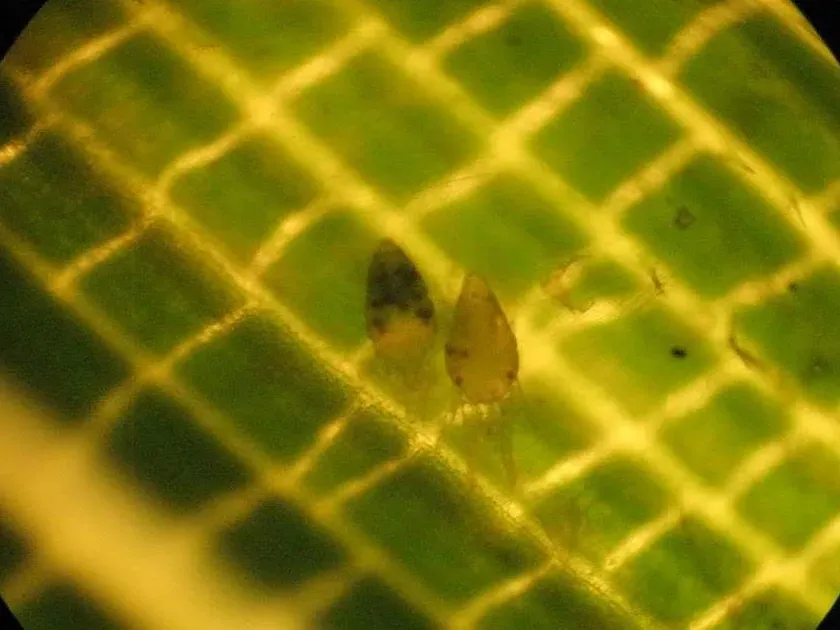
The bamboo spider mite (Stigmaeopsis longus) belongs to the Tetranychidae family. It is a tiny pest with an elongated body, typically ranging from yellowish-white to reddish depending on its growth stage.
Unlike many other spider mites, this species exhibits unique social behavior by constructing dense silken nests along the leaf veins of bamboo. These nests provide essential protection for the colony against predators and environmental stress.
The life cycle proceeds from egg to larva, protonymph, deutonymph, and adult. Under warm and dry conditions, this mite can produce multiple generations quickly, leading to rapid population explosions.
Detecting individual mites without magnification is challenging. Professionals typically identify the pest by its characteristic web nests and the specific patterns of damage left on the leaf surfaces.
Fertilized females overwinter in bark crevices or within protective leaf sheaths, ensuring the survival of the colony until favorable temperatures return in the spring.
What it damages
Stigmaeopsis longus is highly specialized, feeding primarily on various bamboo species. They use their piercing-sucking mouthparts to extract cellular fluids, which disrupts plant health.
Because of this specialization, severe infestations can significantly damage bamboo stands, stripping them of their ornamental value and causing early leaf drop during the peak growing season.
The feeding process results in the destruction of chlorophyll-rich cells, causing chlorosis. This reduction in photosynthetic efficiency leads to stunted growth and weakened plant vigor over time.
Lesions caused by feeding become entry points for opportunistic fungal pathogens, meaning mite infestations are often accompanied by secondary diseases that further complicate the plant's health.
In nursery settings, uncontrolled infestations can lead to complete defoliation, affecting the marketability and survival of young bamboo specimens during their critical establishment period.
Signs of infestation
Early symptoms include tiny, pale stippling or white spots on the upper leaf surface, which correspond to feeding sites on the underside of the leaf.
A diagnostic sign is the presence of white, silky web nests nestled along the midrib of the leaves. Closer inspection reveals the presence of tiny mobile mites and their translucent eggs within these webs.
As the colony expands, leaves gradually lose their vibrant green color, turning yellow or bronze, becoming brittle, and eventually dropping prematurely from the plant.
- Small white specks on the leaf surface.
- Silken nests along the central vein.
- Yellowing or bronzing of foliage.
- Premature leaf abscission.
- Reduced growth rate of new shoots.
Severe infestations often result in the entire plant appearing desiccated and sickly, regardless of adequate irrigation, due to the loss of sap and water balance regulation.
Control measures
Effective management requires the application of systemic acaricides. Products targeting both adult mites and eggs are preferred, ensuring a broad-spectrum response during an active outbreak.
Cultural control is highly effective; maintaining high humidity around bamboo stands through regular misting or overhead irrigation significantly suppresses mite reproduction rates.
Sanitation is critical; pruning and destroying heavily infested leaves and stems helps reduce the immediate source of infestation and prevents the spread to healthy parts of the clump.
Biological control using predatory mites (such as Phytoseiidae species) can be an excellent alternative in greenhouses or sheltered environments where chemical use might be restricted.
Always rotate pesticide classes to manage resistance development in Stigmaeopsis longus, and regularly inspect new plants introduced to the garden to maintain a mite-free environment.
Taxonomy
- Latin name
- Stigmaeopsis longus
- Order
- Mites
- Family
- Tetranychidae
- EPPO code
- STIMLO
Discussion
No discussions yet — be the first.