
Walnut weevil
Sternuchopsis juglans
Description
How to identify
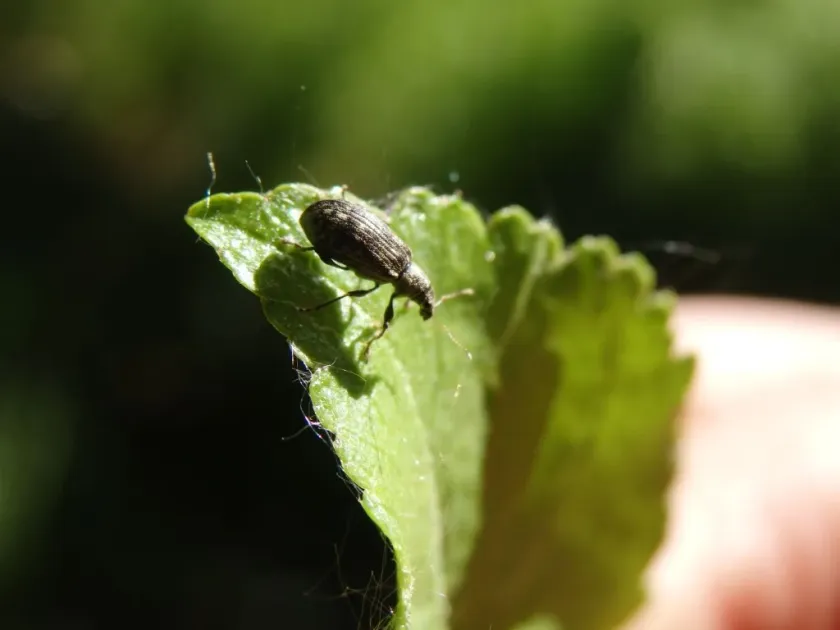
The walnut weevil (Sternuchopsis juglans) is a coleopteran pest belonging to the Curculionidae family. It is recognized by its distinct snout, which is typical for weevils, and its compact, robust body structure.
Adults are small, generally measuring between 7 and 9 millimeters, with colors ranging from grey to brownish-grey, providing excellent camouflage against the rough bark of walnut trees.
The larvae are legless, C-shaped grubs with a pale body and a prominent, hardened brown head capsule. They are exclusively internal feeders, spending their life cycle within the nut.
These insects are primarily nocturnal, remaining hidden during the daylight hours in bark crevices, which makes them difficult to spot during routine garden inspections.
Identification often relies on observing the adults during evening hours or by using sticky traps and branch-shaking techniques during the active season.
What it damages
The primary host for this pest is the walnut tree (Juglans regia). It specializes in attacking developing nuts, causing significant physiological and economic damage.
Adult weevils cause minor damage by feeding on young shoots and buds, but the most severe injury is inflicted by the larvae. The larvae burrow through the husk and shell to consume the developing kernel.
Once a larva enters the nut, it destroys the meat, leading to fruit drop or premature decay. In many cases, the nut becomes empty or filled with frass, making it completely inedible.
Economic impact can be severe in orchards where no control measures are applied, as up to 80% of the harvest can be destroyed by larval infestation.
Secondary infections by molds and bacteria often follow larval damage, as the entry holes provide a gateway for pathogens into the fruit's interior.
When it appears
Adult weevils emerge from the soil in late spring, usually correlating with the period when walnut fruits start to develop and harden slightly.
After mating, females chew small cavities in the green husks of the nuts to deposit their eggs. This egg-laying period can last several weeks depending on the local climate.
Larval development typically occurs over a period of 4 to 6 weeks, during which the larva feeds on the kernel. Once fully mature, the larva exits the nut.
After exiting, the larvae drop to the ground and burrow into the soil, where they pupate and remain until the following spring.
The pest spends the winter underground, effectively protected from harsh winter temperatures by the insulating properties of the soil.
Signs of infestation
The first sign of infestation is the presence of small, circular holes on the surface of the green nut husk, caused by female feeding and egg-laying activities.
Premature fruit drop, particularly in early to mid-summer, is a major indicator that larvae have successfully colonized the crop.
Dark, necrotic spots on the husk often indicate that larval feeding has begun, and the internal tissue is starting to break down due to mechanical injury.
When shaking a branch at night, the sound of insects hitting the ground or a collecting cloth is a clear indicator of a significant adult population.
Opening a damaged nut will reveal the internal cavity occupied by the larva, along with dark-colored waste material instead of a healthy, white kernel.
Control measures
Sanitation is the most critical cultural control measure. Regular collection and destruction of fallen fruit prevent larvae from exiting the nuts and entering the soil.
Tilling the soil under the canopy in late autumn or early winter helps expose pupae to freezing temperatures and predation by birds, significantly reducing the next year's population.
- Application of approved systemic insecticides during the peak adult emergence.
- Installation of sticky barriers on tree trunks to intercept migrating adults.
- Proper orchard management, including pruning to improve light and air circulation.
Chemical control should be timed carefully to coincide with adult activity before egg-laying begins, adhering strictly to safety intervals and local agricultural regulations.
Biological control, including the use of entomopathogenic fungi or nematodes applied to the soil, offers a sustainable alternative to reduce pupal survival rates.
Taxonomy
- Latin name
- Sternuchopsis juglans
- Order
- Coleoptera (beetles)
- Family
- Curculionidae
- EPPO code
- ALCIJU
Discussion
No discussions yet — be the first.