
Sternuchopsis
Sternuchopsis
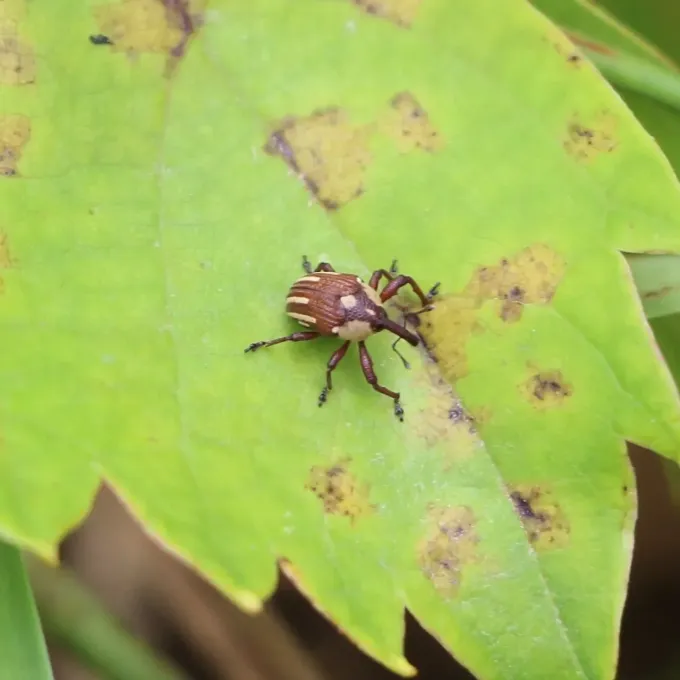
Description
How to identify
Sternuchopsis is a genus of weevils belonging to the family Curculionidae, characterized by a distinct elongated rostrum used for both feeding and oviposition.
Adult insects usually feature a robust exoskeleton covered in various scales or setae, which helps them blend into the soil or plant debris environment.
Larvae of these beetles exhibit the typical C-shaped, legless morphology, adapted for concealed development within plant tissues or the soil root zone.
Identification often relies on the specific morphology of the pronotum and antenna structure, as several related species share similar ecological niches.
Due to their nocturnal or crepuscular behavior, these pests are often overlooked during routine field inspections conducted during daylight hours.
What it damages
Sternuchopsis species act as significant agricultural pests, primarily affecting cereal crops and legumes by damaging both reproductive and vegetative parts.
Adult beetles cause damage by feeding on young leaves, stems, and developing reproductive structures, leading to reduced plant vigor and stunted growth.
The larvae are particularly destructive, as they burrow into the root system or root collar, effectively disrupting the vascular supply of the host plant.
This feeding behavior causes significant plant wilting, increased vulnerability to secondary infections, and a substantial decrease in harvest quality and quantity.
In severe infestations, the pest can cause extensive stand thinning, which directly impacts the overall yield potential of the field.
When it appears
The activity cycle of Sternuchopsis is closely tied to soil temperature and moisture levels, which trigger the emergence of adults from overwintering sites.
Peak adult activity typically occurs during the early vegetative stages of host crops, coinciding with the mating and egg-laying phase of the life cycle.
Larval development progresses through several instars, with the duration of the cycle depending heavily on the availability of nutrients in the host plant.
As the crops mature, the new generation of adults usually moves into soil layers or leaf litter to enter a state of dormancy until the following season.
Effective management during the pre-wintering period is essential to reduce the population density carried over into the next growing cycle.
Signs of infestation
The presence of Sternuchopsis is often first detected by the emergence of irregular patches of chlorotic, stunted plants within the field.
Close inspection of the root collar often reveals larval boreholes and feeding tracks, which are often accompanied by the presence of frass (larval excrement).
Adult feeding activity may be visible as characteristic notch-like defoliation along the edges of leaves, especially observed during the night.
Reduced root anchorage and premature wilting under mild water stress are strong indicators of larval damage to the root system.
- Patches of yellowing or stunted crop growth.
- Feeding notches on leaf margins.
- Evidence of larval tunneling in the root collar area.
Control measures
Integrated pest management (IPM) is crucial, with crop rotation serving as the primary strategy to disrupt the life cycle of the weevil population.
Deep autumn plowing is highly effective in controlling the population by exposing overwintering adults to adverse weather conditions on the soil surface.
The application of systemic insecticides during the peak of adult activity can effectively reduce the population before extensive egg-laying occurs.
Optimizing planting dates allows crops to progress through sensitive growth stages before the peak density of larval activity occurs in the soil.
Regular field scouting and threshold-based monitoring are necessary to determine the economic necessity of applying chemical control measures.
Taxonomy
- Latin name
- Sternuchopsis
- Order
- Coleoptera (beetles)
- Family
- Curculionidae
- EPPO code
- STNUSP
Discussion
No discussions yet — be the first.