
Common musk turtle
Sternotherus odoratus
Description
How to identify
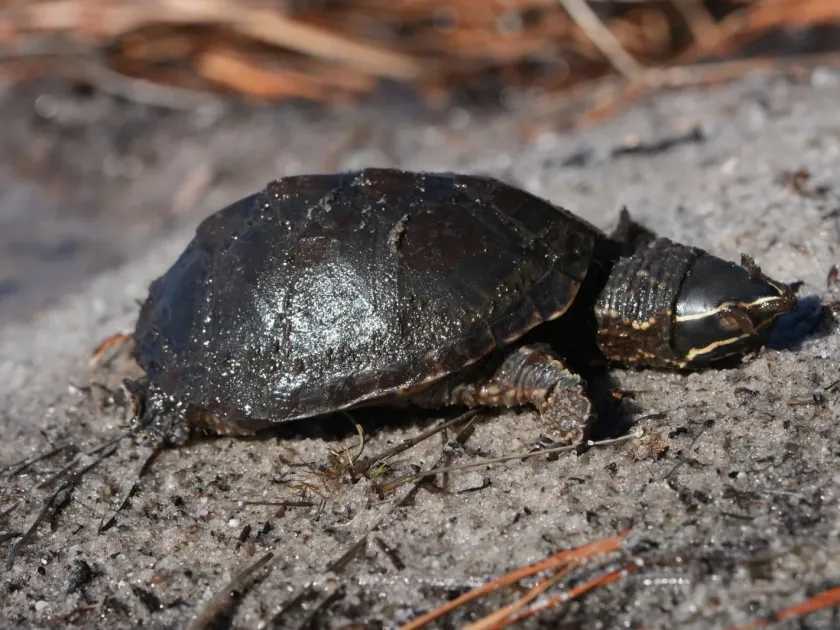
The common musk turtle Sternotherus odoratus belongs to the family Kinosternidae. This small freshwater turtle is recognized by its high-domed, dark-colored shell.
Adults typically measure between 8 and 14 centimeters in length. A distinct feature of the species is the presence of two yellow or white stripes on each side of the head, running from the snout through the eyes.
The name stems from two pairs of musk glands along the bridge of the shell. These glands produce a pungent, musky secretion used for defense against predators.
These turtles are primarily bottom-dwellers, often seen walking along the floor of shallow ponds, canals, and agricultural water systems rather than swimming.
They are highly opportunistic and can thrive in human-made irrigation systems, which provide both shelter and abundant food resources.
What it damages
In agricultural settings, Sternotherus odoratus is considered a nuisance pest in aquaculture and hydroponic facilities, as well as in rice paddies.
They cause direct damage by feeding on young shoots, sprouts, and roots of aquatic vegetation, which can severely impact crop yield and uniform growth.
Their behavior of digging into the substrate often uproots delicate plants, disrupting the root environment necessary for healthy crop development.
Furthermore, their presence in hydroponic systems can lead to mechanical blockage or damage to circulation equipment due to their constant movement and nesting habits.
By consuming beneficial macroinvertebrates that keep water clean, they indirectly cause water quality degradation, which negatively affects plant health.
Signs of infestation
Floating plant debris and chewed leaves on the surface of the water are primary indicators that turtles are feeding on the vegetation.
Disturbed sediment patterns and visible trails along the muddy bottom of drainage channels often confirm the presence of this species.
Finding remains of shell fragments or distinct, pungent musky odors in isolated water pockets are key signs of an established population.
Structural damage to fine-mesh screening or protection nets usually suggests that larger turtles are attempting to enter the protected growing zones.
Increased turbidity of the water, not linked to weather conditions, often indicates significant bottom-stirring activity by a colony of turtles.
Control measures
Physical barriers are the most effective way to prevent damage; using high-strength, fine-mesh screening around cultivated areas blocks access for turtles.
Mechanical trapping using funnel traps (fyke nets) baited with food is recommended to reduce turtle numbers during the peak growing season.
Regular maintenance, including the removal of dense bottom vegetation and accumulated debris, reduces the attractiveness of the environment to musk turtles.
Water management, such as temporary draining of canals or rice fields, can disrupt the turtle's life cycle and force them to vacate the area.
- Installation of exclusionary barriers.
- Deployment of baited funnel traps.
- Periodic draining of water systems.
- Removal of organic bottom debris.
Taxonomy
- Latin name
- Sternotherus odoratus
- Family
- Kinosternidae
- EPPO code
- STTHOD
Discussion
No discussions yet — be the first.