
Mango seed weevil
Sternochetus mangiferae
Description
How to identify
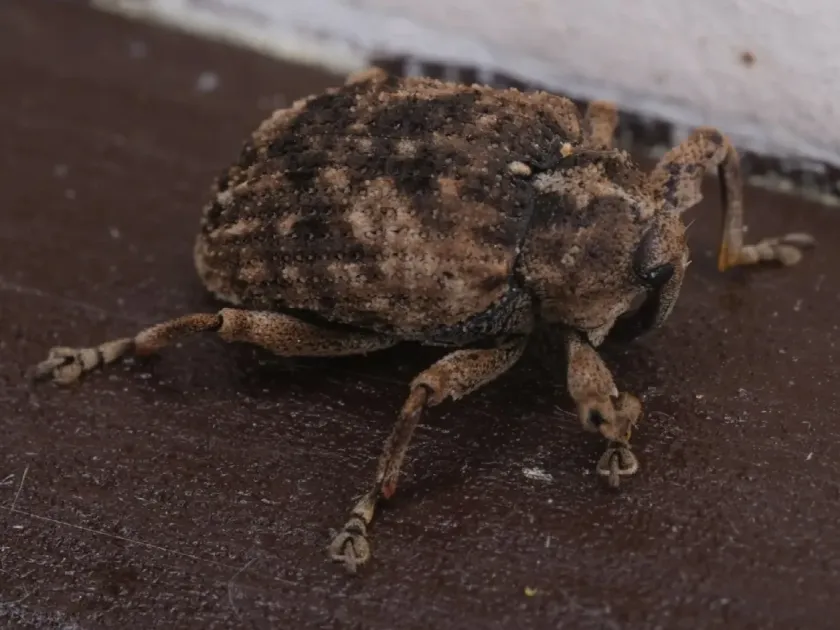
The mango seed weevil (Sternochetus mangiferae) is a destructive member of the Curculionidae family. These insects are small, robust beetles characterized by their distinct snout and brownish-grey, mottled appearance.
Adult weevils measure approximately 8–10 mm in length. When threatened, they exhibit thanatosis, or death-feigning, by folding their legs against their bodies, which makes them look like small bits of organic debris or bark.
The lifecycle begins when a female lays eggs on the surface of young mango fruit. Upon hatching, the larvae immediately tunnel through the pulp to reach the developing seed inside the fruit.
The larval stage is exclusively spent inside the seed. The larvae are legless, cream-colored, and curved, consuming the kernel until they reach the pupal stage, which also occurs within the seed husk.
After metamorphosis, the adult weevil bores an exit hole through the seed and the fruit flesh to emerge, completing its lifecycle. The total developmental period typically ranges from 40 to 50 days.
What it damages
Mango trees (Mangifera indica) are the primary hosts for this pest. The weevil causes severe economic losses by attacking the fruit directly, which is the most valuable part of the tree.
The primary damage is caused by the larvae consuming the internal part of the seed. This not only destroys the germinating potential of the seed but also degrades the quality of the surrounding fruit pulp.
Secondary infections often follow the damage. Bacteria and fungi can enter through the tunnels created by the weevil, leading to internal browning and rotting of the fruit, making it unmarketable.
Infested fruits may show no external signs of damage until the exit holes appear, leading to significant problems in international trade and phytosanitary inspections.
High infestation levels can lead to premature fruit drop, significantly reducing the total harvest weight and quality available for both local and export markets.
Signs of infestation
Detection is notoriously difficult because the majority of the pest's life cycle is spent hidden inside the fruit. Early signs include faint, brown, oval-shaped scars on the fruit surface where the female oviposited.
A major indicator is the premature ripening or dropping of fruits that appear otherwise healthy but show signs of internal disruption when sliced open.
The most obvious sign of an established infestation is the presence of small, circular exit holes on the peel of mature fruit, created by the adults leaving the pulp.
Internally, the presence of frass (larval waste) and tunneling through the hard endocarp (the seed husk) are definitive signs that the fruit has been compromised by Sternochetus mangiferae.
In cases of severe infestation, growers might notice a distinct mushy texture in the pulp near the stone, which often coincides with bacterial soft rot spreading from the larval tunnels.
Control measures
Strict quarantine measures are essential to stop the spread of the pest to non-infested areas. This involves rigorous inspection of fruit shipments at international borders.
Good orchard hygiene is the most effective cultural practice. Growers must collect all fallen fruit daily and destroy them via burning or deep burial to eliminate larvae before they reach maturity.
Chemical control focuses on applying systemic insecticides during the fruit-set phase to target the adult weevils before they begin their egg-laying cycle.
Biological control efforts include the use of natural predators, such as parasitoid wasps and entomopathogenic fungi, which can reduce weevil populations in integrated pest management programs.
Post-harvest treatments, particularly hot water treatment (dipping fruit in water at 46–48°C), have proven highly effective at eradicating eggs and larvae without harming the fruit quality.
Taxonomy
- Latin name
- Sternochetus mangiferae
- Order
- Coleoptera (beetles)
- Family
- Curculionidae
- EPPO code
- CRYPMA
Discussion
No discussions yet — be the first.