
Mango seed weevil
Sternochetus
Description
How to identify
The mango seed weevil (Sternochetus mangiferae) is a member of the Curculionidae family within the order Coleoptera, known for causing significant damage to mango fruit.
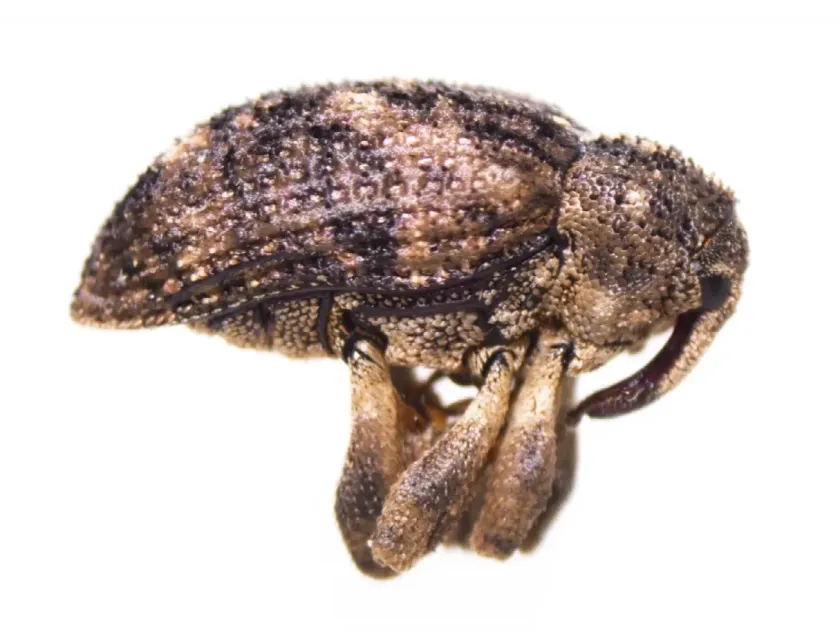
Adult weevils are stout, oval-shaped beetles measuring approximately 6 to 9 mm in length, with coloration varying from dark brown to black, often with mottled patterns.
They possess a distinctive elongated rostrum, typical of the weevil group, which is utilized for boring into the fruit skin to deposit eggs.
The larval stage consists of legless, creamy-white, C-shaped grubs that spend their entire development cycle shielded inside the seed of the mango fruit.
The pupal stage also occurs inside the seed, after which the adult beetle emerges by boring a tunnel through the seed coat and the fruit pulp.
What it damages
The mango seed weevil primarily targets Mangifera indica, leading to severe economic losses in both domestic production and international export markets.
Damage is mainly inflicted by the larvae, which consume the internal portion of the mango kernel, rendering the seed non-viable and damaging the fruit structure.
Fruit infestation often triggers premature dropping of fruits, which significantly reduces the overall harvest volume for growers.
In addition to physical destruction, the tunneling of larvae creates pathways for secondary bacterial and fungal infections, causing the fruit pulp to rot.
Because the larvae are internal feeders, the external appearance of the fruit may remain relatively normal until the adult weevil emerges, leading to market rejection.
When it appears
The lifecycle of this pest is strictly synchronized with the flowering and fruiting phenology of the mango trees in the local environment.
Adults emerge from their overwintering sites, such as tree bark crevices or leaf litter, when the mango trees begin to develop fruit set.
The female weevil lays eggs on the surface of young mangoes, sealing them with a protective, fast-hardening secretion that creates a visible mark on the skin.
Development from egg to adult takes approximately 40 to 50 days, depending on ambient temperatures, allowing for multiple generations in tropical climates.
Overwintering adults are resilient and can survive for months in protected niches, ensuring that the infestation returns each season when fruit becomes available.
Signs of infestation
The most common initial sign is a tiny, dark, semi-circular oviposition scar on the fruit surface, where the female has laid an egg.
Upon harvesting and slicing the fruit, the presence of damaged kernel tissue, larval debris, or mature grubs indicates a clear infestation.
A circular exit hole on the fruit skin is a definite sign that an adult weevil has already emerged from the interior of the fruit.
Infested fruits may show internal browning, soft spots, and a distinct odor of decay due to the internal tunneling activities of the larvae.
Growers often notice an abnormal increase in fruit drop, particularly in fruits that appear nearly mature, which is a symptom of internal damage by the weevil.
Control measures
The primary control strategy involves rigorous orchard sanitation, specifically the timely collection and destruction of all fallen fruits to break the pest's cycle.
Chemical control via insecticides is difficult due to the cryptic nature of the larvae, so spraying is usually targeted at the adult population before egg-laying.
Biological control options, including the use of entomopathogenic fungi or specific parasitic wasps, are being researched to provide sustainable management alternatives.
Strict quarantine protocols for the movement of fruit between regions are essential to limit the geographic spread of this invasive weevil.
- Removing and burning all infested plant material.
- Applying systemic or contact insecticides during the early fruit development stage.
- Using trap crops or pheromone-based monitoring to track adult activity levels.
Taxonomy
- Latin name
- Sternochetus
- Order
- Coleoptera (beetles)
- Family
- Curculionidae
- EPPO code
- SRNCSP
Discussion
No discussions yet — be the first.