
Sternechus
Sternechus subsignatus
Description
How to identify
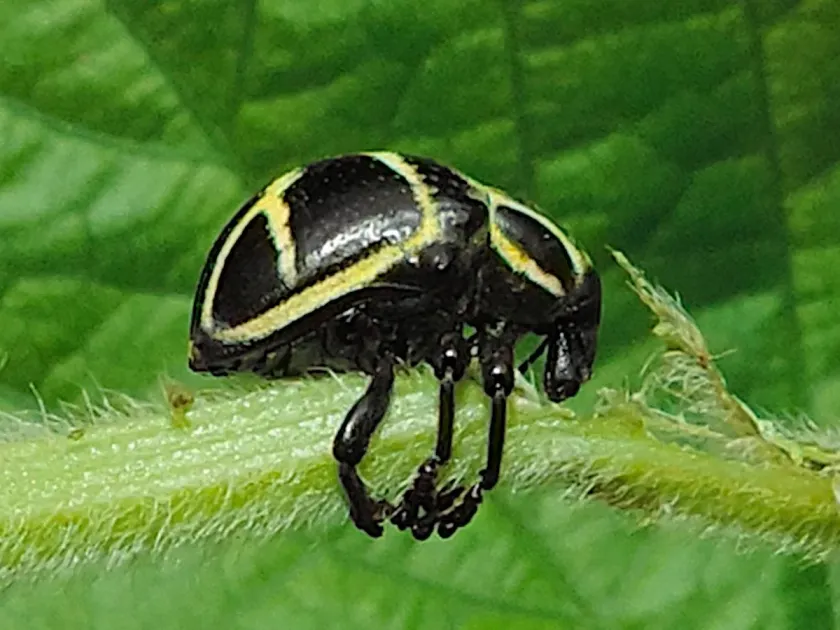
The Sternechus (Sternechus subsignatus) belongs to the order Coleoptera and the family Curculionidae. The adult insect is a medium-sized beetle with a distinct elongated rostrum typical of weevils.
The adult body has a dark, almost black color, often marked with whitish or yellowish spots on the elytra, providing excellent camouflage among plant debris. The body surface is covered by a dense, hard exoskeleton.
Larvae have a C-shaped body, are legless, and appear cream-white with a brown head capsule. They lead a concealed lifestyle, developing either inside plant stems or within the soil, depending on their life stage.
The life cycle involves complete metamorphosis: egg, larva, pupa, and adult. Adults are highly resilient and capable of traveling long distances to locate suitable host plants.
This species is a specialized pest that, under conditions of mass outbreak, can cause severe economic damage to agricultural crops, particularly in regions with humid climates.
What it damages
The primary host crop for Sternechus is the soybean (Glycine max). Adult beetles feed on the leaves and young stems of the plant, which reduces the photosynthetic area and weakens the overall vigor of the crop.
The most significant damage is caused by larvae that bore into the soybean stem. By feeding internally, the larvae create tunnels that disrupt the transport of water and nutrients to the vegetative parts of the plant.
Stem damage results in premature wilting, deformation, and lodging of the plants. This not only stunts growth but also makes the plant highly susceptible to secondary pathogens and various fungal infections.
During periods of heavy infestation, a significant reduction in bean yield is observed. If damage occurs during the early growth stages, it can lead to complete plant death and reduced stand density.
This pest can also infest other legume crops, making it a critical management target in crop rotations where soybeans are planted alongside other susceptible plant species.
When it appears
The activity of adult Sternechus beetles begins in the spring when stable warm temperatures arrive, allowing the overwintered adults to emerge from their hibernation sites in the soil or crop residues.
The peak of adult harmfulness occurs during the soybean emergence period, as beetles colonize young seedlings for supplementary feeding. Regular field monitoring is essential during this time.
The egg-laying period is extended and depends heavily on seasonal weather conditions. Females deposit eggs into the stem tissue, where the larvae will remain throughout the summer months.
Larvae complete their development inside the stem by late summer or early autumn. As the harvest season approaches, the pest prepares for its transition into the soil layer to enter a period of diapause.
Overwintering takes place in the adult stage within the topsoil, where the insect remains until the following spring.
Signs of infestation
The first visual sign of Sternechus presence is the appearance of circular holes or irregular notches on the edges of soybean leaves, caused by adult beetle feeding.
On plant stems, one may notice specific swellings or deformations at the points where larvae have bored into the tissue. These areas often discolor and become noticeably darker than healthy stems.
When inspecting internal tissues of damaged stems, one can easily find winding tunnels filled with larval excrement, along with the larvae themselves.
A critical sign of heavy infestation is the sudden wilting of the plant top or the entire stem, despite adequate soil moisture. Affected stems are prone to snapping under wind pressure.
The mass presence of adult beetles on leaf surfaces during morning or evening hours serves as an immediate indicator for the need to initiate control measures.
Control measures
The primary method for controlling Sternechus is the implementation of a proper crop rotation, as soybean monocultures facilitate the accumulation of pest populations in the soil.
Agrotechnical practices, such as deep autumn plowing, help destroy a portion of the overwintering adults and disrupt their ability to emerge successfully the following spring.
Chemical control involves the application of systemic or contact insecticides during periods of peak adult activity, specifically before the beetles have the chance to lay eggs.
It is vital to use high-quality certified seeds and apply insecticidal seed treatments to protect the seedlings from damage during their most vulnerable early developmental stages.
We recommend conducting monitoring using yellow sticky traps and performing regular field edge inspections to identify and treat infestation foci promptly.
Taxonomy
- Latin name
- Sternechus subsignatus
- Order
- Coleoptera (beetles)
- Family
- Curculionidae
- EPPO code
- STECSU
Discussion
No discussions yet — be the first.