
Sternechus pinguis
Sternechus pinguis
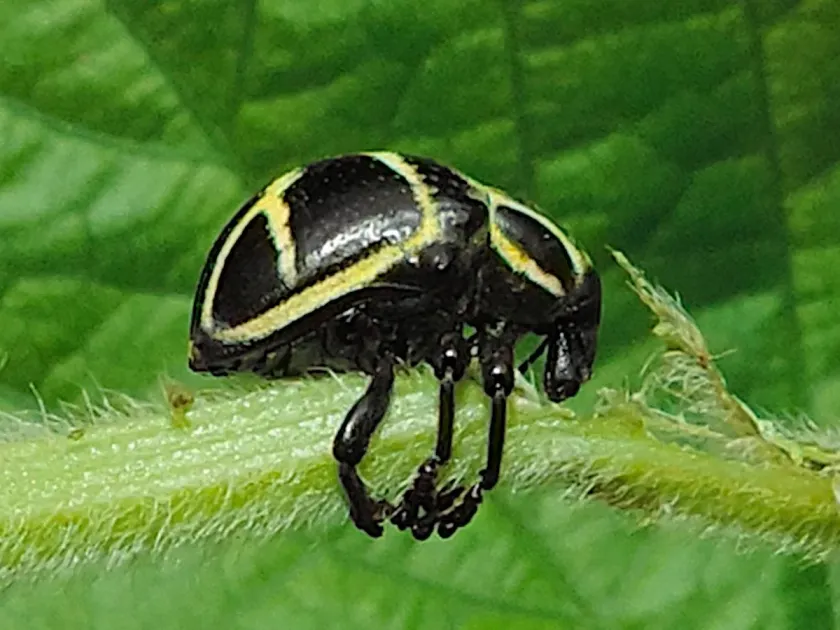
Description
How to identify
Sternechus pinguis is a beetle species belonging to the family Curculionidae (weevils). These insects are known for their robust, oval-shaped bodies and dark coloration, which allows them to blend in with soil surfaces and debris.
The adult beetle is characterized by a prominent rostrum (snout) typical of the Curculionidae family. They typically measure between 8 and 12 millimeters in length and possess strong mandibles for feeding and oviposition.
The larvae of this species are legless, C-shaped grubs with a whitish body and a darker, chitinous head capsule. They spend their entire development phase hidden within plant tissues, which provides them with significant protection from predators.
The life cycle encompasses four stages: egg, larva, pupa, and adult. This complete metamorphosis allows the pest to adapt to various environmental conditions throughout the growing season.
Adult beetles exhibit a defense mechanism known as thanatosis, where they remain motionless or fall to the ground when threatened, making them harder to detect during field surveys.
What it damages
Sternechus pinguis is a significant pest of soybeans (Glycine max). Infestations can cause severe economic losses, particularly in regions where soybean cultivation is the primary agricultural activity.
Adults consume the foliage and young shoots, resulting in numerous small holes in the leaves. This feeding behavior reduces the photosynthetic capacity of the plant and causes the apical parts of the plant to curl or stunt.
The larval stage is the most destructive. Larvae bore galleries inside the soybean stem or root collar, severely disrupting the plant's vascular system, which hinders the transport of water and essential nutrients.
Severe infestations often lead to stem lodging, making plants highly vulnerable to wind damage. Furthermore, the internal tunnels act as entry points for fungal pathogens, resulting in secondary infections and plant decay.
The cumulative effect of adult and larval damage significantly reduces grain filling and overall crop yield, often leading to patchy or thin stands in heavily infested fields.
When it appears
The emergence of adult beetles following winter diapause typically aligns with the early stages of soybean vegetative growth. They migrate from their overwintering sites, such as crop residues or field margins, to colonize new fields.
The mating and oviposition phase occurs as temperatures rise during the spring and early summer. Females puncture the plant stems to deposit eggs, which marks the start of the infestation cycle.
Larval development occurs over several weeks inside the plant tissue. During this period, the larvae continuously feed, growing in size and deepening their internal galleries within the stem structure.
Pupation takes place either within the damaged stem or in the surrounding soil, depending on soil moisture and ambient temperature conditions during the season.
The appearance of a new generation of adults usually signifies the end of the reproductive cycle, after which the beetles prepare for overwintering in protected sites in the soil or under leaf litter.
Signs of infestation
The earliest signs of infestation are the presence of irregular perforations on the soybean leaves caused by adult feeding. Monitoring these holes is a key indicator for early detection.
Upon inspecting the base of the stems, one may observe small scars or puncture marks resulting from the oviposition process. In some cases, localized stem swelling may occur at the point of egg insertion.
Wilting of specific branches or the entire plant, particularly during midday heat, indicates that internal larval feeding is obstructing the plant's vascular flow.
When an infested stem is split open, the characteristic galleries or tunnels filled with larval frass become visible, confirming the presence of the pest even if the larvae are no longer present.
- Holes and ragged margins on leaflets
- Apical stem distortion and stunted growth
- Wilting of plants during peak sunlight
- Presence of internal tunneling in stems
- Secondary rot infections at damaged sites
Control measures
Crop rotation is the most effective cultural practice to manage Sternechus pinguis. Avoiding continuous soybean planting for several years helps significantly reduce local pest populations by starving them.
Deep plowing after the harvest helps expose overwintering larvae and pupae to extreme temperature fluctuations and natural predators, thereby lowering the initial population for the next season.
Chemical control using systemic insecticides can be effective when applied during the period of adult emergence and supplemental feeding, before the eggs are laid inside the plants.
Good field sanitation, including the removal of crop debris and weeds from surrounding areas, is essential to limit the migration of the weevil onto new soybean crops.
Regular scouting of field margins and early-season monitoring allow for timely intervention, which is crucial for preventing widespread damage throughout the crop area.
Taxonomy
- Latin name
- Sternechus pinguis
- Order
- Coleoptera (beetles)
- Family
- Curculionidae
- EPPO code
- STECPI
Discussion
No discussions yet — be the first.