
Soybean stem weevil
Sternechus paludatus
Description
How to identify
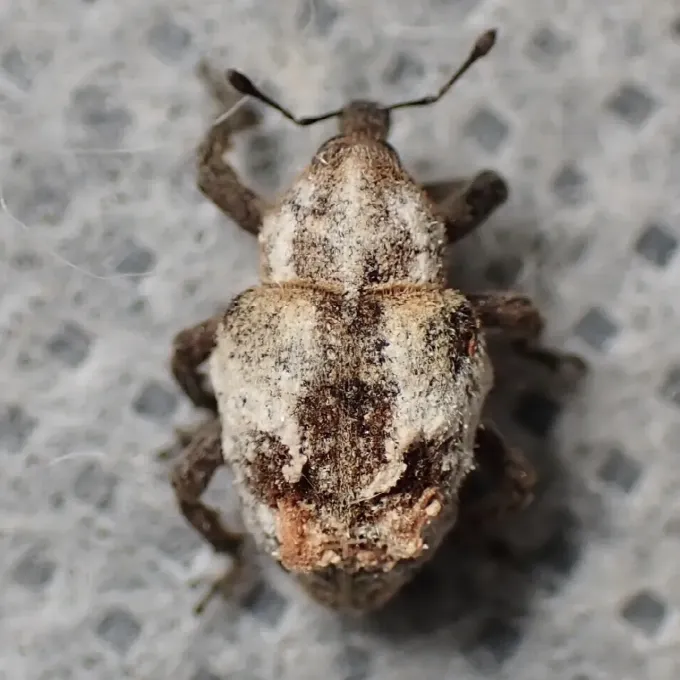
The soybean stem weevil (Sternechus paludatus) is a member of the Coleoptera order and the Curculionidae family. It is recognized by its distinct snout, which is characteristic of all true weevils.
The adult insect features a heavily sclerotized exoskeleton, typically dark brown or black in color, providing excellent camouflage against soil and plant debris.
The larvae are legless, white to cream-colored grubs, specifically adapted for boring into plant tissues. They have powerful mandibles capable of chewing through tough soybean stalks.
Adult weevils exhibit a defensive behavior called thanatosis, where they feign death and drop to the ground when disturbed, making them difficult to spot during field inspections.
Their life cycle is highly dependent on environmental moisture; adult beetles tend to aggregate in areas with favorable humidity levels during the soybean growing season.
What it damages
Soybean plants are the primary host for Sternechus paludatus. Both adults and larvae can cause damage, but the larval stage is the most destructive to the crop.
Adults feed on foliage and young stems, creating small pits or scratches, which, while not lethal on their own, can weaken the plant and facilitate secondary pathogen entry.
Larvae bore into the interior of the soybean stem, creating tunnels. This internal feeding disrupts the plant's vascular system, preventing the flow of water and nutrients.
Affected plants often show stunted growth, chlorosis, and wilting, particularly during hot and dry periods when the damaged stems can no longer support transpiration needs.
Severe infestations can lead to stem lodging or breaking at the point of larval activity, resulting in significant yield loss or complete plant death in heavily infested spots.
Signs of infestation
One of the earliest signs of activity is the appearance of small feeding holes or scratches on leaves and upper stems caused by adult weevil feeding activities.
Visible galls or swellings on the main stem are clear indicators of internal larval development, as the plant attempts to react to the presence of the borer.
Premature wilting of the plant top, even when soil moisture appears adequate, is a strong indicator that the vascular system is compromised by tunneling insects.
Splitting the stem will reveal internal galleries packed with larval frass, which provides definitive confirmation of the presence of the soybean stem weevil.
Exit holes found on the lower sections of the stems indicate that the larvae have completed their development and have exited to pupate in the soil.
Control measures
Integrated pest management begins with proper crop rotation, as it effectively limits the build-up of local pest populations by depriving them of their primary host.
Deep fall tillage is an effective cultural practice that exposes pupae and overwintering adults to adverse weather conditions, significantly reducing the population in the field.
Chemical control should be timed to hit adult weevils before they lay eggs, as once the larvae are inside the stem, they are largely protected from contact insecticides.
Monitoring using sweep nets or adhesive traps helps determine the timing and necessity of insecticide applications, ensuring cost-effective management of the pest.
Maintaining clean field borders by removing leguminous weeds reduces alternative host availability, further decreasing the pressure on the soybean crop.
Taxonomy
- Latin name
- Sternechus paludatus
- Order
- Coleoptera (beetles)
- Family
- Curculionidae
- EPPO code
- STECPA
Discussion
No discussions yet — be the first.