
Little tern
Sterna albifrons
Description
How to identify
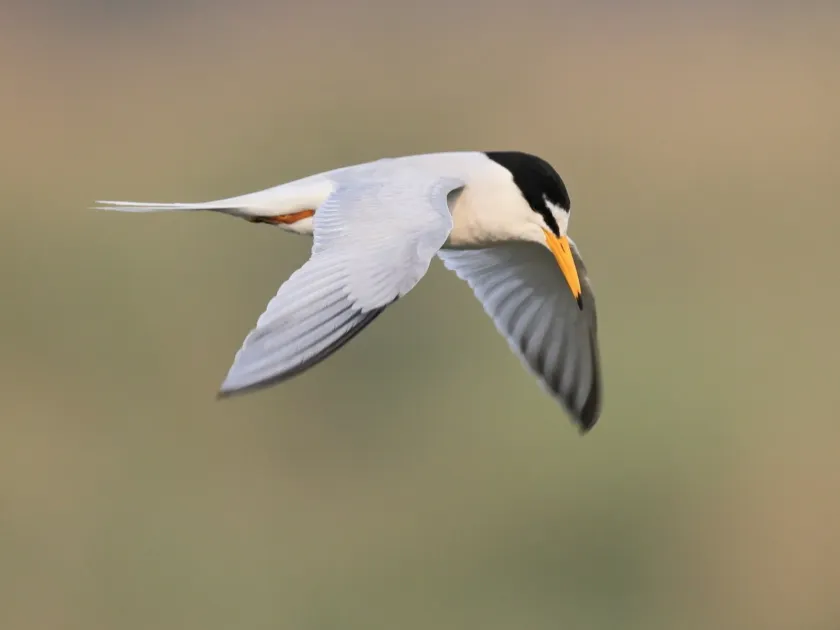
The Little tern is the smallest member of the Laridae family within the Charadriiformes order. It is characterized by its compact size, white plumage with grey wings, and a distinct black cap covering the top of its head.
Adults possess a yellow bill with a prominent black tip, which distinguishes them from other similar tern species. Their body length ranges between 22 and 24 centimeters with a wingspan of up to 50 centimeters.
These birds nest in colonies on open sandy or pebbly riverbanks, beaches, and lake shores. Their colonial behavior is a primary strategy for defense against natural predators in their environment.
In flight, they are known for rapid wingbeats and the ability to hover stationary above the water surface before diving for small prey. This behavior is vital for their survival and successful foraging.
The biological cycle is highly synchronized with seasonal water levels, as they require stable, dry nesting sites during the egg-incubation phase.
What it damages
It is crucial to clarify that the Little tern is not an agricultural pest. Its diet consists almost entirely of small fish, aquatic insect larvae, and crustaceans harvested from water bodies.
The bird shows no interest in seeds, grains, or vegetative tissues of agricultural crops. Consequently, it poses zero threat to harvest production or plant health in farming areas.
Misunderstandings regarding the species' role in agriculture often arise due to their proximity to irrigation ponds or wetlands situated within or near agricultural fields.
Presence of Little terns in an area often indicates a healthy aquatic ecosystem, which can provide indirect benefits by controlling local insect populations through natural predation.
No agronomic damage data exists for this species because it does not interact with the cultivated components of agro-ecosystems.
Control measures
Since the Little tern is a protected species under many national and international environmental laws, any control measures involving harm are strictly prohibited.
Farmers are encouraged to follow conservation guidelines that protect natural habitats. Protecting riverbank areas supports local biodiversity without impeding agricultural operations.
If deterrents are necessary near critical infrastructure, non-lethal and humane acoustic or visual scare tactics are the only acceptable approaches, provided they do not disrupt breeding colonies.
Agricultural practices should strive to minimize chemical runoff into waterways to ensure the continued availability of prey for these birds, thus preventing their displacement.
- Protecting nesting colony sites.
- Implementing eco-friendly agricultural management.
- Ensuring water quality in nearby irrigation systems.
Taxonomy
- Latin name
- Sterna albifrons
- Family
- Sternidae
- EPPO code
- STNAAL
Discussion
No discussions yet — be the first.