
Steriphus
Steriphus
Description
How to identify
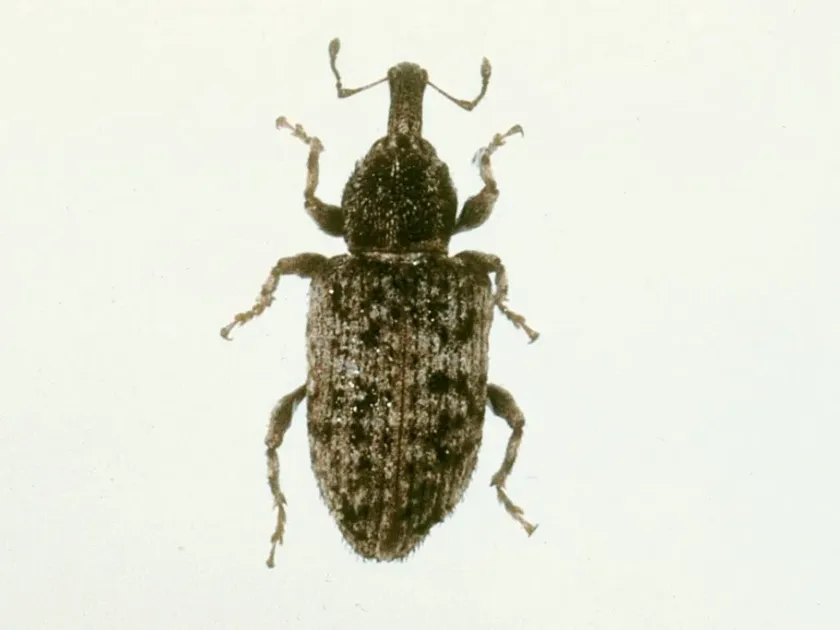
Steriphus is a genus belonging to the family Curculionidae (true weevils), order Coleoptera. These insects are characterized by a distinct rostrum (snout) and a robust exoskeleton that protects them from environmental stresses.
Adult weevils in this genus typically measure between 5 and 9 mm in length. Their coloration is usually dull, ranging from dark brown to grey, which provides effective camouflage in the soil environment and among plant debris.
The larvae are apodous (legless), fleshy, and typically white or yellowish with a dark, hardened head capsule. They spend their entire developmental period in the soil, focusing on feeding on underground plant structures.
The life cycle is heavily influenced by soil moisture and temperature fluctuations. During favorable spring conditions, adults emerge from the soil to feed and mate, initiating the next generation's infestation cycle.
Accurate species-level identification within the genus Steriphus often requires specialized entomological study, particularly of the male genitalia, as external morphological traits can be highly variable across different populations.
What it damages
Steriphus species cause damage to a variety of herbaceous plants, including cereal crops and certain forage grasses. Both adults and larvae are responsible for direct injury to the host plants.
Adults primarily feed on the foliage, causing irregular notching on the margins of the leaves. This feeding activity reduces the overall photosynthetic surface area of the plant, which can stunt development in younger stages.
Larval stages are considered the most destructive, as they feed on the root systems and the base of the stems. By severing root connections, they significantly impede the plant's ability to absorb water and nutrients.
Damaged plants often show signs of severe stress, including wilting, yellowing, and stunted growth. Such mechanical injuries also serve as entry points for various soil-borne pathogens, leading to secondary infections and root rot.
In cases of high population density, the combined impact of adult leaf-feeding and larval root-destruction can result in significant stand reduction and potential economic yield loss across the field.
Signs of infestation
The most noticeable sign of a Steriphus infestation is the irregular stand pattern in a field, characterized by patches of stunted or wilting plants that fail to thrive despite adequate moisture levels.
Upon closer inspection, the leaves of affected plants will exhibit characteristic feeding scars, typically appearing as uneven notches or ragged edges along the leaf margins.
Excavating the soil around the base of symptomatic plants often reveals the larvae, which are found in the root zone. Missing or heavily pruned lateral roots are primary indicators of larval feeding activity.
Adult weevils are often shy and exhibit thigmotaxis or thanatosis (feigning death), causing them to drop to the ground when plants are disturbed, making them difficult to spot during daylight hours.
Affected plants are frequently poorly anchored in the soil and can be easily pulled out, confirming the loss of root structural integrity due to the feeding activity of the larvae.
Control measures
Crop rotation remains the most effective long-term management strategy for Steriphus. By rotating away from host plants, the population of larvae can be significantly starved, leading to a decline in overall numbers.
Cultural practices, such as intensive autumn tillage (ploughing), help disrupt the soil environment and expose overwintering stages to predation, desiccation, and adverse weather conditions.
For high-risk areas, the use of insecticidal seed treatments provides crucial early-season protection, ensuring that young seedlings are not compromised during the most vulnerable stages of development.
When monitoring indicates that population thresholds have been exceeded, foliar applications of broad-spectrum insecticides may be necessary to suppress adult populations and prevent further reproduction.
- Maintain a clean field environment by eliminating host weeds.
- Conduct regular monitoring to determine the timing of adult emergence.
- Optimize soil fertility to help plants compensate for minor root damage.
Taxonomy
- Latin name
- Steriphus
- Order
- Coleoptera (beetles)
- Family
- Curculionidae
- EPPO code
- DESISP
Discussion
No discussions yet — be the first.