
Steremnius carinatus
Steremnius carinatus
Description
How to identify
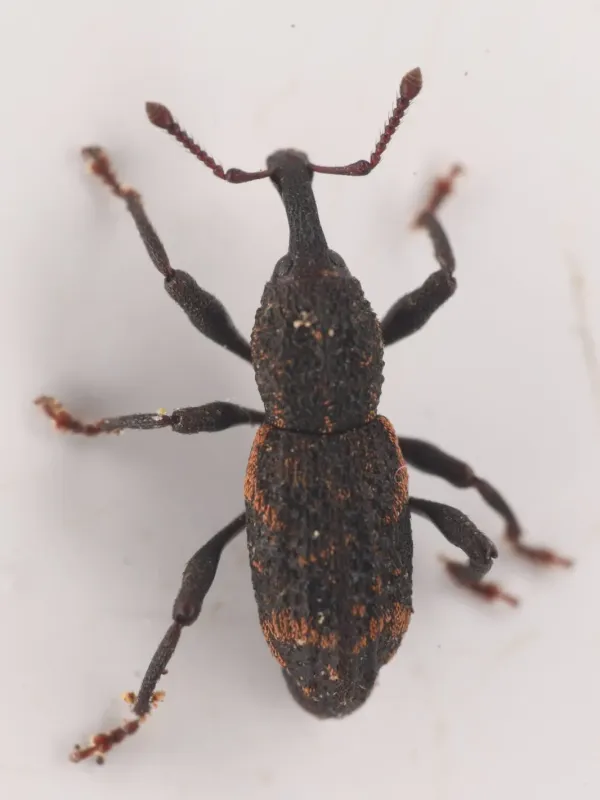
Steremnius carinatus belongs to the order Coleoptera and the Curculionidae family. It is a snout beetle characterized by its elongated body and a prominent rostrum (snout) typical of this insect family.
Adult beetles are relatively small, usually measuring between 8 and 12 millimeters in length. Their dark, brownish-black color helps them blend into the forest floor environment where they reside.
The name carinatus refers to the distinct, ridge-like keel structures found on the elytra (wing covers), which is a key diagnostic feature for visual identification in the field.
The larvae are typically legless, cream-colored, and C-shaped, with a hardened, darker head capsule. They lead a cryptic life, usually developing within decaying wood or moist timber residues.
These weevils are primarily nocturnal, spending daylight hours hiding under debris or inside bark crevices, making them elusive for casual observers during the day.
What it damages
This species is considered a pest of coniferous seedlings, particularly in young plantations or areas recently subjected to logging or natural disturbances like windthrow.
The damage is primarily caused by adult beetles that feed on the thin bark of young spruce, pine, or fir seedlings, often girdling the stem and disrupting nutrient transport.
While the primary impact is on young saplings, high populations can cause significant mortality in nursery settings and reforestation sites, resulting in substantial financial loss.
In addition to direct feeding damage, the wounds created by the adults can serve as entry points for various pathogens and secondary wood-boring insects, further weakening the trees.
Older trees are generally resistant, but young transplants in forest environments are extremely vulnerable until their bark thickens enough to withstand the beetle's mouthparts.
Signs of infestation
The most evident sign of a Steremnius carinatus infestation is the presence of irregular, notched feeding lesions on the stems of small coniferous trees, often near the ground level.
Seedlings may show signs of stress, such as yellowing or browning needles, stunted growth, and a general lack of vigor due to the disruption of their internal vascular systems.
Close inspection of the stem base might reveal fresh resin flow around the feeding sites, as the plant attempts to "seal" the wounds caused by the beetle's aggressive feeding.
During the night, adult beetles can be found directly on the stems of infested saplings, often exhibiting a "death feigning" behavior when disturbed or illuminated by light.
Accumulations of fresh logging slash, old stumps, and damp soil conditions in the proximity of new plantations act as a strong attractant for adult weevils colonizing new areas.
Control measures
Good silvicultural practices are the cornerstone of control, primarily involving the thorough removal of stumps and debris that provide breeding grounds for the weevil larvae.
In high-risk areas, the use of mechanical protective sleeves on young seedlings can prevent adult beetles from reaching the bark and causing lethal feeding damage.
If population densities exceed economic thresholds, targeted insecticide applications during the adult feeding phase can effectively reduce the number of reproductive individuals.
Biological control, including the protection of insectivorous birds and predatory ground beetles, is essential for maintaining natural equilibrium and suppressing weevil populations.
Regular monitoring using bait stations or traps is vital for detecting early activity, allowing forest managers to implement timely interventions before widespread damage occurs.
Taxonomy
- Latin name
- Steremnius carinatus
- Order
- Coleoptera (beetles)
- Family
- Curculionidae
- EPPO code
- STMICA
Discussion
No discussions yet — be the first.