
Stenoscelis hylastoides
Stenoscelis hylastoides
Description
How to identify
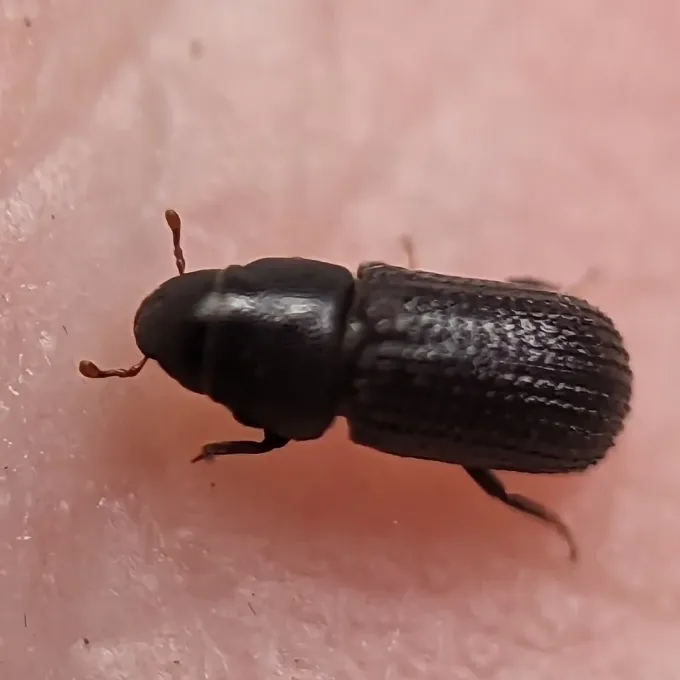
Stenoscelis hylastoides is a species of weevil (family Curculionidae) known for its specialized wood-boring behavior. These small beetles possess a cylindrical body shape adapted for navigating the galleries they excavate within trees.
Adult beetles exhibit a dark brown to black coloration, which serves as effective camouflage against the bark of host trees. Their surface features fine longitudinal grooves.
The larvae are typically legless, white to yellowish grubs with a well-developed, dark head capsule. They are biologically specialized to consume wood fibers and excavate tunnels deep into the timber.
Due to their cryptic lifestyle, these insects are rarely seen by foresters unless the bark is peeled back or the wood is specifically inspected for damage.
Precise identification often requires expert analysis of morphological features, specifically the structure of the rostrum and the punctuation patterns on the pronotum.
What it damages
This pest primarily targets weakened, stressed, or recently felled timber. It is rarely a primary pest of perfectly healthy, vigorous trees, preferring those with compromised health.
Adults and larvae bore into the cambium and the outer sapwood layers. By creating an intricate network of galleries, they disrupt the tree's vascular system, hindering the movement of water and nutrients.
Severe infestations lead to rapid tree decline, characterized by crown thinning and eventual tree mortality. This process is often accelerated by the presence of other secondary forest pests.
The economic impact is significant in forestry, as the galleries made by larvae degrade the technical quality of the wood, making it unsuitable for high-value timber products.
Mass infestations often occur in logging sites where slash or untreated log piles provide an abundant and accessible food source for the growing population.
When it appears
The adult beetle's active flight period typically commences in the spring, coinciding with rising temperatures that trigger the insects to emerge from their overwintering sites.
Females are responsible for initiating galleries in the bark, where they deposit their eggs. Larval development occurs throughout the summer months as they feed on the inner tissues of the host.
Winter is generally spent in the wood, either as mature adults or late-instar larvae, protected from harsh environmental conditions by the depth of their galleries.
New adults often emerge later in the season to undergo a period of maturation feeding before either reproducing or seeking shelter for the winter.
The number of generations per year is heavily dependent on regional climate, with warmer latitudes allowing for faster development cycles compared to cooler regions.
Signs of infestation
The most reliable indicator of an infestation is the presence of frass (boring dust), which consists of fine wood particles and excrement found near the base of trees.
Small, circular entry holes in the bark are visible evidence of the beetles' initial attack. These holes are often concentrated on the lower sections of the tree trunk.
Removing a portion of the bark reveals the complex patterns of galleries underneath, which are often packed tightly with wood debris and larval excrement.
A dying tree often shows canopy symptoms, such as chlorosis (yellowing of needles or leaves) and premature needle drop, as the infestation reaches a critical stage.
- Accumulated frass around the tree base.
- Small circular entry holes on the bark.
- Visible gallery networks in the sapwood.
- Discoloration and thinning of the tree crown.
- Localized bark detachment.
Control measures
Sanitation felling is the most effective management strategy; removing and destroying infested trees prevents the population from spreading to healthy parts of the stand.
Proper forest management includes the rapid removal of fresh timber from the site, ensuring that potential breeding material is not left in the forest during the beetle's flight season.
The use of trap trees can concentrate the local population of Stenoscelis hylastoides, allowing foresters to remove the beetles systematically before they disperse.
Promoting overall forest health through selective thinning and ensuring species diversity enhances the resilience of the stand against secondary pests like the Stenoscelis weevil.
While chemical treatments are occasionally used in high-value plantations, they should be applied cautiously, following environmental regulations to minimize ecological impact.
Taxonomy
- Latin name
- Stenoscelis hylastoides
- Order
- Coleoptera (beetles)
- Family
- Curculionidae
- EPPO code
- STEWHY
Discussion
No discussions yet — be the first.