
Cryptomeria weevil
Stenoscelis cryptomeriae
Description
How to identify
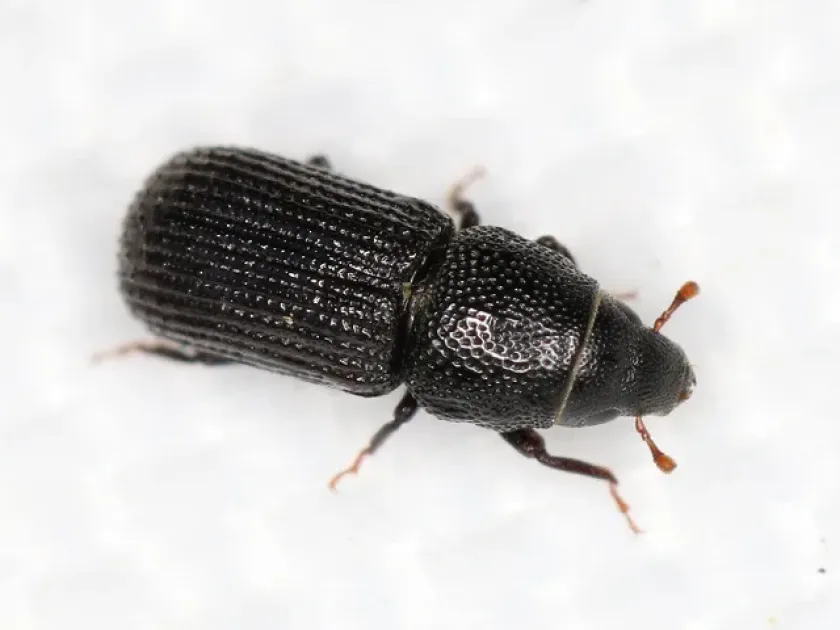
The Cryptomeria weevil (Stenoscelis cryptomeriae) is a member of the Curculionidae family, which belongs to the order Coleoptera. This beetle is a specialized wood-boring pest that targets conifer species.
Adult beetles possess a typical elongated snout and a hardened, dark-brown or black exoskeleton. They are well-adapted to survive within the protective layers of tree bark and wooden stems.
Larvae are legless, white, and fleshy, featuring a well-developed head capsule with strong mandibles designed for boring through plant tissue to feed on the inner layers of the trunk.
The complete life cycle, including the pupal stage, occurs hidden inside the host plant, making this insect a notoriously difficult pest to detect during the early phases of colonization.
They are particularly attracted to physiologically weakened conifers that lack the resin pressure necessary to expel the borers, often exploiting sites of previous mechanical damage.
What it damages
As the name implies, the primary host for this beetle is the Cryptomeria genus (Japanese cedar). However, it is known to infest other conifers when they are under stress.
The damage is caused by both adults and larvae feeding on the cambium and the sapwood layer, which significantly disrupts the tree's ability to transport water and essential nutrients.
When infestation is severe, the tree's vascular system becomes riddled with tunnels, causing a gradual decline in vigor that eventually leads to the death of the affected branches or the whole tree.
In nursery environments, the presence of the Cryptomeria weevil can result in major economic losses due to reduced plant quality and the high mortality rates of young conifer stock.
Infested trees often become prone to secondary infections by wood-decay fungi, as the boreholes and tunnels provide easy entry points for pathogens and opportunistic bacteria.
Signs of infestation
The most visible sign of an active infestation is the appearance of small, circular exit holes on the bark of the trunk or larger branches, left behind by emerging adults.
Accumulations of frass, which looks like fine sawdust or wood shavings mixed with insect excrement, are often found on the bark surface directly beneath the entry points.
Foliar symptoms include a gradual yellowing or browning of the needles, indicating that the tree is suffering from hydraulic failure caused by the damaged vascular system.
If the bark is carefully peeled away at suspected sites, one can observe distinct, labyrinthine tunnels etched into the wood, often packed with debris and the larvae themselves.
Stunted growth or the sudden death of specific branches (flagging) are common late-stage indicators that the beetle population has successfully established itself within the tree.
Control measures
Sanitation is the most effective approach; all heavily infested trees should be promptly identified, removed, and destroyed to prevent the maturation and dispersal of the next beetle generation.
Maintaining high horticultural standards is crucial, as healthy, well-hydrated, and correctly fertilized trees are much more capable of resisting colonization attempts by the weevils.
- Application of systemic insecticides during the peak activity period of the adult beetles.
- Trunk injections with specialized pesticides for high-value ornamental or historical trees.
- Monitoring with pheromone or bait traps to determine the timing and density of the pest population.
- Regular inspections of tree trunks for the presence of frass or visible boreholes, especially after periods of extreme weather.
Biological control through the use of entomopathogenic nematodes or fungi has shown potential as a supplementary strategy in integrated pest management programs.
Taxonomy
- Latin name
- Stenoscelis cryptomeriae
- Order
- Coleoptera (beetles)
- Family
- Curculionidae
- EPPO code
- STEWCR
Discussion
No discussions yet — be the first.