
Pear weevil
Stenocorynus subfasciatus
Description
How to identify
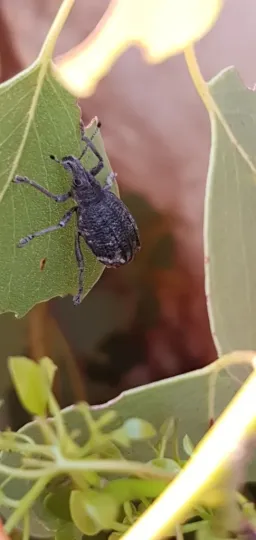
The pear weevil (Latin: Stenocorynus subfasciatus) is a member of the Rhynchitidae family within the order Coleoptera. This small beetle, measuring approximately 5–7 mm in length, is characterized by a prominent, elongated rostrum typical of the weevil family.
Its coloration ranges from dark bronze to a golden-green metallic luster. The body is covered with fine hairs, providing a degree of camouflage that makes them difficult to spot against the bark and foliage of fruit trees.
Larvae are legless, white-colored, and C-shaped with a distinct brownish head. They remain hidden throughout their developmental stage, protected within the plant tissues they inhabit.
Adults overwinter in the soil at depths of 10–15 cm or in bark crevices. As temperatures rise in early spring, they emerge to begin feeding on the developing buds and tender leaves.
The life cycle is closely synchronized with the phenology of host trees. Females lay eggs in leaf petioles or young fruit, creating specific conditions for the larvae to thrive.
What it damages
While the primary host is the pear tree, the beetle also infests apple, hawthorn, and other Rosaceae species. Adults feed on buds, young leaves, and developing fruitlets.
The most significant damage is caused by the larvae, which develop inside curled leaves or bored fruits. This causes premature dropping of fruitlets and general weakening of the host tree.
Mass infestations can result in severe yield loss, especially in young orchards. The fruit that survives becomes deformed, loses its commercial value, and is prone to secondary fungal infections.
Defoliation and damage to the shoots negatively impact the tree's photosynthetic capacity, which reduces the potential for fruit bud formation for the following growing season.
In highly favorable conditions, this pest can compromise 30-40% of the harvest if adequate protective measures are not implemented during the critical flowering and fruit-setting stages.
When it appears
Adults emerge from hibernation early in the spring, typically when pear buds begin to swell and air temperatures rise above +10°C. This period is the most important window for pest control.
The active feeding and egg-laying phase occurs from the time of blooming through the formation of young fruit. During these weeks, the beetles are most active in the tree canopy.
Larval development takes place inside plant tissues over several weeks. Once they complete their growth, the larvae descend to the soil to pupate during the mid-summer period.
New generation adults emerge later in the summer. They spend this time feeding before preparing for their winter dormancy, which begins as temperatures drop and foliage thins.
The species is univoltine, meaning it produces only one generation per year. Autumn migration into the soil marks the end of their above-ground activity until the following spring.
Signs of infestation
Early symptoms include small, irregular holes in the buds and young leaves. Close inspection of the canopy may reveal the presence of adult beetles, especially in the early morning.
A tell-tale sign of infestation is the appearance of curled or rolled leaves that eventually turn brown and wither while still attached to the branches.
Evidence of egg-laying or larval activity can be found in the form of small punctures on the skin of young fruitlets and their premature shedding from the tree.
- Premature fruit drop in late spring.
- Rolled, necrotic leaves scattered through the canopy.
- Visible bite marks on buds and young shoots.
- Adults falling from branches when disturbed, mimicking death.
Monitoring the tree canopy during the early morning hours provides the best opportunity to detect adults before they initiate large-scale egg-laying activities.
Control measures
Cultural control methods involve the regular removal and destruction of fallen leaves and infested fruit. This mechanical removal stops the larvae from reaching the soil for pupation.
In small-scale orchards, shaking the beetles off branches onto a tarp in the early morning is effective, as the insects are sluggish in cooler temperatures and easily collected.
Tilling the soil beneath the trees in autumn or early spring disrupts the hibernation sites and pupation chambers, which significantly lowers the overwintering population.
Chemical protection is most effective if applied during the budding and post-bloom stages. Systemic or contact insecticides labeled for fruit crops should be used according to local guidelines.
Rotating chemical classes is essential to manage resistance in the pest population. Furthermore, biological control agents, such as entomopathogenic fungi, can be integrated into the management strategy.
Taxonomy
- Latin name
- Stenocorynus subfasciatus
- Order
- Coleoptera (beetles)
- Family
- Curculionidae
- EPPO code
- STEYSU
Discussion
No discussions yet — be the first.