
Pear leaf weevil
Stenocorynus lateralis
Description
How to identify
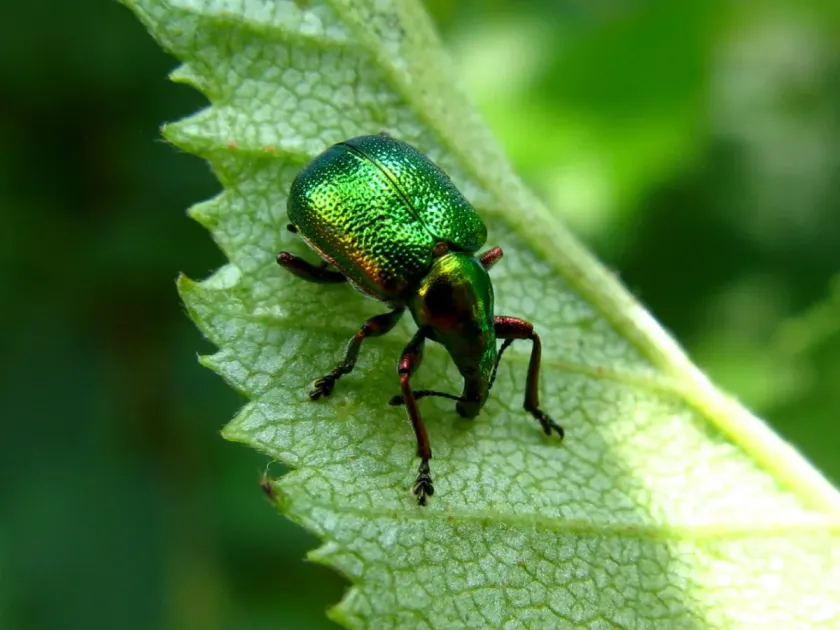
The pear leaf weevil (Stenocorynus lateralis) is a member of the Rhynchitidae family within the Coleoptera order. It is a small beetle, typically 4–6 mm long, characterized by a metallic blue or greenish sheen on its body.
A distinctive morphological feature is its elongated rostrum (snout), which is particularly prominent in females and is used to create leaf rolls. The beetle's body surface is finely punctured, giving it a subtle textured appearance.
Larvae are legless, slightly curved, and creamy-white in color with a dark, well-developed head. They are primarily found inside the leaf rolls created by the adult female, where they consume the plant tissue.
Adult beetles overwinter in the soil or under leaf litter in the orchard. As soon as the weather warms in spring, they emerge to feed on buds and young shoots, marking the start of the infestation cycle.
This pest is elusive and often hides by dropping to the ground when disturbed, making manual detection difficult without systematic checking of the tree canopy.
What it damages
The primary host for this beetle is the pear tree. However, when populations are high, they may also target other pomaceous fruits such as apples, quinces, and occasionally stone fruits, causing localized damage.
Damage is twofold: adults damage buds, blossoms, and young leaves, while larvae consume the interior of the rolled leaves. This feeding behavior hampers the plant's overall development and vigor.
Significant leaf damage reduces the plant's photosynthetic capacity, causing stunted growth and lower yield. In young orchards, the infestation can severely compromise the architectural development of the trees.
The leaf rolls eventually dry out and die, creating necrotic patches across the canopy. These patches make the tree look ragged and can become focal points for secondary fungal or bacterial infections.
Left unmanaged, high populations can cause premature leaf drop and weaken the tree to the point where it becomes susceptible to environmental stress and other pests.
Signs of infestation
The most obvious indicator of a pear leaf weevil infestation is the presence of cigar-shaped, rolled leaves on the tips of branches. These rolls are created by females as egg-laying sites.
Adult feeding causes small, irregular holes or notches on the surface of young leaves. If you inspect the leaves closely, these signs are usually present before the rolling stage becomes fully apparent.
Dried, brownish, and shriveled leaves clinging to the ends of shoots are a clear sign of past or active larval development. These "nests" are highly visible during the growing season.
In the spring, buds may fail to open or appear distorted due to adult feeding. This can lead to a reduction in the number of blossoms and subsequent fruit set.
Shaking tree branches over a white sheet during the early morning hours can reveal the presence of adult beetles, confirming the need for control measures.
Control measures
Cultural control is the first line of defense. This includes gathering and burning or composting fallen leaves to eliminate overwintering sites, as well as pruning infested leaf rolls before the larvae emerge.
Tilling the soil in the orchard's canopy zone during the late autumn disrupts the beetles' overwintering process, exposing them to predators and harsh winter conditions.
Manual collection of adults is feasible in smaller orchards. Shaking branches into a catch-net or sheet is most effective during cool early morning hours when the beetles are lethargic.
Chemical control with insecticides is recommended if monitoring shows a high pest density. Treatments are best timed before bloom or immediately after petal fall to target adults before they lay eggs.
- Use selective systemic insecticides to minimize harm to beneficial pollinators.
- Encourage natural predators such as ground beetles and insectivorous birds in the orchard.
- Regular monitoring and rapid removal of newly formed leaf rolls can prevent population explosions.
Taxonomy
- Latin name
- Stenocorynus lateralis
- Order
- Coleoptera (beetles)
- Family
- Curculionidae
- EPPO code
- STEYLA
Discussion
No discussions yet — be the first.