
Angel shark
Squatina
Description
How to identify
It is crucial to clarify that Squatina (the angel shark) refers strictly to a genus of cartilaginous fish from the order Squatiniformes, which inhabit marine environments.
In agronomy and phytopathology, this organism is not a plant pest, as these animals are strictly adapted to the seabed of oceans and seas.
Confusion in classification often arises from misinterpreting Latin nomenclature or incidental naming overlaps with specific insects or nematodes.
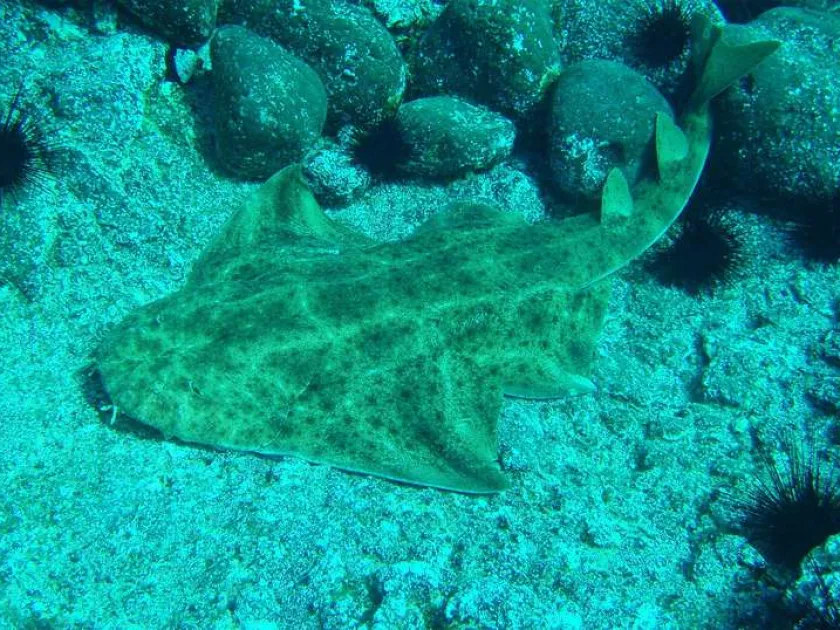
Biologically, these fish are characterized by a flattened body shape similar to rays, which distinguishes them from other fish species.
For an agronomist, it is essential to distinguish between taxonomical classifications to avoid erroneous attempts at controlling organisms that do not exist in agrocenoses.
What it damages
Since angel sharks are marine organisms, they are incapable of damaging crops, vegetables, or fruit trees in any agricultural setting.
These animals feed exclusively on small fish, crustaceans, and mollusks found on the seafloor.
There is no recorded instance of agricultural damage caused by this genus anywhere in the world.
Any link to agriculture is indirect, primarily involving the potential use of marine-derived fertilizers that might contain processed fish components.
Damage to plants by this biological object is entirely impossible due to the total ecological isolation of their marine habitat.
Taxonomy
- Latin name
- Squatina
- Family
- Squatinidae
- EPPO code
- SQUTSP
Discussion
No discussions yet — be the first.