
Squamura quadrinotata
Squamura quadrinotata
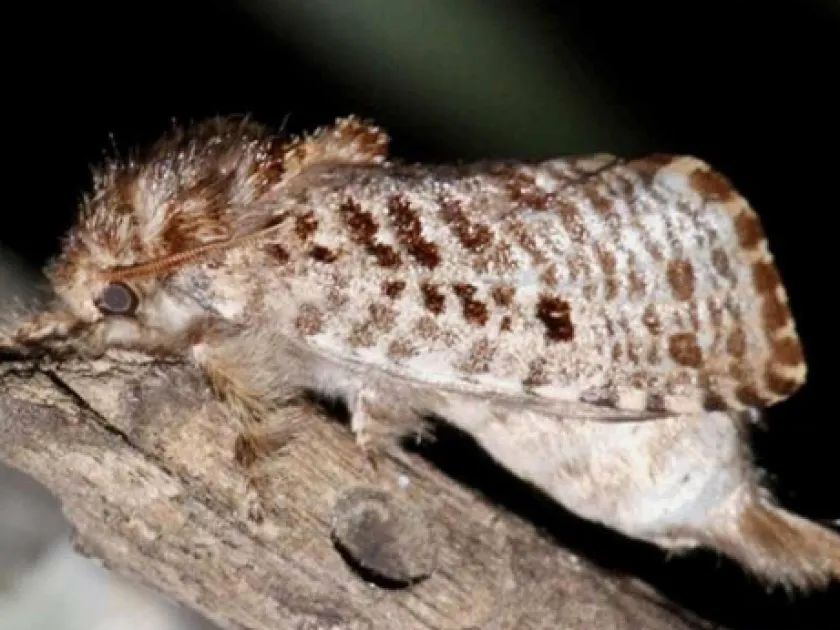
Description
How to identify
Squamura quadrinotata belongs to the Cossidae family, a group of moths commonly known as carpenter moths. These insects are well-known for their wood-boring larval stage.
The adult moth is characterized by specific markings on its forewings, featuring four distinct spots that serve as a diagnostic feature for the species.
These moths are nocturnal and possess cryptic coloration, allowing them to remain camouflaged on tree bark during the daylight hours when they are resting.
The life cycle involves the female laying eggs in crevices on the bark, after which the larvae bore into the tree to begin their development.
Larvae are robust, wood-boring insects with well-developed mandibles, enabling them to tunnel through dense wood layers efficiently.
What it damages
The pest primarily affects deciduous trees, including many orchard species such as apple, pear, and various stone fruits, causing severe internal damage.
Larval tunneling disrupts the vascular system of the tree, specifically the phloem and xylem, which interferes with the transport of water and nutrients.
Trees infested with these larvae often show signs of stunted growth, reduced foliage density, and a significant decline in fruit yield over time.
The tunnels created by the larvae serve as entry points for secondary pathogens like fungi and bacteria, which often cause rot and wood decay.
If the infestation is left unmanaged, the cumulative damage can lead to the death of major branches or the entire tree within a relatively short period.
Signs of infestation
The most visible sign of an infestation is the presence of frass, a powdery waste material consisting of wood shavings and larval excrement, near the tree base.
Dark, discolored sap or gumming on the trunk often indicates areas where the larvae have penetrated the bark or are currently feeding.
Small, round entry holes on the bark surface are clear indicators of larval activity, sometimes accompanied by silk webbing around the opening.
A decline in the overall health of the crown, including premature leaf yellowing and the death of individual terminal branches, suggests internal damage.
During the flight season, moths may be found resting on the trunk, providing a visual cue for targeted monitoring and pest management interventions.
Control measures
The primary control method involves pruning and destroying heavily infested branches to reduce the pest population density within the orchard.
Systemic insecticides can be injected into the larval tunnels, followed by sealing the entrance with grafting wax or putty to ensure maximum efficacy.
Maintaining tree vigor through proper fertilization and watering helps trees develop natural defenses against wood-boring insects.
Pheromone traps are highly effective for monitoring adult moth emergence, allowing for timely applications of contact insecticides during the egg-laying stage.
- Regular inspection of bark for frass accumulation.
- Prompt sealing of mechanical injuries to prevent pest attraction.
- Encouraging natural predators of the moth in the garden.
Taxonomy
- Latin name
- Squamura quadrinotata
- Order
- Lepidoptera (butterflies)
- Family
- Metarbelidae
- EPPO code
- SQUAQU
Discussion
No discussions yet — be the first.