
Tuatara
Sphenodon punctatus
Description
How to identify
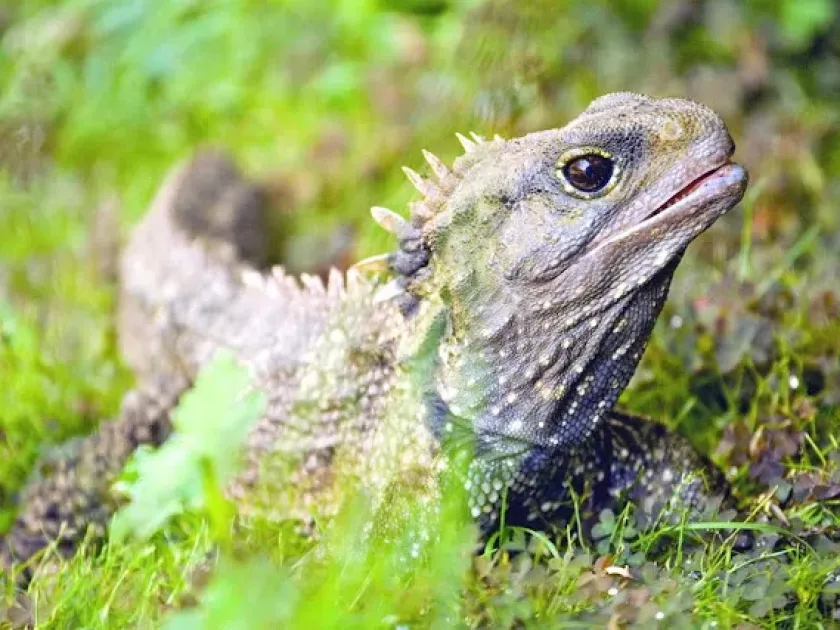
The Tuatara, scientifically known as Sphenodon punctatus, is a unique reptile belonging to the order Rhynchocephalia and the family Sphenodontidae.
It is the only surviving member of its order, often referred to as a living fossil, characterized by its spiny crest along the back and a primitive skeletal structure.
These reptiles are endemic to New Zealand and are strictly protected under national and international laws due to their rarity and scientific importance.
Biologically, the tuatara is a slow-growing, nocturnal creature that thrives in cool, humid environments, which is far from the typical habitat of agricultural pests.
They exhibit a very low metabolic rate and a long lifespan, reaching maturity only after many years, which prevents them from ever becoming an invasive population.
What it damages
In agronomy, the tuatara is not categorized as a pest because it does not feed on any agricultural plants, crops, fruits, or stored grains.
As an insectivore, its diet consists primarily of beetles, spiders, crickets, and other invertebrates found within its natural forest habitat.
There is zero documented evidence of Sphenodon punctatus causing any damage to farms, greenhouses, or food production systems globally.
They pose no threat to agricultural productivity, and their ecological role is confined to functioning as a predator of insects within untouched ecosystems.
Therefore, they do not require any monitoring or management efforts from an agricultural or economic standpoint.
Control measures
Since the tuatara is not a pest, there are no control, extermination, or management protocols in place, and such actions would be illegal.
Conservation efforts are entirely focused on protecting their habitats from invasive mammalian predators like rats, which are the real threat to the species.
For agricultural land located near or bordering conservation areas, sustainable practices that minimize chemical drift are encouraged to preserve local biodiversity.
Farmers operating in regions where protected species may exist should strictly adhere to regional ecological zoning and conservation guidelines.
The protection of such endangered species reflects the integration of sustainable land management and environmental stewardship within the agricultural sector.
Taxonomy
- Latin name
- Sphenodon punctatus
- Family
- Sphenodontidae
- EPPO code
- SQHNPU
Discussion
No discussions yet — be the first.