
Tuatara
Sphenodon
Description
How to identify
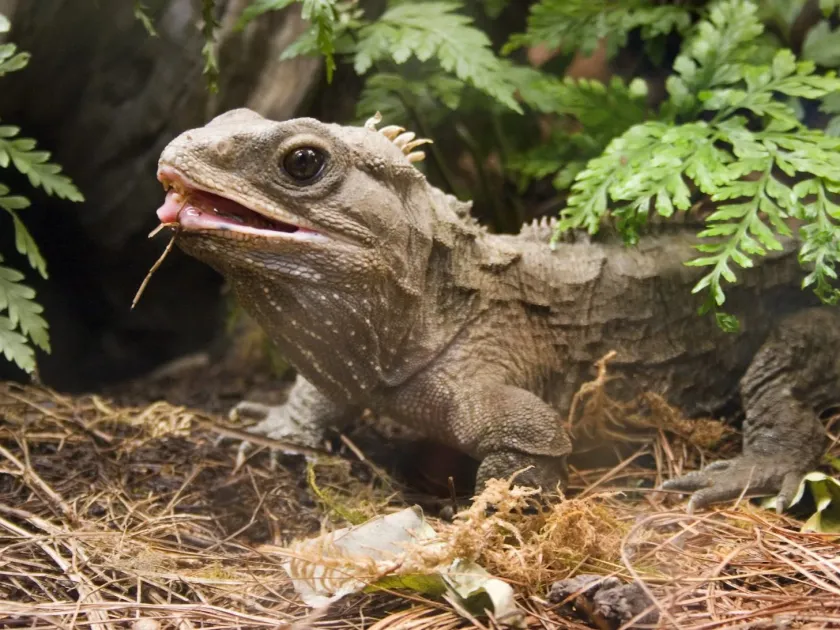
The tuatara (Sphenodon punctatus) is a unique reptile that stands alone in its taxonomic order, Rhynchocephalia, representing a lineage that dates back to the Triassic.
Morphologically, it resembles a lizard, featuring a spiny crest along the back, a heavy body, and the ability to reach lengths of up to 80 centimeters.
It possesses a distinct parietal eye, also known as a third eye, located on the top of its head, which is covered by scales in adult specimens.
The species is endemic to New Zealand and is renowned for its slow metabolic rate and nocturnal hunting behavior in cool environments.
Given its evolutionary importance, the tuatara is considered a living fossil and serves as an icon of New Zealand's unique biological heritage.
What it damages
The tuatara is not a pest to any agricultural crops, horticultural plants, or forestry resources.
Its diet consists strictly of invertebrate prey such as beetles, crickets, spiders, and occasionally small seabirds or their eggs found in coastal habitats.
Because it is an insectivorous predator, it does not feed on vegetation, cause root damage, or impact the quality of plant yields.
There is absolutely no record of the tuatara causing economic damage to farmers, orchard owners, or commercial gardeners.
In fact, the presence of the tuatara is indicative of a balanced ecosystem rather than a risk to cultivated lands.
When it appears
The activity patterns of the tuatara are heavily influenced by ambient temperature, as they are ectothermic animals with very specific thermal requirements.
They are most active during the warmer months, although they remain functional at significantly lower temperatures than most other reptiles.
Their reproduction cycle is exceptionally slow, with females laying a clutch of eggs only once every four years on average.
Incubation time is remarkably long, taking between 12 and 15 months for the embryos to fully develop and hatch from their shells.
During the cooler winter period, tuataras significantly reduce their activity, often remaining inactive in their burrows to conserve energy.
Control measures
As the tuatara is a protected species under New Zealand law, no control measures are permitted, as they are entirely unnecessary for agriculture.
The species faces severe threats from invasive predators like rats, and conservation efforts are focused on protecting the tuatara from these intruders.
Farmers and land managers in areas where tuataras may be present should respect the legal protections surrounding these rare animals.
There are no known pesticides, mechanical traps, or deterrents meant for this species, as they are not pests and represent no threat to human activities.
If you encounter a tuatara, it should be left undisturbed, and local wildlife authorities should be contacted if there is any risk to its safety.
Taxonomy
- Latin name
- Sphenodon
- Family
- Sphenodontidae
- EPPO code
- SQHNSP
Discussion
No discussions yet — be the first.