
African penguin
Spheniscus
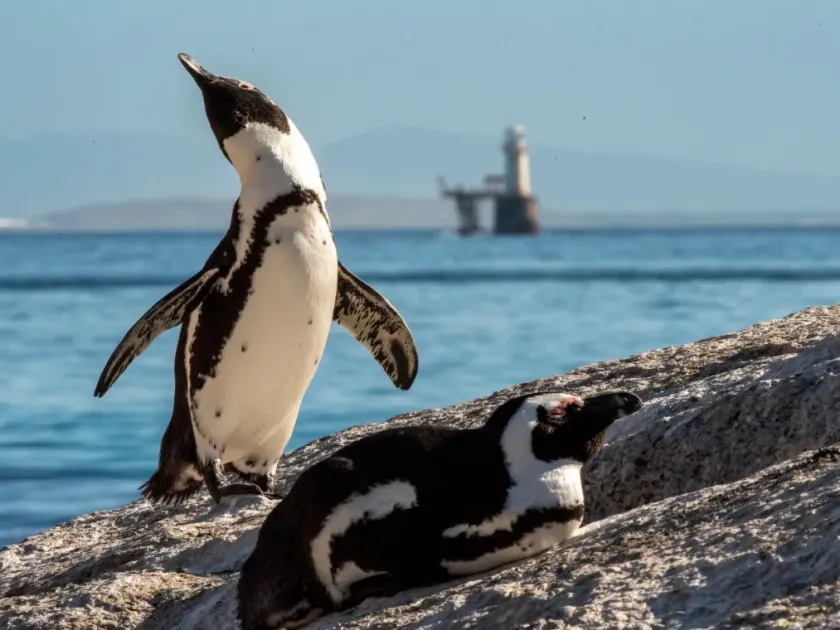
Description
How to identify
The African penguin, known scientifically as Spheniscus demersus, is a marine bird belonging to the Sphenisciformes order and Spheniscidae family. Its appearance within an agroecosystem is considered a biological anomaly.
Visually, the individual is easily identified by the characteristic black ring around the eyes and high-contrast black-and-white plumage. Adult birds reach 60–70 centimeters in height, making them highly visible on open terrain.
This species is not a pest in the traditional agronomic sense, as it does not consume crops. However, their colonial social behavior can pose a threat to the integrity of agricultural infrastructure and installations.
The biology of the species involves high sociability and a strong attachment to specific nesting sites. The disturbance of natural habitats can lead birds to wander onto coastal agricultural fields.
The lifecycle of the penguin is inextricably linked to the marine environment, and their presence on farmland is usually a result of ecological imbalance or a search for new nesting locations.
What it damages
African penguins are not phytophagous and do not cause direct damage to agricultural crops through the consumption of leaves or fruit. They do not damage root systems or plant stems.
The primary damage consists of mechanical trampling of young seedlings and seedbeds as the colony moves through the field. Heavy birds leave deep indentations, compacting the soil and disrupting its structure.
The presence of the colony is accompanied by significant amounts of guano, which alters the chemical composition of the soil. The excess nitrogen and phosphorus in their excrement can lead to localized chemical burns on plants.
They can damage drip irrigation systems and lightweight protective materials like plastic films or agro-textiles, which are perceived by the birds as obstacles or temporary shelters.
The harm caused is largely anthropogenic: the presence of a colony makes mechanical soil cultivation impossible due to the risk of destroying eggs and nests.
When it appears
The species' activity is mainly evident during the breeding season, which is prolonged but most intense during spring and summer months. During this period, colonies may occupy coastal land areas.
The migratory activity of the birds often coincides with the start of field work, which triggers conflicts between agricultural interests and the necessity of wildlife conservation.
Signs of infestation
Primary signs of appearance include the presence of specific paths trampled into the soil and large amounts of guano covering the ground surface.
The emergence of characteristic nesting pits in the soil is common, which destroys vegetation over areas up to half a meter in diameter. Visible damage to irrigation components is also a frequent indicator.
Control measures
Given that the African penguin is a protected species in many regions, control methods must be strictly humane and preventative in nature.
It is recommended to utilize visual and acoustic deterrents that do not cause physical harm to the animals. The use of aggressive pesticides must be avoided entirely.
To prevent access to agricultural plots, it is advisable to install protective mesh fencing up to 80 centimeters high, which effectively discourages birds from entering crop areas.
The most effective method is the preservation of natural habitats along the coastline, which keeps colonies at a distance from agricultural land.
- Installation of reflective tapes.
- Use of acoustic cannons with recorded alarm signals.
- Establishing buffer zones between the sea and crop fields.
Taxonomy
- Latin name
- Spheniscus
- Family
- Spheniscidae
- EPPO code
- ZPHNSP
Discussion
No discussions yet — be the first.