
Sparganothis pettitana
Sparganothis pettitana
Description
How to identify
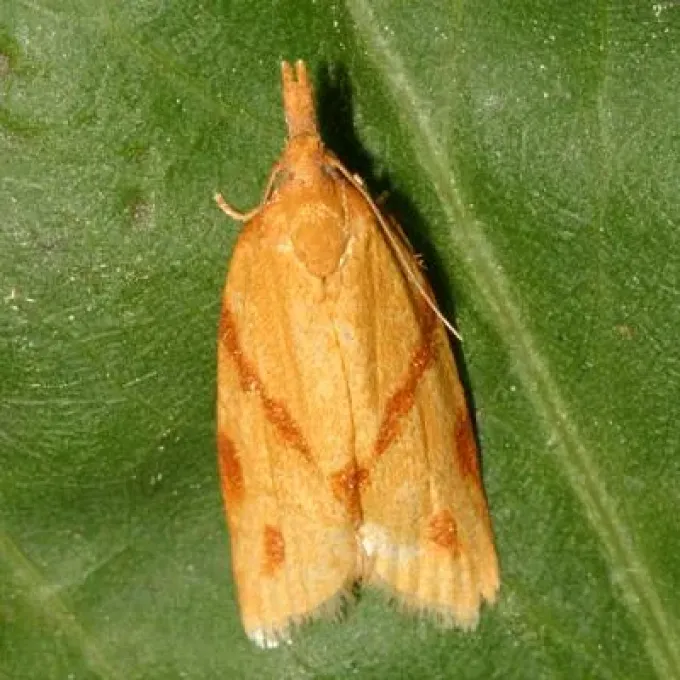
Sparganothis pettitana is a species of moth in the family Tortricidae. These moths are relatively small, with a wingspan typically ranging between 20 and 25 mm.
The adult moths exhibit forewings that are yellowish to ochre-brown in color, often adorned with a distinct dark reticulated or banded pattern.
The larvae, or caterpillars, go through several instars. They are known for being very active and will quickly drop from leaves or wiggle vigorously when disturbed.
Pupae are usually enclosed within leaves that have been rolled or tied together with silk, making them difficult to spot without close inspection.
Proper identification often requires examining the wing pattern of the adults or studying the larval habits on specific host plants during the growing season.
What it damages
The primary hosts for this species are various hardwood trees, with maples (Acer species) being the most commonly affected plants.
Other host species include basswood (Tilia), oak (Quercus), and ash (Fraxinus), where larvae feed on the leaf tissue, causing visible damage.
Larvae consume the leaf lamina, often leaving behind the tougher veins, which is referred to as skeletonization of the foliage.
Heavy infestations can lead to significant canopy thinning, reduced growth rates, and weakened trees due to premature leaf loss.
In nurseries, this pest can cause severe aesthetic and physiological damage, rendering saplings unsuitable for sale or long-term growth.
When it appears
Adult moths typically emerge during mid-summer, when environmental conditions are optimal for mating and laying eggs on the host trees.
The lifecycle is generally univoltine in cooler climates, meaning there is one generation per year, although development timing can shift with weather.
Overwintering occurs in the larval stage. Small caterpillars construct silk-lined hibernacula in crevices of the bark or among leaf litter.
As spring temperatures rise, the overwintered larvae emerge to feed on budding leaves, completing their development before pupation in early summer.
The transition from larva to adult is synchronized with the flush of new growth on host trees, ensuring a steady food supply for the developing larvae.
Signs of infestation
The most diagnostic sign of Sparganothis pettitana is the presence of leaves that are rolled, tied, or folded and secured with silk threads.
Upon opening these leaf rolls, one can often find the larva itself or dark, granular frass, which is a clear indicator of active feeding.
Visible defoliation in the canopy, where leaves appear ragged or skeletonized, is another major sign of a developing pest population.
Accumulation of silk webbing on branches and foliage gives the affected sections of the tree a cluttered and damaged appearance.
- Leaves rolled or folded with silk.
- Skeletonized leaf patches.
- Frass deposits inside leaf rolls.
- Excessive silk webbing in the canopy.
Control measures
Biological control, such as encouraging natural predators like parasitic wasps and birds, is an effective way to manage populations in larger areas.
In smaller landscapes, manual removal and destruction of infested leaf rolls can significantly lower the local population of the pest.
Chemical control using insecticides may be necessary during severe outbreaks, specifically timed to the larval emergence period in the spring.
Maintaining tree vigor through proper watering and fertilization helps trees better withstand the stress caused by leafroller feeding.
Using pheromone traps is a recommended strategy to monitor adult flight periods and to determine the precise timing for targeted management actions.
Taxonomy
- Latin name
- Sparganothis pettitana
- Order
- Lepidoptera (butterflies)
- Family
- Tortricidae
- EPPO code
- SPARPE
Discussion
No discussions yet — be the first.