
Sparganothis directana
Sparganothis directana
Description
How to identify
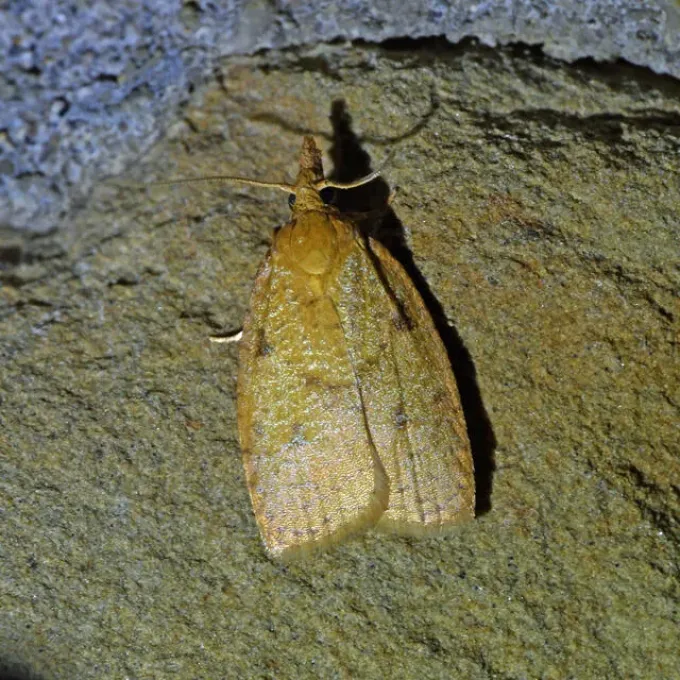
Sparganothis directana is a species of moth belonging to the Tortricidae family. Adult moths typically have a wingspan ranging from 20 to 25 mm, with ochre-yellow to brown forewings featuring a distinct reticulated or netted pattern.
The larvae progress through several instars, changing in body color from light green to a darker shade with a well-defined, darker head capsule as they mature.
Identification is often difficult due to the larvae's cryptic behavior, as they prefer to hide within rolled or webbed leaves to avoid predators and environmental stress.
The eggs are typically laid in clusters on the upper leaf surface, covered with a protective fluid that dries into a flat, shiny scale-like mass, camouflaging them against the leaf surface.
This species is well-adapted to habitats like bogs and commercial berry plantations, where the environment provides consistent food resources and shelter.
What it damages
The primary hosts for Sparganothis directana are plants in the Ericaceae family, with American cranberry (Vaccinium macrocarpon) being the most susceptible crop.
Larvae feed on leaves, flower buds, and young shoots, which significantly stunts plant growth and reduces the overall photosynthetic capacity of the canopy.
In cases of high infestation, the larvae consume developing berries and blossoms, causing direct economic loss by reducing both yield volume and fruit quality.
The characteristic feeding damage involves webbing leaves together, creating a sheltered nest, which protects the larvae from contact insecticides.
Failure to control the initial population can lead to rapid spread across a plantation, resulting in significant defoliation and weakened plant health.
When it appears
Adult moths are typically active during mid-summer, which is the primary window for mating and oviposition on the foliage of host plants.
The resulting larvae feed actively throughout the summer months, building up energy reserves necessary for successful overwintering.
Overwintering occurs at the larval stage, with the insects creating small, dense silken hibernacula within leaf litter or sheltered spots on the plant stems.
In spring, as temperatures rise, the larvae break dormancy and resume feeding on the emerging buds and tender spring foliage.
A clear understanding of the seasonal timeline is essential for growers to time their monitoring and control measures for maximum efficiency.
Signs of infestation
The most common early sign of an infestation is the presence of tightly rolled or webbed leaves at the tips of the growing shoots.
Accumulation of larval frass (waste material) inside the silken nests confirms that the pest is actively feeding and establishing a colony.
Gradual drying and browning of the terminal buds or distorted shoot tips are clear indicators of significant feeding pressure on the plants.
- Silken webbing between leaves or plant parts.
- Irregular feeding holes or notches on the edges of leaves.
- Deformed buds and damage to the berry clusters.
- Discoloration of plant tissues near the infestation site.
Light trap monitoring for adult moths in the evenings serves as an excellent early warning system for the start of the summer flight period.
Control measures
Integrated Pest Management (IPM) is the most effective approach for controlling Sparganothis directana, focusing on minimizing chemical usage.
Biological control using Bacillus thuringiensis (Bt) based products is highly effective against young larvae while preserving beneficial insect populations.
Selective chemical insecticides may be used when necessary, though applications must be scheduled outside of bloom periods to avoid harming pollinators.
Cultural practices, such as removing weeds around the edges of the fields, help eliminate alternative hosts and reduce overall pest pressure.
Consistent use of pheromone traps allows growers to detect population spikes, enabling targeted and timely interventions to protect the crop.
Taxonomy
- Latin name
- Sparganothis directana
- Order
- Lepidoptera (butterflies)
- Family
- Tortricidae
- EPPO code
- SPARDI
Discussion
No discussions yet — be the first.