
Solpuga brunnipes
Solpuga brunnipes
Description
How to identify
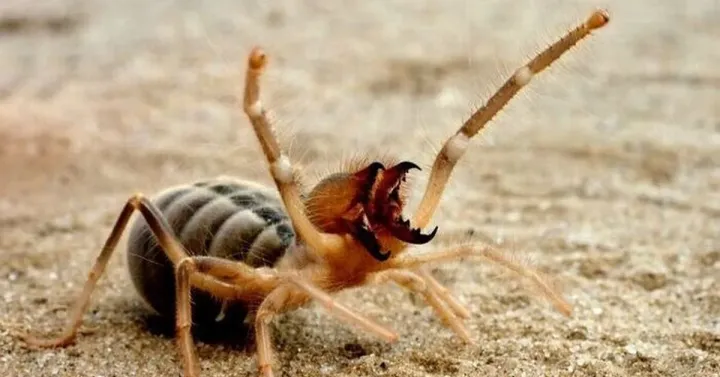
Solpuga brunnipes is a significant member of the Solifugae order, often referred to as camel spiders or sun spiders. These arachnids are characterized by their massive chelicerae, which look like claws and are used for grasping prey and digging.
Anatomically, they possess a distinct cephalothorax and a segmented abdomen, covered in fine sensory hairs. Their coloration ranges from tan to deep brown, providing excellent camouflage in arid, sandy soil environments.
The species is primarily nocturnal, spending daylight hours in deep burrows or beneath debris to avoid desiccation. This behavioral trait makes them difficult to monitor during standard daytime inspections.
Their life cycle involves multiple molts without a true pupal stage, meaning the juveniles resemble smaller versions of the adults, facilitating rapid colonization of suitable soil habitats.
Identification in the field is usually based on their rapid, erratic movement across the soil surface during the night, as well as the presence of deep, circular entrance holes to their burrows.
What it damages
While Solpuga brunnipes is predominantly a beneficial predator that feeds on insects like locusts, it can cause indirect agricultural damage through its digging activities. Burrowing into the root zone can disrupt plant stability.
Seedlings and young crops are particularly susceptible, as the mechanical damage to roots and the rhizosphere can cause immediate stunting or death of the affected plant.
Root system disruption creates entry points for soil-borne pathogens, including bacteria and fungi, which can subsequently cause secondary rot infections in the root tissues.
The damage is most pronounced in loose, sandy-loam soils where the species finds it easiest to construct its tunnels. Denser clay soils are generally less affected due to the difficulty of digging.
Economic damage is usually localized and rarely warrants large-scale chemical intervention, as the benefits of controlling other harmful insects often outweigh the minor mechanical damage caused by these arachnids.
When it appears
The seasonal appearance of Solpuga brunnipes is strongly correlated with temperature. Activity levels rise significantly as the soil temperature increases throughout the late spring and summer months.
Mid-summer represents the peak of their life cycle, coinciding with mating periods and the development of the next generation, leading to an increased number of individuals on the soil surface at night.
As autumn approaches and temperatures drop, their metabolic activity slows down. The spiders retreat deeper into the soil profile to hibernate or enter a state of dormancy to survive the winter months.
Early spring activity is generally low, as the moisture levels in the soil are often too high for their preference, and the soil temperature is insufficient to trigger active foraging.
Farmers are advised to conduct night observations during the summer solstice period to accurately assess the population density if significant crop damage is suspected.
Control measures
Management strategies for Solpuga brunnipes focus on cultural practices rather than pesticides, as chemical control can disrupt the natural balance of beneficial entomophagous populations.
Deep tillage and mechanical soil cultivation are the most effective methods to disturb their subterranean galleries, forcing the population to migrate away from the cultivated fields.
Maintaining a weed-free field prevents the formation of shaded microclimates and moist areas that attract these arachnids during the hot daytime hours, effectively making the environment less hospitable.
If high infestation occurs in greenhouses or small-scale intensive crop areas, physical barriers can be utilized to prevent the spiders from entering the immediate root zone of delicate plants.
Sustainable agricultural practices that promote soil health and discourage excessive moisture accumulation are key to minimizing the negative impacts of Solpuga brunnipes on production.
Taxonomy
- Latin name
- Solpuga brunnipes
- Family
- Solpugidae
- EPPO code
- SOLPBR
Discussion
No discussions yet — be the first.