
Hispaniolan solenodon
Solenodon paradoxus
Description
How to identify
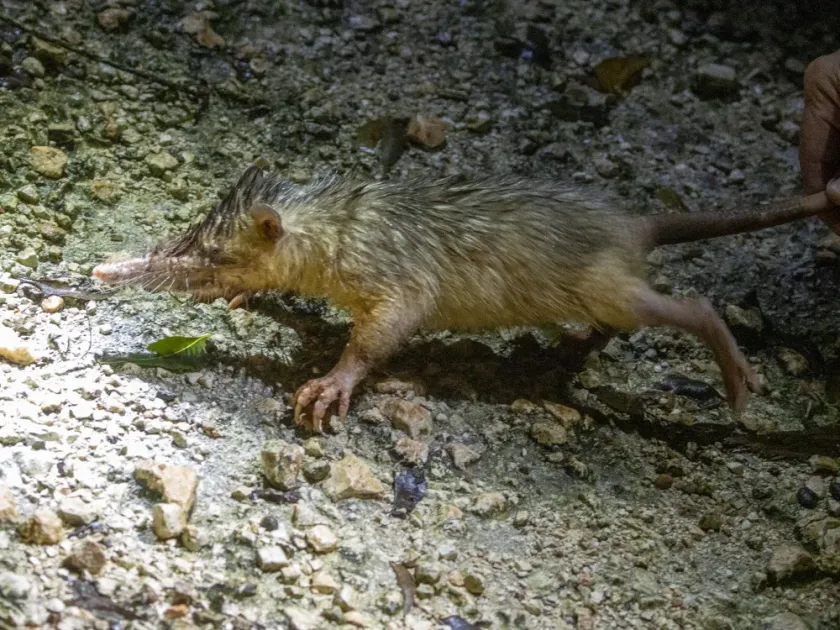
The Hispaniolan solenodon is a rare, shrew-like mammal that belongs to the order Eulipotyphla. It is one of the few venomous mammals in the world, equipped with toxic saliva for subduing its prey.
The animal possesses a long, flexible snout, a scaly tail, and very strong claws on its forelimbs. It has a robust, brownish-black body and reaches a length of about 30 cm.
It is endemic to the island of Hispaniola (Haiti and the Dominican Republic). The species is highly specialized for a subterranean lifestyle, often living in tunnels and natural rock crevices.
Solenodons are primarily nocturnal, relying on their keen sense of smell and hearing to locate food in the dark, as their vision is poorly developed.
Due to its rarity and status as an endangered species, it is rarely encountered in modern agricultural settings, preferring undisturbed tropical habitats.
What it damages
The Hispaniolan solenodon is not considered a crop pest. It is strictly an insectivore, consuming a diet of soil-dwelling invertebrates such as larvae, beetles, and worms.
The only negative interaction with agricultural activities is the physical disturbance of the topsoil caused by its digging behavior while searching for prey.
In rare instances, tunneling activity can disturb the root zones of small vegetable plants or seedlings, causing minor dehydration of the root system.
However, the solenodon can also be considered beneficial, as it actively consumes many soil-based insect pests that cause significant damage to agricultural crops.
The economic impact is negligible. There is no evidence of this animal consuming agricultural crops or fruit, making it harmless to the harvest itself.
When it appears
The species does not follow seasonal migration or hibernation patterns. Its activity levels remain relatively stable throughout the tropical year.
Solenodons tend to be more active during the wet season, as the moist soil is easier to dig and contains a higher density of prey organisms.
Reproductive cycles are not linked to the agricultural calendar. The presence of the animal in the vicinity of farms remains consistent over time.
High temperatures during the dry season may limit the animal's surface activity, pushing it to stay in deeper, cooler underground burrows to maintain body moisture.
Overall, seasonal changes in the vegetation growth have no direct impact on the solenodon's life cycle or feeding habits.
Signs of infestation
Signs of presence include characteristic surface soil disturbances, often manifested as narrow, shallow furrows created by the animal while foraging.
Disturbed soil around roots and fresh mounds of earth at burrow entrances are typical indicators of a burrowing mammal’s activities in the area.
A distinct, musky odor, sometimes described as goat-like, may be noticeable near wooded areas or field boundaries where the animal has recently passed.
The presence of chitinous remains (the shells of beetles or other insects) near a potential den site is a strong indication of a solenodon's feeding site.
Due to the extremely low population density of this animal, identifying these signs in an active farm environment is statistically very rare.
Control measures
As the Hispaniolan solenodon is a protected and endangered species, all lethal control methods are strictly prohibited and illegal under environmental laws.
For gardeners looking to protect sensitive roots from mechanical damage, physical barriers such as underground metal mesh fences are highly effective.
Managing soil quality by using non-invasive pest control for insects can naturally decrease the solenodon's motivation to forage in specific agricultural plots.
The use of non-toxic repellents, such as concentrated vinegar or essential oil-based sprays, can discourage the animal from digging near delicate plants.
The most recommended approach is coexistence, acknowledging the importance of the solenodon to the local island ecosystem and biodiversity.
Taxonomy
- Latin name
- Solenodon paradoxus
- Family
- Solenodontidae
- EPPO code
- SLNOPA
Discussion
No discussions yet — be the first.