
Golden springtail
Sminthurinus aureus
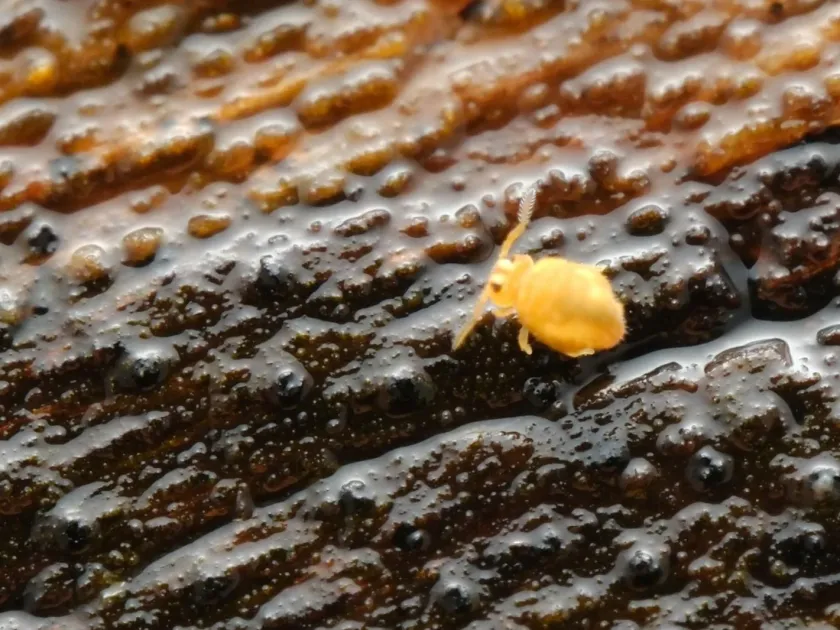
Description
How to identify
The golden springtail (Sminthurinus aureus) belongs to the Sminthuridae family within the Collembola order. They are tiny arthropods, typically measuring between 1 and 1.5 mm in length.
These insects have a globular, compact body shape and are often colored in shades of yellow, gold, or green, which characterizes their specific common name.
A distinctive feature is the presence of a furcula, a spring-like appendage under the abdomen that allows them to perform rapid and sudden jumps when disturbed.
Their life cycle involves incomplete metamorphosis. They prefer cool, humid microclimates and are frequently found on the undersides of leaves or within damp soil.
Populations can expand rapidly under conditions of excessive moisture and poor drainage, making them a common issue in indoor plant setups and greenhouses.
What it damages
The golden springtail primarily feeds on the tissues of young leaves, seedlings, and cotyledons. They are known to affect both vegetable crops and ornamental plants.
They pose a significant risk to the seedlings of cucumbers, tomatoes, and various leafy greens, often causing extensive damage to early-stage growth.
Both adults and nymphs scrape away the leaf epidermis, which disrupts photosynthesis and significantly weakens the host plant's general health.
Open wounds on the leaf surface frequently serve as entry points for various fungal pathogens, further complicating the recovery of the affected plant.
Under heavy infestations, these springtails can hollow out seedlings, leading to stunted growth, deformity, and a complete loss of crop marketability.
When it appears
Springtail activity is closely tied to humidity levels and ambient temperatures, with peaks occurring throughout the spring and early summer seasons.
In greenhouse or indoor environments, the golden springtail can reproduce throughout the year, provided that moisture levels remain consistently high.
Periods of prolonged rain or over-irrigation create the ideal environment for their population growth, especially when paired with mild, moderate temperatures.
Optimal development occurs at temperatures ranging between +15°C and +22°C, which encourages active feeding and oviposition in the upper soil layers.
In open-field agricultural settings, the highest densities are typically recorded during May and June, coinciding with the most vulnerable seedling stage.
Signs of infestation
One of the primary indicators of a springtail infestation is the appearance of small, pin-prick holes or transparent "windows" on the leaf surface.
When inspecting the underside of leaves, one may observe numerous tiny, light-colored or golden specks that suddenly jump when disturbed or exposed to air currents.
Unexplained wilting of seedlings, despite adequate soil moisture, often points to the activity of springtails feeding on root hairs or the lower stem.
A moving, dusty-looking film on the surface of damp potting soil is a strong visual sign of a large springtail population colony.
Affected foliage eventually turns brown and brittle at the points of damage, causing the leaves to curl and the stem structure to weaken over time.
Control measures
The most effective strategy for managing golden springtail is strict water management; ensure proper drainage and allow the soil surface to dry between waterings.
Regular cultivation and loosening of the topsoil layer are highly recommended to desiccate the soil surface, which prevents the survival of eggs and nymphs.
If infestations become severe, apply specialized insecticides approved for the specific crop, focusing on treatments that target soil-dwelling pests.
- Increase air circulation in greenhouses to lower ambient relative humidity.
- Remove all plant debris and weeds, which provide shelter and food for the pests.
- Always use high-quality, pasteurized potting mixes to start new seedlings.
Biological controls, such as beneficial nematodes, can also be utilized as a safer, eco-friendly alternative to chemical pesticides in sensitive growing environments.
Taxonomy
- Latin name
- Sminthurinus aureus
- Family
- Katiannidae
- EPPO code
- SMNNAU
Discussion
No discussions yet — be the first.