
Sminthurinus
Sminthurinus
Description
How to identify
Sminthurinus is a genus of springtails belonging to the order Symphypleona (formerly often grouped under Poduromorpha) and the family Sminthuridae. They are tiny arthropods known for their ability to jump using a specialized organ called a furcula.
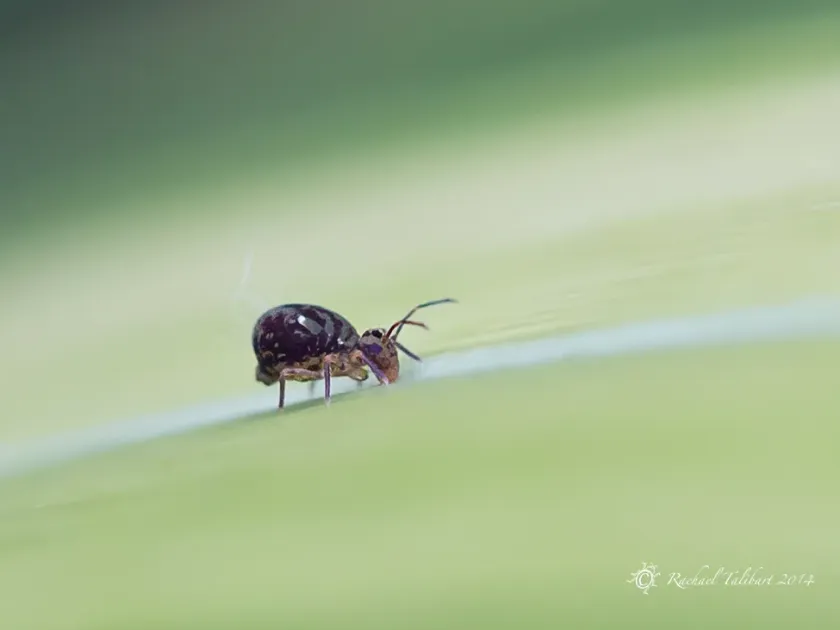
Adults typically have a globular or rounded body shape, measuring between 1 and 2 mm in length. Their coloration varies widely, often appearing dark or yellow depending on the species and environmental factors.
Unlike more elongated soil-dwelling springtails, Sminthurinus has a distinct, compact body structure that makes them easily recognizable under a hand lens.
Their life cycle involves direct development, meaning they do not undergo a pupal stage. This allows them to reproduce rapidly under favorable humidity conditions.
They are strictly humidity-dependent and thrive in organic-rich soils or moist substrates, which makes them common inhabitants of greenhouse environments.
What it damages
Sminthurinus can be a significant pest for young seedlings of various vegetable, ornamental, and flowering plants, especially in nursery settings.
The damage is caused by both larvae and adults feeding on the delicate tissues of cotyledons and young leaves. They scrape the epidermis, creating tiny holes or pitted areas.
When populations are high, they can cause extensive damage to the growth point, leading to stunted plants or the complete failure of the seedlings.
The feeding wounds left by the insects are susceptible to secondary fungal infections, which often exacerbate the physical damage caused by the insects themselves.
Because they are particularly attracted to tender tissues, their impact is most severe immediately after germination and during the early establishment phase of the crop.
When it appears
Their activity is highly correlated with high humidity levels, making them most prevalent during rainy seasons or in poorly ventilated greenhouse structures.
In managed agricultural environments, they can remain active year-round as long as moisture is abundant and the temperature is mild.
The peak infestation period typically occurs during the spring, when the combination of warming temperatures and moist soil provides the perfect breeding environment.
Drier conditions tend to force them deeper into the soil or lead to a significant decline in the active surface-feeding population.
They are most active during the early morning and evening hours when humidity is higher and the evaporation rate is low.
Signs of infestation
The primary sign of an infestation is the appearance of tiny, scattered necrotic spots or holes on the surface of young leaves, often mistaken for other causes.
Visible presence can be confirmed by observing the soil surface; when disturbed, the small creatures will jump away, which is a classic behavior of collembola.
Uneven growth and the sudden wilting of seedlings without obvious root rot are common indicators of persistent feeding on sensitive plant parts.
Examination of the soil surface or the underside of leaves often reveals clusters of these small, jumping insects, especially after irrigation.
Stunted plant growth and an overall unhealthy appearance in seed trays are diagnostic signs when other major pests are absent.
Control measures
The most effective management strategy is cultural control, specifically adjusting irrigation practices to prevent constant surface moisture.
Improving ventilation in greenhouses and allowing the top layer of the substrate to dry out between waterings helps to significantly reduce populations.
Maintaining high levels of sanitation, including the removal of dead plant material, denies these pests the organic matter they need to feed and breed.
Chemical control can be achieved using approved insecticides, though they are usually only necessary in cases of severe infestation in commercial nurseries.
Biological control agents, such as predatory mites (e.g., Hypoaspis miles) or entomopathogenic fungi, are effective tools for long-term population management.
Taxonomy
- Latin name
- Sminthurinus
- Family
- Katiannidae
- EPPO code
- SMNNSP
Discussion
No discussions yet — be the first.