
Sminthurides
Sminthurides
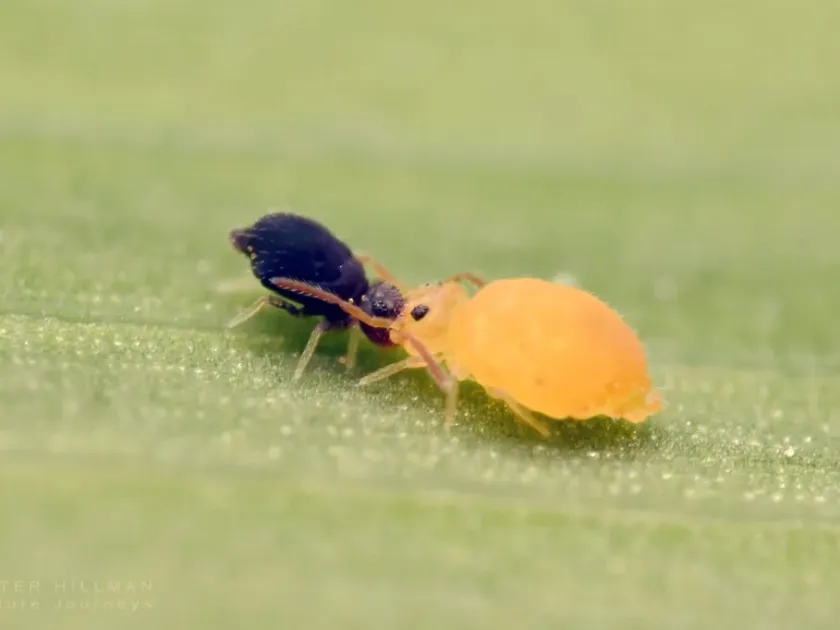
Description
How to identify
Sminthurides are members of the order Collembola, specifically belonging to the family Sminthuridae. They are minute, soil-dwelling or water-surface arthropods commonly known as springtails.
The adults are characterized by a globular body shape and a specialized jumping organ called the furcula, which allows them to leap away when disturbed.
Typically measuring between 1 to 2 millimeters in length, these creatures are often difficult to spot without the use of a magnifying glass or microscope.
Their coloration is variable, ranging from pale white or yellow to dark brown or black, often reflecting the moisture levels and the nature of their habitat.
They thrive in high-humidity environments, making them common inhabitants of greenhouses, damp soil, and the water surface of ponds or irrigation channels.
What it damages
The primary agricultural damage caused by Sminthurides involves feeding on the cotyledons, young leaves, and tender shoots of germinating seeds and seedlings.
In greenhouse settings, they can become a significant nuisance, as the consistently humid microclimate provides ideal conditions for their rapid population growth.
Young plants, being tender and devoid of tough outer layers, are most vulnerable to their scraping and feeding activities, which leave behind small holes.
High infestation rates can devastate seedling trays, significantly reducing the success rate of propagation and causing stunted development in young crops.
While mature plants are generally more resilient, heavy feeding at the root collar can create entry points for soil-borne pathogens and secondary fungal infections.
When it appears
Sminthurides activity is intrinsically linked to moisture availability, as their delicate integument is highly susceptible to desiccation in dry air.
The highest population levels are typically observed during the spring months, coinciding with the germination period and the peak demand for moist seedbeds.
In greenhouses, the seasonal boundaries are blurred, as controlled environments allow for continuous breeding cycles throughout the entire year.
In outdoor conditions, their activity spikes after rainfall or irrigation, when the soil surface remains damp enough for them to move and feed effectively.
Given favorable temperatures (15-22 Celsius), their life cycle is short, allowing for rapid generation turnover and sustained pressure throughout the growing season.
Signs of infestation
The most obvious sign of Sminthurides infestation is the presence of numerous tiny, jumping specks on the surface of the growing medium when watered.
Leaves often exhibit small, characteristic "pinprick" holes, which may coalesce over time as feeding continues, resulting in visible chlorosis or leaf necrosis.
Inspecting the soil surface around the base of the plant often reveals active clusters of these organisms, which jump immediately upon touch or soil disturbance.
Affected seedlings usually show signs of stress, such as loss of turgor, slowed growth, or yellowing leaves caused by the impairment of photosynthetic tissue.
Microscopic tissue damage at the seedling base can sometimes appear as dark, sunken spots, which indicates intensive feeding by these springtails.
Control measures
The cornerstone of Sminthurides management is moisture control; ensuring adequate drainage and good air circulation significantly inhibits their ability to thrive.
Sterilizing potting mixes before sowing seeds is a critical preventive measure to eliminate eggs or dormant individuals from the growing substrate.
Yellow sticky traps can be employed as a monitoring tool, helping to track adult activity and reduce the overall number of flying or jumping individuals.
- Avoid over-watering and allow the top layer of soil to dry out periodically.
- Use biological control agents such as entomopathogenic fungi to suppress populations.
- Apply targeted insecticides only when damage thresholds are consistently exceeded.
Maintaining high levels of sanitation, including the prompt removal of decaying organic matter, eliminates the breeding sites and reservoirs for this pest.
Taxonomy
- Latin name
- Sminthurides
- Family
- Sminthurididae
- EPPO code
- SMNDSP
Discussion
No discussions yet — be the first.