
Cuscuta weevil
Smicronyx lutulentus
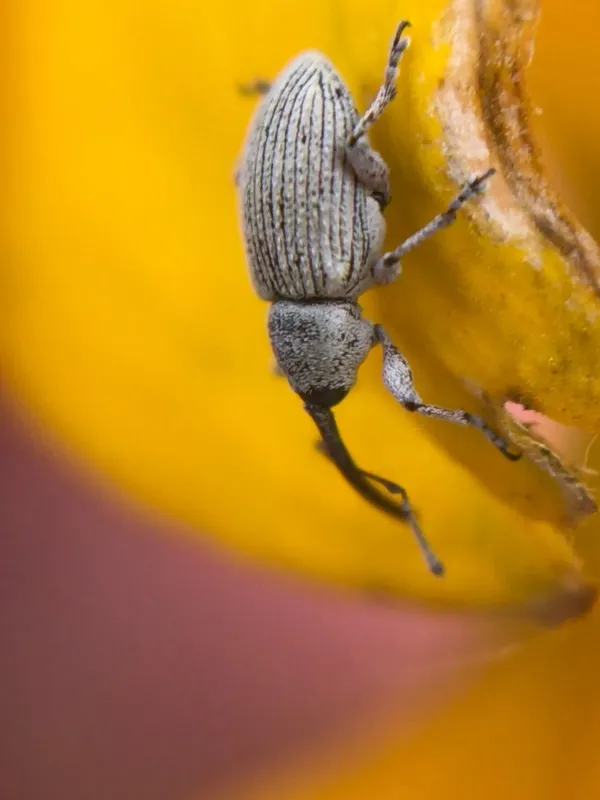
Description
How to identify
The Cuscuta weevil (Smicronyx lutulentus) belongs to the Curculionidae family and is a specialized insect that targets dodder, a parasitic weed genus.
Adult weevils are small, measuring approximately 2–3 mm in length, and typically display a greyish-brown coloration, helping them blend into their host plants.
The life cycle encompasses four stages: egg, larva, pupa, and adult, with the larval stage being the most impactful in terms of reducing the reproductive capacity of the host.
Larvae develop exclusively within the floral tissues and seed capsules of the dodder plant, ensuring protection from many external environmental stressors.
This species is widely recognized in agricultural research as a significant candidate for the biological suppression of invasive parasitic weeds.
What it damages
The Smicronyx lutulentus weevil feeds almost exclusively on the reproductive organs of the dodder plant (Cuscuta spp.).
By consuming the ovaries and developing seeds within the dodder flowers, the larvae effectively prevent the plant from reproducing successfully.
This feeding activity significantly reduces the seed bank of the weed, which indirectly benefits the crops infested by the parasite.
Because the weevil does not feed on crops like alfalfa or sugar beets, it is categorized as a beneficial organism rather than a pest to farm production.
The damage caused by the weevil is localized to the dodder parasite, serving as a natural mechanism to keep weed populations in check.
Signs of infestation
Signs of infestation include withered, discolored, or prematurely browned flower clusters on the dodder vines during the summer months.
Careful inspection of the dodder stems may reveal small punctures or oviposition scars where the adult weevils have placed their eggs.
The presence of larvae inside the flower ovaries can be confirmed by dissecting the floral tissues during the peak of the growing season.
A significant reduction in seed production, or the absence of viable seeds within the dodder capsules, is a key indicator of weevil activity.
The overall vigor of the parasitic dodder plant appears reduced, with stunted growth and limited ability to spread to adjacent plants.
Control measures
Protection strategies focus on maintaining the presence of the weevil as a biological tool rather than eradication.
Farmers are advised to limit the use of broad-spectrum insecticides in areas where dodder is prevalent to allow the weevil population to thrive.
Conservation of natural habitats around fields supports the overwintering and survival of adult weevils, ensuring their return the following year.
Integrated Pest Management (IPM) practices should prioritize the preservation of these beneficial insects to enhance long-term weed suppression.
- Avoidance of non-target insecticide applications.
- Preservation of local vegetation that supports weevil populations.
Taxonomy
- Latin name
- Smicronyx lutulentus
- Order
- Coleoptera (beetles)
- Family
- Curculionidae
- EPPO code
- SMICLU
Discussion
No discussions yet — be the first.