
Sitona longulus
Sitona longulus
Description
How to identify
Sitona longulus is a species of beetle belonging to the family Curculionidae (weevils). These insects are known for their elongated bodies and are specifically adapted to feed on various leguminous plants throughout the growing season.
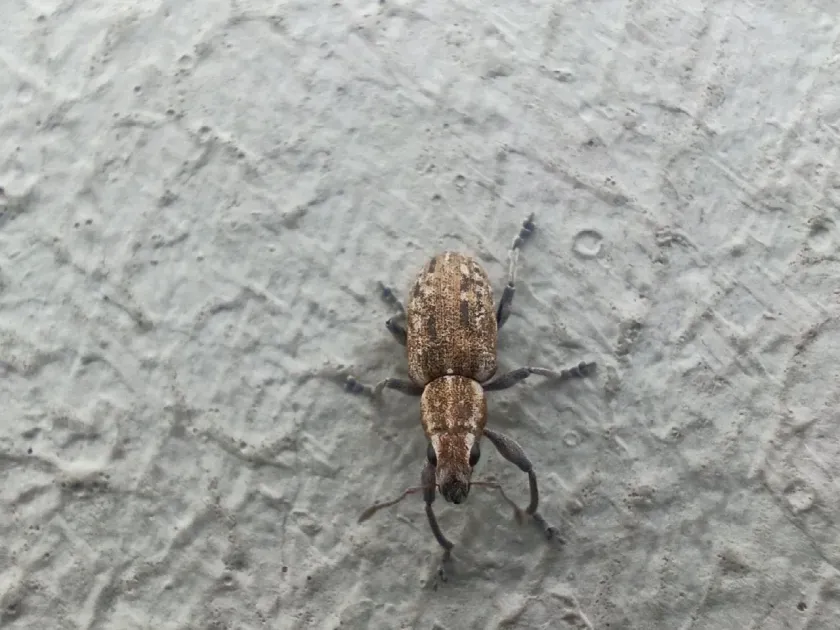
Adult weevils are relatively small, typically featuring a greyish or brownish coloration that blends well with soil and plant debris. They possess a characteristic short, broad rostrum (snout) which is a defining feature of the Sitona genus.
The larvae are white, fleshy, and legless, with a small brown head capsule. They live exclusively underground, developing within the soil profile where they focus their feeding activities on the root systems of host plants.
The life cycle is typically univoltine, meaning there is one generation per year. Overwintering occurs in the adult stage, often in sheltered areas such as leaf litter, field margins, or within the top few centimeters of the soil.
During the spring, when temperatures rise, the adults emerge to feed on young foliage. This is followed by mating and egg-laying, which typically takes place in the soil surrounding the base of the host plants.
What it damages
Sitona longulus primarily targets grain legumes such as peas, lentils, lupins, and various clovers. The economic impact is often significant, as both adult and larval stages cause damage to the host plant.
Adult weevils feed on the leaves, creating distinct, U-shaped notches along the leaf margins. This feeding habit is known as "notching," which reduces the total leaf area available for photosynthesis, weakening the overall plant vigor.
The larvae represent the most damaging stage. They feed on the root nodules, which are essential for nitrogen fixation. By destroying these nodules, the larvae interfere with the plant's symbiotic relationship with beneficial bacteria.
As a result of root damage, the affected plants show reduced growth, yellowing of leaves, and an overall decrease in yield. In severe infestations, the nitrogen deficiency caused by nodule destruction can stunt the plants permanently.
Field-level damage often appears as uneven growth or patchy spots. If the infestation occurs while the seedlings are still establishing, the impact can be devastating, sometimes leading to total stand failure.
When it appears
Adult weevils become active in the early spring, usually as soon as soil temperatures reach approximately 8 to 10 degrees Celsius. This coincides with the emergence of young legume sprouts, which provide the first food source.
The period of intensive leaf feeding occurs throughout the spring. As the season progresses into early summer, the adults focus on reproduction, and eggs are deposited in the soil near the host roots.
Larval development takes place throughout the summer months. During this time, the larvae move through the soil, actively searching for and consuming root nodules, which often coincides with the plant's peak vegetative growth stages.
The emergence of the new generation of adults usually occurs mid-summer, around July or August. These newly emerged beetles feed on the remaining foliage before seeking out overwintering sites for the cold season.
As temperatures drop in the autumn, the adults cease feeding and move to their hibernation locations. They spend the winter in a state of diapause, hidden in soil or under plant residues, waiting for the cycle to restart in the spring.
Signs of infestation
The most recognizable symptom of a Sitona longulus infestation is the presence of semi-circular or U-shaped bites along the edges of leaves. This "scalloped" appearance is a classic indicator of weevil activity.
Stunted growth or chlorotic (yellowish) leaves often point to underground damage. When such plants are carefully excavated, a lack of healthy pink or white root nodules is typically evident compared to healthy plants.
Observing the adults in the field is possible during the morning or late afternoon. When disturbed, these beetles often drop from the plant to the soil, where their mottled coloration makes them difficult to spot against the dirt.
Inconsistent plant density and patches of weakened, smaller plants within a field can suggest a high larval population. These areas often exhibit delayed flowering and pod development.
Scouting is best conducted by using a sweep net to collect adults during their active hours. Regularly checking the roots of plants in "weak" spots can confirm the presence of larvae and help determine the need for intervention.
Control measures
Management of Sitona longulus requires an integrated approach. Crop rotation is the most effective cultural practice, as moving legume crops away from fields previously occupied by legumes breaks the pest's cycle.
Deep autumn tillage can help disturb the overwintering sites, exposing the dormant adults and larvae to predators and harsh weather conditions, thereby reducing the population size for the following spring.
Chemical control involving foliar insecticide applications may be necessary if adult populations exceed the economic threshold. Timing is crucial, and applications should be made when adults are most active before egg-laying occurs.
Seed treatments with systemic insecticides are a preventative tool that protects seedlings during the critical early growth stages, ensuring that the plant can establish a strong root system before larval pressure increases.
- Maintain high soil fertility to promote rapid plant recovery.
- Control weeds that might act as alternative host plants.
- Monitor adult populations with sticky traps if available.
- Use resistant or tolerant crop varieties whenever possible.
Taxonomy
- Latin name
- Sitona longulus
- Order
- Coleoptera (beetles)
- Family
- Curculionidae
- EPPO code
- SITNLO
Discussion
No discussions yet — be the first.