
Pea leaf weevil
Sitona crinitus
Description
How to identify
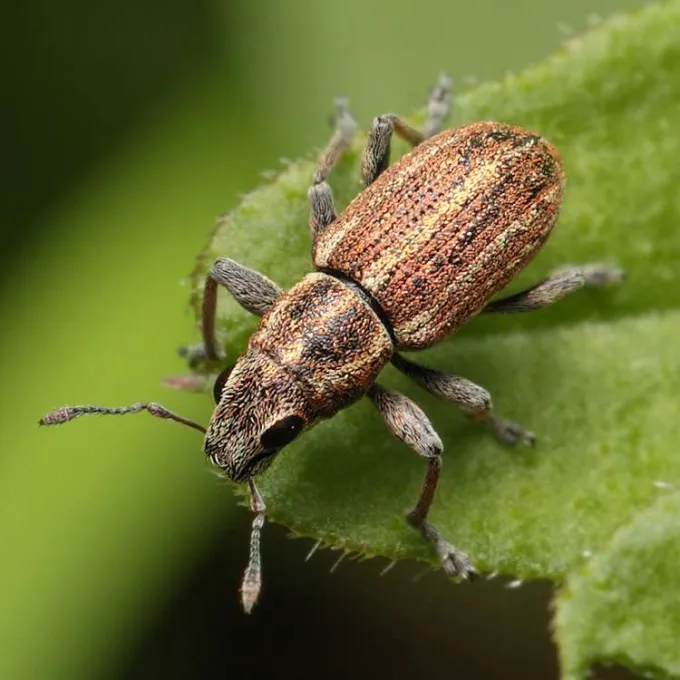
The pea leaf weevil (Sitona crinitus) is a destructive pest of leguminous crops, belonging to the Curculionidae family. Adult beetles are small, typically ranging from 3 to 4.5 mm in length, with a characteristic short snout.
The body is covered with grayish-brown scales and setae, which provide excellent camouflage against soil and plant debris. These physical features distinguish it from other weevil species found in agricultural fields.
Larvae are white, crescent-shaped, and legless with a well-developed head capsule and mandibles. They live underground and are specialized in feeding on the roots and nitrogen-fixing nodules of host plants.
The insect undergoes a complete metamorphosis involving four distinct stages: egg, larva, pupa, and adult. Adults typically hibernate in the soil or protected surface areas, emerging in early spring when temperatures rise.
Mating occurs shortly after emergence. Females lay eggs in the soil near the base of host plants. The hatching larvae move deeper into the soil to begin feeding on the root system, which is critical for the plant's development.
What it damages
The pea leaf weevil primarily infests pulse crops such as peas, lentils, chickpeas, vetch, and alfalfa. The economic impact is felt both during the early vegetative stage and throughout the root development phase.
Adults cause damage by feeding on the edges of young leaves, creating characteristic notched or serrated patterns. In cases of high infestation, they can completely defoliate seedlings, leading to reduced photosynthetic capacity.
Larval feeding is significantly more destructive. Larvae burrow into the soil to consume root nodules, which are essential for nitrogen fixation. This damage disrupts the plant's symbiotic relationship with beneficial bacteria.
The loss of nitrogen-fixing capacity results in stunted growth, chlorosis, and reduced yield quality. Severely infested crops struggle to withstand drought and other environmental stresses due to compromised root systems.
In high-pressure years, if untreated, the infestation can result in significant yield losses ranging from 20% to over 30%. The timing of the attack coincides with the most sensitive growth stages of the crops.
Signs of infestation
The primary symptom of a pea leaf weevil presence is the appearance of U-shaped notches along the margins of leaves. This distinctive leaf damage is an early warning sign that requires immediate field inspection.
Below-ground, the absence or disintegration of root nodules is a clear indication of larval activity. Farmers should dig up a sample of plants to inspect root health if leaf notches are observed.
In sunny conditions, adults may be visible on the soil surface or resting on the foliage. However, they are prone to dropping to the ground when disturbed, making them difficult to spot without careful observation.
Patches of poor growth and yellowing plants within a field suggest a localized infestation. Over time, these patches can expand as the weevil population migrates throughout the field.
General crop stress, characterized by slow development and poor pod set, often indicates that the root nodules have been heavily damaged by larvae earlier in the season, even if adult numbers seem low at that moment.
Control measures
Crop rotation is the most effective cultural method to manage pea leaf weevil populations. By avoiding pulse crops in fields with previous infestations, growers can significantly reduce the risk of early-season damage.
Deep autumn tillage can disrupt the hibernation sites of the adults, reducing their survival rate and overall population density in the following spring season.
Seed treatment with systemic insecticides is the standard practice for providing protection during the early growth stages, effectively preventing adult feeding before it causes permanent damage to the seedlings.
During the growing season, if the leaf damage exceeds the economic threshold, foliar application of insecticides (such as pyrethroids) may be necessary to suppress the adult population and limit further egg-laying.
- Implement strict crop rotation patterns to break the life cycle.
- Ensure rapid crop establishment through proper fertilization and early sowing.
- Monitor field edges, as they often serve as entry points for migrating adults.
Taxonomy
- Latin name
- Sitona crinitus
- Order
- Coleoptera (beetles)
- Family
- Curculionidae
- EPPO code
- SITNCR
Discussion
No discussions yet — be the first.