
Sitona callosus
Sitona callosus
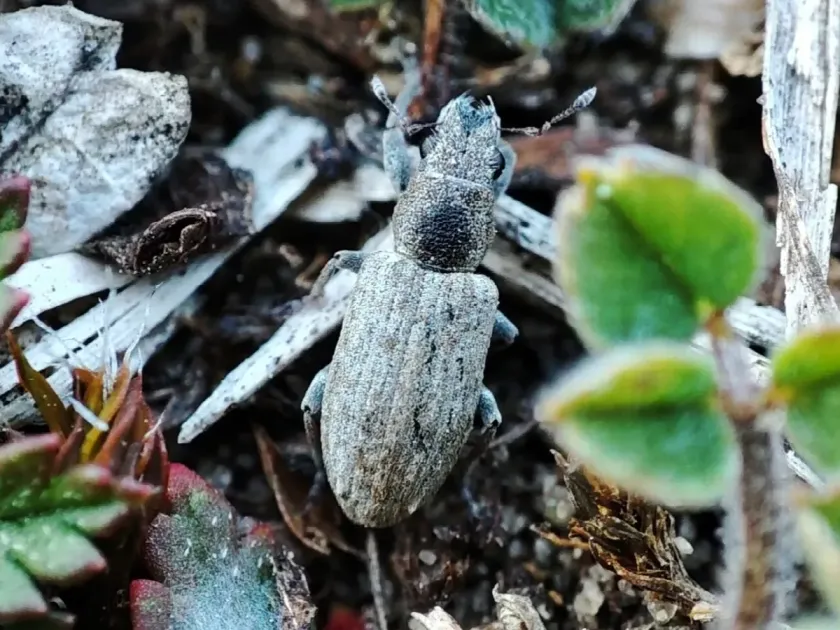
Description
How to identify
The weevil Sitona callosus is a beetle belonging to the order Coleoptera and the Curculionidae family, which is known for its snout-like head structure.
Adult insects are small, typically measuring between 4 to 5 mm, and possess a greyish-brown coloration that allows them to blend into their environment perfectly.
The life cycle of this pest involves complete metamorphosis, including egg, larva, pupa, and adult stages, typically completing one or more generations per year depending on the climate.
Larvae are white, legless, and C-shaped, living primarily within the soil where they interact directly with the root systems of their host plants.
Adults overwinter in soil debris or protected areas, emerging as soon as the soil temperatures begin to rise in the spring.
What it damages
This pest primarily attacks legumes such as peas, vetch, alfalfa, clover, and soybeans, causing significant agricultural damage across many regions.
Adults feed on the foliage by chewing distinct notches along the edges of the leaves, which reduces the plant's photosynthetic capacity.
The larvae are particularly destructive as they feed on the root nodules where nitrogen-fixing bacteria reside, essentially starving the plant of vital nutrients.
Severe infestations can lead to stunted plant growth, yellowing of foliage, and, in cases of extreme density, the total loss of seedlings.
The cumulative effect of adult foliar feeding and larval root damage significantly impacts both the quality and the final yield of the crop.
When it appears
Adults emerge from their winter hibernation in early spring when temperatures reach approximately 10 to 12 degrees Celsius, coinciding with legume germination.
Feeding activity by adults is most intense during the spring and early summer when the population reproduces and begins laying eggs in the soil.
Larval development takes place throughout the growing season, hidden beneath the surface of the soil, making them difficult to detect without careful root inspection.
New adults emerge during mid to late summer, at which point they feed on the remaining foliage before seeking out hibernation sites for the winter.
The seedling stage is the most vulnerable time, as plants are small and have a limited capacity to withstand damage from adult weevil feeding.
Signs of infestation
The most visible sign of infestation is the notched or scalloped appearance of the leaf margins, which is a classic symptom of adult weevil feeding.
Stunted, yellowing, or wilting plants despite adequate soil moisture may indicate significant larval damage to the root nodules.
Careful excavation of the soil around the roots will reveal empty or destroyed nodules, confirming the presence of larvae in the rhizosphere.
Sparse crop stands or irregular growth patterns in legume fields often correlate with high weevil population density.
- Scalloped notches on leaf edges.
- Yellowing and stunted vegetation.
- Destruction of nitrogen-fixing root nodules.
- Reduced vigor in early crop growth stages.
Control measures
Implementing crop rotation is a fundamental practice to prevent the build-up of local weevil populations and break their life cycle.
Early sowing can help the crop reach a larger size before the peak activity period of the weevil, thereby increasing the plant's tolerance to feeding.
Chemical control involving systemic insecticides is often necessary during the early stages of plant development to prevent egg-laying by adults.
Post-harvest cultivation and deep plowing help to destroy the wintering sites and expose the remaining adults and larvae to predators and desiccation.
Optimizing plant nutrition, particularly with phosphorus and potassium, encourages faster root development and supports the plant's natural recovery from larval damage.
Taxonomy
- Latin name
- Sitona callosus
- Order
- Coleoptera (beetles)
- Family
- Curculionidae
- EPPO code
- SITNCA
Discussion
No discussions yet — be the first.