
Grain mite
Siteroptes cerealium
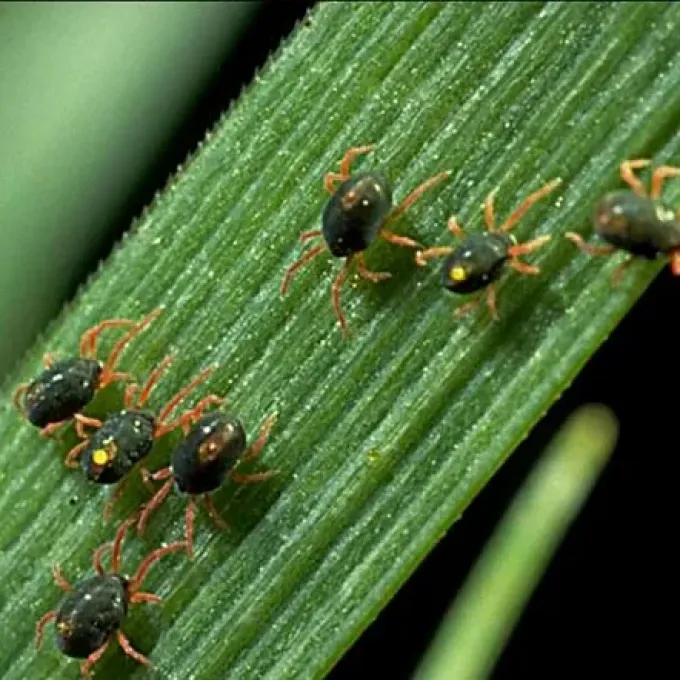
Description
How to identify
The grain mite (Siteroptes cerealium) is a member of the Siteroptidae family, order Trombidiformes. It is a microscopic pest with a translucent body, typically reaching only 0.2–0.3 mm in length.
The life cycle consists of egg, larva, nymph, and adult stages. Females exhibit physogastry, a process where their abdomen expands significantly while carrying offspring.
These mites reproduce rapidly, allowing them to establish massive populations within a single growing season if weather conditions remain favourable.
Often found associated with fungal infections, these mites may utilize fungal spores as a nutritional supplement or as a substrate for their development.
They overwinter as adults, finding shelter in crop residues, under leaf sheaths, or within the upper layers of the soil to survive harsh temperatures.
What it damages
Primary hosts include major cereal crops such as wheat, rye, barley, and oats. Various wild grasses also serve as natural reservoirs for the pest.
Damage occurs primarily during the reproductive stage of the plant, specifically affecting the development of the grain and the spikelets.
By feeding on plant sap, the mites disrupt the vascular transport of nutrients, leading to physiological stress and stunted plant growth.
Beyond physical feeding damage, Siteroptes cerealium often acts as a vector for various fungal pathogens that exacerbate the degradation of the head.
The economic impact is severe, resulting in significantly reduced grain weight, poor quality, and, in cases of heavy infestation, complete crop failure.
Signs of infestation
The most distinctive sign of infestation is whitehead formation, where the ear turns prematurely white and fails to produce healthy, filled grains.
Plants may show symptoms of stunted growth, leaf curling, or twisted stems, which are indicative of severe physiological disruption caused by the mites.
On closer inspection, one might notice a fine, dust-like coating at the base of the glumes, which actually consists of dense colonies of the mites.
Empty or shriveled grains found during harvest analysis serve as a post-factum indicator of high mite activity during the grain-filling stage.
Widespread patches of thin or withered crops across the field often indicate a localized outbreak that has spread significantly over time.
Control measures
Cultural control practices, such as proper crop rotation and the destruction of grassy weeds, are essential for limiting the pest's spread.
Deep plowing following the harvest helps bury crop residues, effectively trapping and eliminating a large portion of the overwintering population.
Chemical intervention via acaricides can be effective but requires precise timing, as the mites' location deep within the spikelets often provides protection.
Selecting resistant crop varieties helps minimize the vulnerability of the plants, reducing the necessity for intensive chemical applications.
Strict sanitation protocols in storage facilities are necessary to ensure that mites carried with the grain do not proliferate after the harvest is gathered.
Taxonomy
- Latin name
- Siteroptes cerealium
- Order
- Mites
- Family
- Siteroptidae
- EPPO code
- SITECE
Discussion
No discussions yet — be the first.