
Siteroptes mite
Siteroptes
Description
How to identify
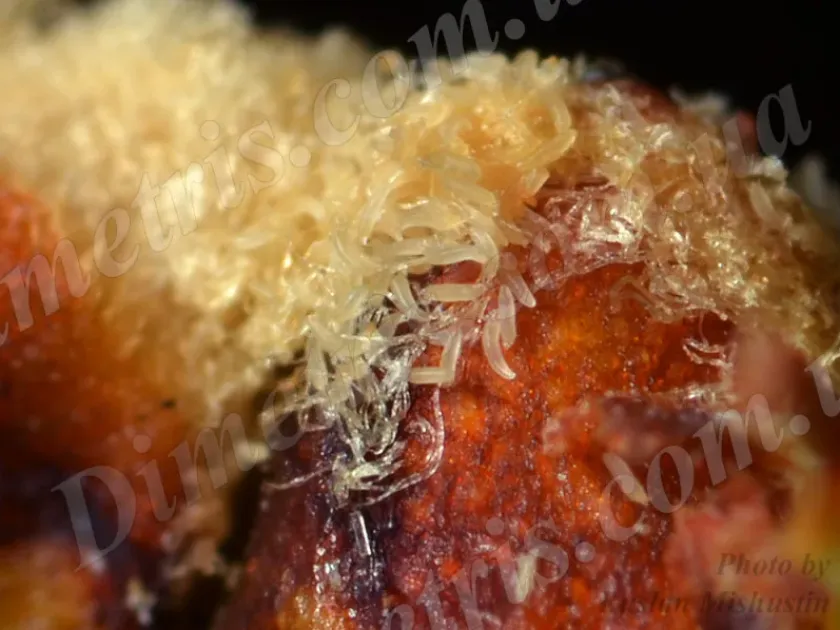
The Siteroptes mite (genus Siteroptes) belongs to the order Trombidiformes and the family Siteroptidae. These are microscopic arthropods with elongated, translucent bodies measuring approximately 0.2 mm in length.
The life cycle encompasses eggs, larvae, nymphs, and adults. A key biological feature is the physogastry of the females, where the abdomen swells significantly to accommodate numerous eggs, becoming visible under magnification.
These mites typically occupy sheltered niches within plant tissues, such as the spaces under wheat glumes, which protects them from environmental extremes and many pesticides.
Siteroptes mites are recognized as important vectors for various fungal pathogens, notably those causing Fusarium-related diseases in grains, significantly increasing their economic impact.
Their rapid reproductive rate allows for explosive population growth when environmental conditions, particularly humidity and temperature inside the plant canopy, are favorable.
What it damages
The primary hosts for Siteroptes mites are cereals, including wheat, rye, barley, oats, and various wild grass species that serve as alternate hosts.
Mites cause damage by piercing the plant tissues and extracting sap from the reproductive organs, including the glumes, flowers, and developing ovaries of the grain spike.
The direct feeding leads to poorly developed, shriveled, or sterile grains, which drastically reduces both the quality and total yield of the harvested crop.
Indirect damage occurs when the mites facilitate the entry and spread of fungal pathogens, leading to the condition known as "whiteheads" or spikelet blight.
In cases of heavy infestation, the entire spike may fail to develop, resulting in white, empty heads that are easily identified in the field during the grain-filling stage.
When it appears
Mite activity generally begins in spring as temperatures rise above 10-12 degrees Celsius, prompting their migration from overwintering sites onto young crop tillers.
Overwintering occurs primarily in the adult female stage, taking refuge in crop debris, stubble, and the leaf axils of perennial grasses surrounding the field.
The most significant population increase occurs during the heading and flowering stages of cereal crops, when the anatomy of the developing spike provides optimal nutrition and protection.
Dry and hot weather patterns often accelerate the generational cycle of the mite, leading to sharp population spikes during the mid-vegetative and reproductive stages of the crop.
As the harvest approaches and temperatures fluctuate in the autumn, females seek out new overwintering sites in the soil or protected organic debris.
Signs of infestation
The most distinct sign of infestation is the appearance of white, bleached spikelets that stand out against the green or ripening parts of the cereal head.
This "whitehead" symptom is a result of the mites feeding and the subsequent localized death of the spikelet tissue, often exacerbated by fungal infection.
Upon closer examination with a hand lens, one may notice the glumes of the affected spikelets pushed open or slightly deformed due to the mass of mites residing inside.
Plants heavily infested with Siteroptes mites often exhibit stunted growth and general chlorosis, as the nutritional transport to the grain is severely disrupted.
If the spike is peeled back, one can observe colonies of yellowish or white mites, confirming the presence of the pest in the field.
Control measures
Effective management begins with robust cultural practices, such as crop rotation, which breaks the pest's cycle by removing its preferred hosts for a season.
Deep plowing and the thorough burial of crop stubble are crucial, as these actions eliminate the primary overwintering sites for the mites.
- Utilizing certified, mite-free seed and treating seeds as a preventive measure against initial contamination.
- Managing and eliminating wild grass weeds on field margins to reduce the number of reservoir hosts.
- Applying systemic acaricides at the early heading stage if scouting indicates population thresholds are exceeded.
Chemical control must be timed precisely; since mites reside deep within the spikelets, systemic products are significantly more effective than contact-only sprays.
Regular field monitoring during the critical growth phases is essential to detect early infestations and prevent the widespread loss of yield.
Taxonomy
- Latin name
- Siteroptes
- Order
- Mites
- Family
- Siteroptidae
- EPPO code
- SITESP
Discussion
No discussions yet — be the first.