
Cotton rat
Sigmodon hispidus
Description
How to identify
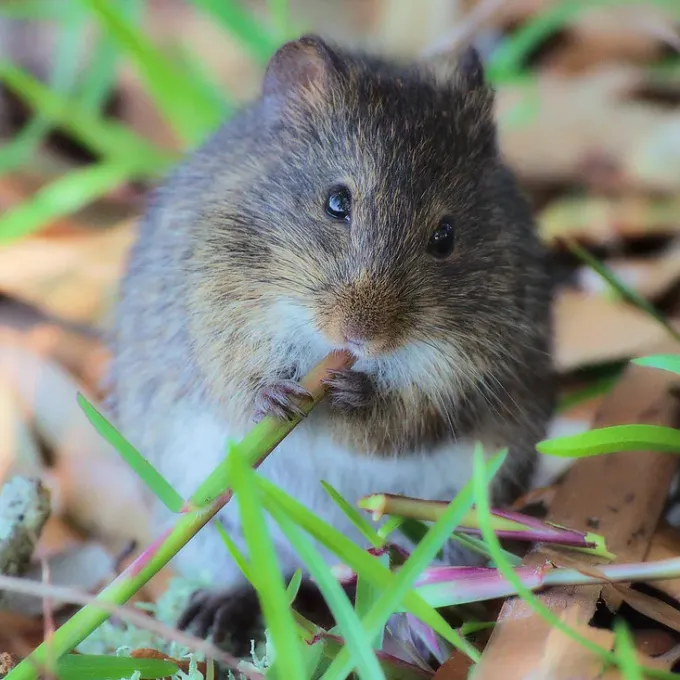
The cotton rat (Sigmodon hispidus) belongs to the order Rodentia and the family Cricetidae. It is a medium-sized rodent characterized by a coarse, grizzled brown coat and a tail that is typically shorter than its head-body length.
Adults measure approximately 15 to 20 centimeters in length. They are highly adaptable creatures capable of inhabiting various environments, ranging from dense grasslands to cultivated fields.
These rodents are known for their high reproductive potential, allowing populations to expand rapidly when food sources are abundant and environmental conditions are favorable.
Cotton rats construct elaborate nests in shallow burrows or hidden within thick vegetation, which makes detection of their colonies challenging for farmers.
They are active throughout both day and night, displaying territorial behaviors that help them maintain dominance in suitable nesting areas near food supplies.
What it damages
Cotton rats pose a significant threat to a wide range of agricultural crops, most notably cotton, maize, sugarcane, and various small grains.
The primary damage occurs when they gnaw the stems of young plants at the base, leading to the destruction of seedlings and thinning of the crop stand.
Furthermore, they cause substantial losses by feeding on the reproductive parts of plants, including seeds and ripening fruits, which directly reduces overall yield.
Their burrowing activities result in soil compaction and disruption of root systems, which impairs the plants' ability to take up nutrients and water efficiently.
When infestation spreads to storage facilities, these rodents contaminate harvested products with urine and feces, rendering the grain unfit for use.
When it appears
The population activity of Sigmodon hispidus is heavily dictated by seasonal availability of food and shelter, as well as prevailing weather patterns.
Activity peaks during the vegetative growing season of crops, when succulent vegetation provides an ideal food source and protective cover for the rodents.
In colder months, cotton rats often relocate to more protected areas, such as farm buildings, haystacks, or thick brush that offers insulation from the elements.
Migration typically increases during the spring, as populations disperse to colonize new fields that offer fresh grazing opportunities for the growing colonies.
Reproduction is largely opportunistic, continuing throughout the year in warmer climates, while being more seasonal in areas with significant temperature extremes.
Signs of infestation
One of the most characteristic signs of infestation is the appearance of well-worn runways through the grass, connecting feeding areas to nesting sites.
Observers should look for freshly gnawed crop stems left at the base of plants, which indicate active feeding sites within the field or along its edges.
The presence of shallow, circular entrance holes in the soil, often accompanied by mounds of disturbed earth, confirms the existence of a burrow system.
Finding piles of plant debris and feces near burrow entrances is a reliable indicator that the colony is currently occupying and utilizing the area.
Significant gaps or patches in crop density are often observed where feeding pressure has been the most intense, leading to localized plant death.
Control measures
Effective management begins with maintaining field hygiene, which involves the removal of weeds and debris that provide harbor and protection for cotton rats.
The application of rodenticides, specifically anticoagulants, can be highly effective when used correctly according to local regulatory safety standards.
Mechanical trapping remains a viable option for managing localized infestations, especially near field perimeters or in high-value crop production areas.
Encouraging natural predators such as birds of prey (owls, hawks) and snakes can provide sustainable biological suppression of cotton rat populations.
Deep tillage or plowing after harvest disrupts the burrow structures, making the environment less hospitable and forcing rodents to leave the treated area.
Taxonomy
- Latin name
- Sigmodon hispidus
- Order
- Rodents
- Family
- Muridae
- EPPO code
- SIGMHI
Discussion
No discussions yet — be the first.