
Sicyonia carinata
Sicyonia carinata
Description
How to identify
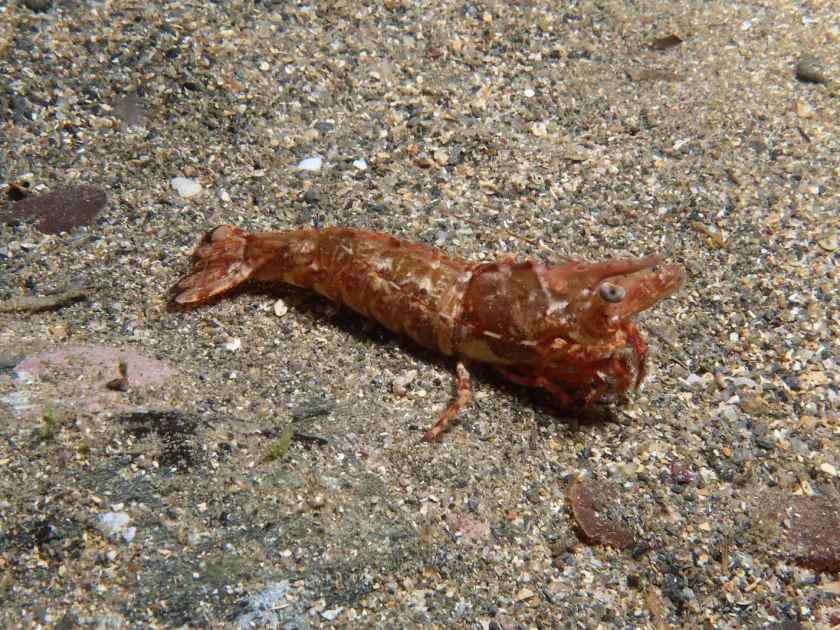
Sicyonia carinata, commonly known as a rock shrimp, belongs to the family Sicyoniidae and the order Decapoda. It is a marine crustacean inhabiting sea floors and is not a terrestrial plant pest.
The organism is identified by a prominent ridge (keel) along its carapace, from which its Latin name is derived. Its body is adapted for aquatic life and movement on sandy or silty seabeds.
From a biological standpoint, this species is well-studied in marine biology and aquaculture. It bears no biological relationship to the insects or mites that commonly plague farms or home gardens.
The life cycle of this species occurs entirely within marine or estuarine environments, starting from larval stages in the water column to maturity on the ocean floor.
Distinguishing between aquatic crustaceans and terrestrial crop pests is crucial for accurate agricultural diagnostics. Sicyonia carinata should not be considered a risk to any land-based crop.
What it damages
Sicyonia carinata poses no threat to crops, vegetables, or ornamental plants. As an aquatic dweller, it lacks any biological mechanism to interact with or cause damage to land plants.
Reports or suggestions that this species might harm agricultural fields are incorrect. It is physically impossible for this crustacean to survive, let alone feed, in a typical soil environment.
Its diet consists of marine detritus, plankton, and organic materials found at the bottom of the sea. There is no intersection between its feeding habits and modern agriculture.
The harm caused by this organism to agriculture is non-existent. It is an environmental feature of marine ecosystems rather than a threat to the food chain of crops.
For farmers concerned about crop loss, it is advised to focus on identifying common pests such as aphids, beetles, or caterpillars rather than confusing them with marine life.
Control measures
No control measures are needed for Sicyonia carinata. Applying pesticides or any form of pest control treatment against this organism would be ecologically harmful and entirely ineffective for agricultural purposes.
If plant damage is observed, growers should utilize diagnostic tools specific to terrestrial pathogens and pests. Accurate identification is the first step in successful crop protection.
Integrated Pest Management (IPM) practices should be focused on the actual pests prevalent in your area. This includes regular field scouting and monitoring for signs of infestation.
Maintaining soil health and applying proper cultural practices are the best defenses against true crop pests. These methods ensure robust plant development and resilience.
Consult with local agricultural extensions if you encounter unidentified damage in your crops, as they can provide accurate assessments and safe, scientific solutions.
Taxonomy
- Latin name
- Sicyonia carinata
- Family
- Penaeidae
- EPPO code
- SICYCA
Discussion
No discussions yet — be the first.