
Northern pink shrimp
Penaeus duorarum
Description
How to identify
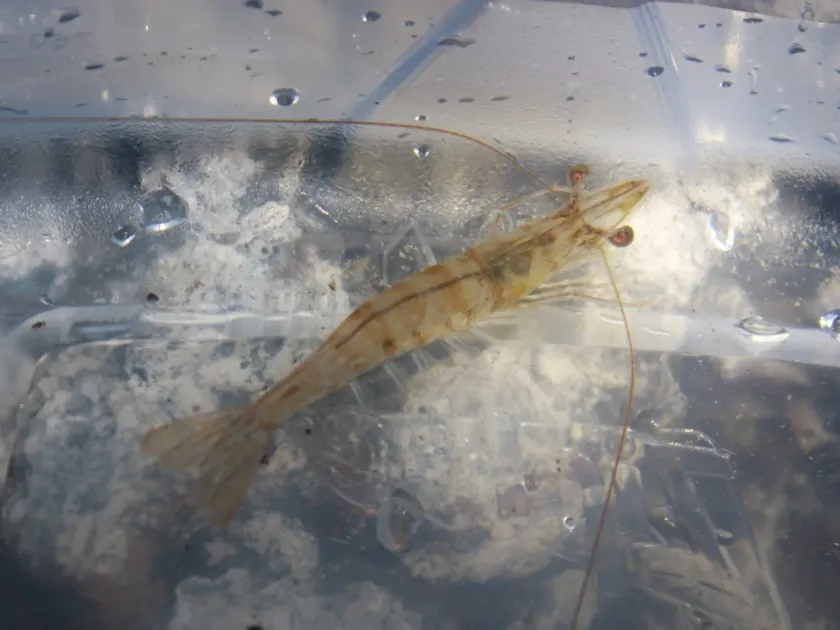
The Northern pink shrimp (Penaeus duorarum) is a species of crustacean belonging to the family Penaeidae, order Decapoda.
It is a marine organism that exclusively inhabits the saltwater environments of the Atlantic Ocean, typically found in coastal estuaries.
The shrimp is characterized by its light pink, translucent exoskeleton and long sensory antennae used for navigating the seafloor.
This species is biologically restricted to aquatic habitats and cannot survive or function in soil-based or agricultural environments.
Classifying this species as a plant pest is biologically inaccurate, as it lacks the physiological capacity to interact with terrestrial flora.
What it damages
The Penaeus duorarum does not cause any damage to agricultural crops, garden plants, or trees.
As a marine scavenger and detritivore, it feeds on organic debris, algae, and small organisms located on the ocean floor.
There is no documented evidence in agronomy or plant pathology linking this shrimp to the destruction of any plant species.
The animal does not possess the anatomy required to feed on leaves, roots, or fruits, nor does it reside in habitats where crops are cultivated.
Consequently, it represents zero threat to agricultural production and should not be considered in any pest management program.
When it appears
The life cycle of the Northern pink shrimp is governed by marine environmental factors, such as salinity, water temperature, and ocean currents.
Its reproductive and migratory patterns are entirely independent of terrestrial seasons or the growth cycles of crops.
Throughout the year, these shrimp remain submerged in marine or brackish water, having no seasonal contact with agricultural land.
Agronomic seasonal monitoring does not apply to this species, as it is geographically and biologically separated from arable fields.
Farmers do not need to consider the presence of this marine crustacean when planning seasonal pest control operations.
Signs of infestation
There are no signs of infestation on plants caused by the Northern pink shrimp because it cannot feed on or live near them.
If plant damage is observed, it is invariably the result of terrestrial pests such as insects, rodents, or fungal pathogens.
Identifying symptoms like wilting, holes in leaves, or root damage should always lead to investigations of local terrestrial insects.
Misattributing plant damage to non-pest marine life can lead to ineffective and unnecessary management attempts.
Reliable crop health monitoring involves targeting identified threats, which never include this specific species of shrimp.
Control measures
No protection or control measures are required for the Northern pink shrimp as it is not an agricultural pest.
Management efforts should focus solely on actual threats like aphids, beetles, or weeds that impact crop yield.
It is crucial to ensure that agricultural runoff containing pesticides does not negatively impact the natural habitats where shrimp live.
Environmental stewardship involves preventing the chemicals used on farms from damaging the surrounding aquatic ecosystems.
The Northern pink shrimp serves as a valuable component of the marine food web and should be conserved, not targeted.
Taxonomy
- Latin name
- Penaeus duorarum
- Family
- Penaeidae
- EPPO code
- PENSDU
Discussion
No discussions yet — be the first.