
Serropalpus niponicus
Serropalpus niponicus
Description
How to identify
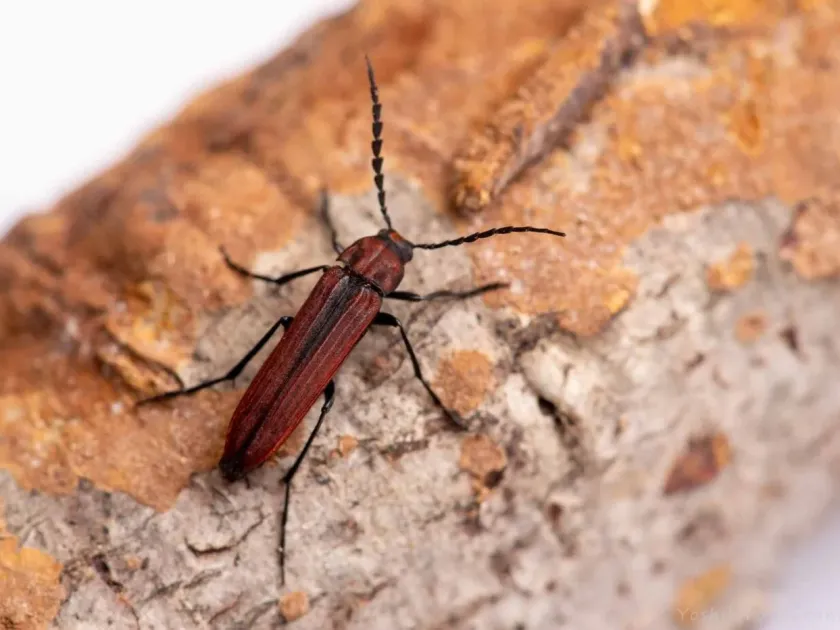
Serropalpus niponicus belongs to the family Melandryidae within the order Coleoptera. This insect typically features an elongated, slightly flattened body, often dark brown or black in color.
Adult beetles are adapted for a cryptic lifestyle, hiding within narrow bark crevices and wood cracks, which makes them difficult to observe during routine forest inspections.
The larvae possess specific anatomical features that allow them to bore efficiently into woody tissues. They are typically whitish with a distinct head capsule and powerful mandibles for feeding.
The life cycle is closely linked to weakened or dying trees, which provide the necessary environment for larval development and sustenance.
Identification in the field requires expertise, as the species shares many morphological characteristics with other beetles that inhabit wood tissues.
What it damages
This species acts primarily as a secondary pest, infesting coniferous trees that are already stressed, physiologically suppressed, or dying due to environmental factors.
The primary damage is caused by larvae tunneling through the bast and sapwood layers, which disrupts nutrient and water flow, ultimately accelerating the death of the tree.
High infestation density significantly reduces the commercial quality of the timber, making it unsuitable for industrial use due to the extensive gallery system left by the larvae.
The tunnels created by Serropalpus niponicus serve as entry points for fungal pathogens and wood-rotting organisms, which significantly hasten the decay of the trunk.
Outbreaks often originate in areas where trees have suffered mechanical damage or are struggling with adverse hydrological conditions in the forest ecosystem.
When it appears
Adult emergence typically occurs during the spring and summer, when beetles actively search for suitable host trees to lay their eggs.
Oviposition takes place in bark crevices or existing wounds on the tree, ensuring that newly hatched larvae have immediate access to food sources.
Larval development can be a prolonged process, potentially spanning one or more seasons depending on climate conditions and the host tree's condition.
The insects overwinter primarily at the larval stage deep within the wood, which allows them to withstand low temperatures effectively during the winter months.
Completion of the development cycle and pupation usually occurs in spring, leading to the emergence of a new generation of adults to repeat the reproductive cycle.
Signs of infestation
A primary sign of infestation is the presence of boring dust, which accumulates in bark folds or at the base of the tree trunk.
Close inspection of the bark surface may reveal small entry or exit holes created by the beetles when they enter or emerge from the wood.
Early stages of infestation may show premature needle yellowing or shedding, indicating a breakdown in the tree's internal physiological processes.
Bark loosening on specific sections of the trunk is another indicator that the underlying wood has been heavily damaged by larval galleries.
Increased woodpecker activity in certain forest areas often serves as an indirect sign that wood-boring insects are present, as the birds actively hunt them.
Control measures
Sanitary logging remains the most effective management strategy. Removing infested or dead trees prevents the buildup of pest populations and protects healthy stands.
Regular monitoring of forest health, particularly in high-risk zones, is crucial to identify and address outbreaks at the earliest possible stage.
Clearing forest residue and leftover timber from harvest sites removes potential breeding grounds for the pest, which is vital for population control.
Biological control methods, such as utilizing natural predators or entomopathogenic fungi, may serve as valuable supplements to standard forest management practices.
Maintaining high forest resilience through proper silvicultural care, including timely thinning and stand management, reduces the likelihood of mass infestation by Serropalpus niponicus.
Taxonomy
- Latin name
- Serropalpus niponicus
- Order
- Coleoptera (beetles)
- Family
- Melandryidae
- EPPO code
- SERUNI
Discussion
No discussions yet — be the first.