
Serropalpus
Serropalpus
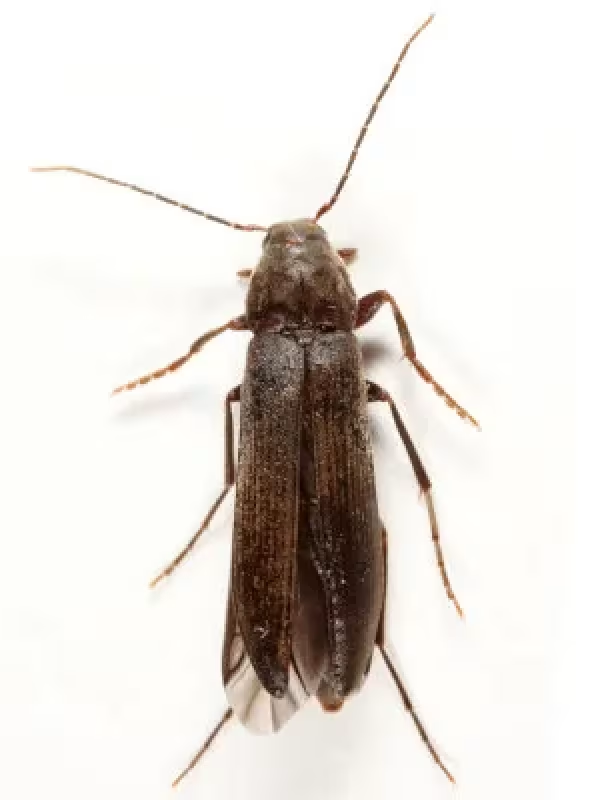
Description
How to identify
Serropalpus belongs to the family Melandryidae, within the order Coleoptera. These insects are known as wood-boring beetles that primarily inhabit coniferous trees in various forest ecosystems.
Adult beetles typically possess a cylindrical and elongated body, usually ranging from 8 to 16 millimeters in length. Their coloration often includes dark brown or black shades, providing effective camouflage.
A distinctive feature of this genus is the structure of their maxillary palpi. This biological detail is crucial for entomologists when distinguishing Serropalpus from other similar wood-inhabiting Coleoptera species.
The larvae are specialized for boring through dense wood. They have a cream-colored body and a robust head, adapted for chewing through cellulose and lignified tissues of host trees.
Their life cycle is closely tied to trees in a state of decay or physiological stress. While playing a role in the natural decomposition of timber, they are considered pests when attacking commercial forestry resources.
What it damages
Serropalpus primarily damages coniferous species such as spruce, fir, and pine. They are most frequently found in weakened, wind-thrown, or fire-damaged timber that remains on the ground.
In the timber industry, these beetles cause significant economic losses by creating deep galleries within the wood. This boring activity compromises the structural integrity of logs and planks.
The damage caused by larvae renders timber unsuitable for high-quality construction or carpentry work. Extensive tunneling leads to a reduction in the grade and market value of the wood.
Besides physical boring, the presence of these pests facilitates the colonization of the wood by various fungi and bacteria, which accelerates the decay process of the timber material.
Even in living trees that are already suffering from stress, the damage caused by Serropalpus can exacerbate the decline of the host tree, eventually leading to its premature death.
When it appears
Adult beetles typically emerge and become active during the warmer months, spanning from late spring through the summer. This is the period when they seek suitable hosts for reproduction.
The developmental period of the larvae inside the wood is quite extended and often spans over a full year, depending heavily on ambient temperatures and the moisture content of the wood.
Populations of Serropalpus often surge after major environmental disturbances, such as windstorms or forest fires, which leave behind a large volume of weakened wood for the beetles to colonize.
Overwintering occurs primarily at the larval stage. Larvae burrow deep into the wood, which provides a protective microclimate, enabling them to survive harsh winter conditions.
As temperatures rise in the spring, the larvae resume feeding activity, preparing to pupate and emerge as new adults, thus completing the reproductive cycle of the pest.
Signs of infestation
The presence of fine wood dust, known as frass, on the surface of the bark or at the base of a tree is one of the most reliable indicators of an active infestation.
Close inspection of the trunk surface often reveals small entry or exit holes. These marks indicate where the beetles have penetrated the wood or emerged after completing their development.
In heavily infested timber, one might hear subtle sounds of chewing or boring. This indicates that larvae are actively feeding deep within the wood tissue of the infested host.
Visible changes in the tree's health, such as premature browning or needle loss, often point to significant damage to the vascular system caused by internal insect activity.
- Accumulation of wood bore dust around the tree base.
- Presence of small circular holes on the bark.
- Internal galleries visible when logs are cross-sectioned.
Control measures
Sanitary logging is the primary control method. Removing infested timber from the forest prevents the spread of the beetle to healthy trees and minimizes further population growth.
Efficient management of timber storage is essential. Logs should not be left in the forest for long periods, as they quickly become attractive breeding grounds for wood-boring insects.
In forest nurseries and valuable plantations, maintaining tree vigor is key. Proper forest management practices reduce the number of trees prone to beetle attacks.
Chemical control is generally reserved for stored timber or high-value ornamental trees. Systemic insecticides can provide protection for susceptible wood assets during the flight period.
Promoting a balanced ecosystem by protecting natural predators, such as parasitoid wasps and predatory beetles, is a sustainable long-term strategy for managing pest populations.
Taxonomy
- Latin name
- Serropalpus
- Order
- Coleoptera (beetles)
- Family
- Melandryidae
- EPPO code
- SERUSP
Discussion
No discussions yet — be the first.