
Segestria florentina
Segestria florentina
Description
How to identify
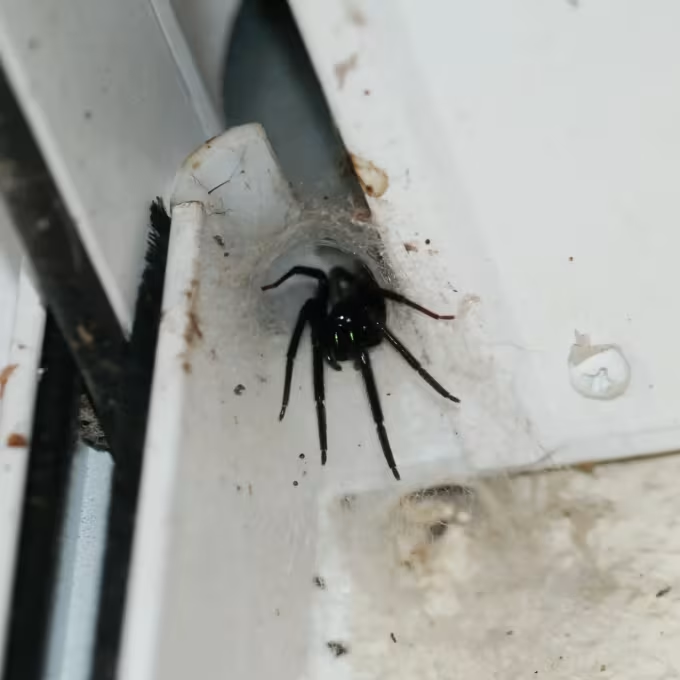
The Segestria florentina is one of the largest and most well-known spiders in Europe, belonging to the Segestriidae family. Females can grow up to 22 mm in body length, while males are slightly smaller. A key identifier is the metallic green reflection on their chelicerae, which is clearly visible when they are active.
These spiders have a dark, often uniform black or dark brown appearance. Their body is adapted for life in tight spaces, being relatively elongated. Despite their size, they are rarely seen because they are strictly nocturnal and highly sensitive to light and movement.
The habitat of this species includes deep cracks in rock walls, crevices in old tree bark, and gaps in man-made structures. They thrive in environments where they can easily anchor their tubular webs and remain concealed from predators and humans.
They are ambush hunters that construct a radial array of tripwires around the entrance of their hideout. They wait inside the tunnel until an insect brushes against the signal lines, at which point the spider attacks with remarkable speed.
Taxonomically, they are members of the Araneae order. It is crucial to distinguish this species from actual plant-eating pests, as it plays an entirely different ecological role as a predator rather than a consumer of plant material.
What it damages
Segestria florentina is not a plant pest. It does not feed on any agricultural crops, leaves, stems, or fruits. As a dedicated insectivore, it focuses exclusively on small insects that happen to wander into its hunting range.
Some gardeners mistakenly identify these spiders as threats because of their presence in bark crevices on fruit trees. However, they do not damage the trees in any way, nor do they feed on sap. Their presence is purely for shelter and hunting purposes.
The economic impact of this spider on agricultural production is neutral to positive. By preying on a wide range of insects, including some that might be harmful, they function as natural biocontrol agents in the garden ecosystem.
The only concern regarding this species involves human interaction. If handled roughly or accidentally pressed against the skin, they can deliver a painful bite. While not medically significant for a healthy adult, it is uncomfortable and warrants basic hygiene.
Labeling this arachnid as a "pest" is scientifically inaccurate. It should be viewed as a beneficial member of the garden's natural fauna, contributing to the limitation of insect populations without causing any harm to the vegetation.
Control measures
There are no recommended control measures against Segestria florentina for agricultural purposes, as there is no economic damage to crops. Using pesticides to kill these spiders is ineffective and counterproductive to maintaining a healthy ecosystem.
If the presence of these spiders is undesirable near living quarters or high-traffic areas, simple structural maintenance is the best approach. Sealing cracks in masonry, removing loose bark from trees near homes, and tidying up wooden debris will naturally reduce their potential nesting sites.
To avoid accidental bites during routine garden maintenance, always wear heavy-duty gardening gloves. This simple precaution is sufficient to prevent incidents when clearing debris or working around stone walls where these spiders are known to dwell.
Integrated pest management (IPM) practices encourage the preservation of predatory species like Segestria florentina. Their role as natural predators makes them an asset in managing the populations of minor pests in the garden environment.
We advise against the use of broad-spectrum insecticides, which would eliminate these beneficial predators along with target pests. Maintaining a natural balance is more sustainable and beneficial for the long-term health of your garden or orchard crops.
Taxonomy
- Latin name
- Segestria florentina
- Family
- Segestriidae
- EPPO code
- SEGEFL
Discussion
No discussions yet — be the first.