
Segestria
Segestria
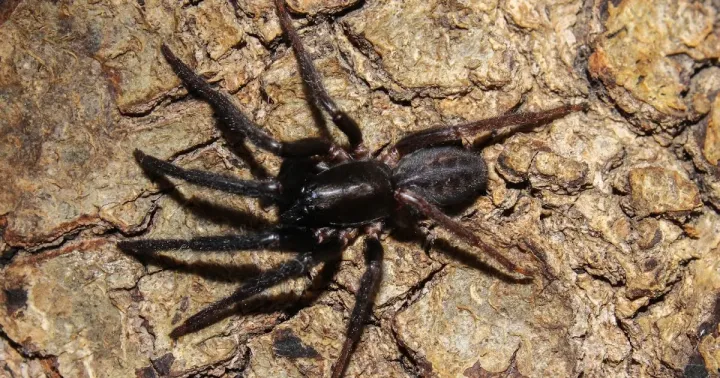
Description
How to identify
Segestria belongs to the family Segestriidae (tube-dwelling spiders). These are predatory arachnids that, while not typical phytophages, can occur in agroecosystems and often cause concern among agronomists due to their specific behavior.
These spiders are distinguished by a cylindrical body and a characteristic arrangement of six eyes in a semicircle. Their coloration varies from dark brown to almost black, which allows them to effectively camouflage in their natural environment.
A distinctive feature is their hunting style: they spin tubular webs in bark crevices, soil cracks, or stem cavities, waiting for prey. Their legs are often held forward, which is a unique anatomical trait for this family.
The individuals go through several molting stages, and mature adults can exhibit aggression when their shelters are disturbed. It is important to distinguish them from beneficial entomophages that inhabit similar biomes.
For accurate identification, one often needs to examine the shape of the web and the structure of the chelicerae, which in Segestria are directed forward and adapted for the rapid capture of insects passing by the entrance to their burrow.
What it damages
Direct damage to agricultural crops caused by Segestria is minimal, as they are predators rather than consumers of plant tissues. However, their presence in large numbers can disrupt the microclimate in the root zone.
The primary issue lies in mechanical damage to delicate plant tissues when setting up burrows in stems or under the bark of young seedlings. This creates entry points for phytopathogenic fungi and bacteria.
In fruit farming, Segestria may colonize old trees, where their web nests interfere with normal sap flow in localized areas of the bark, weakening the plant's overall immunity.
Indirect damage is also associated with the fact that these predatory spiders may kill beneficial pollinators or natural entomophages (such as small predatory mites) that keep populations of true pests under control.
Therefore, the harmfulness of Segestria is indirect and manifests in the disturbance of the biological balance in orchards and greenhouses, which requires monitoring of their population density.
When it appears
The activity of these spiders begins in early spring when soil temperatures reach stable positive levels. During this period, individuals emerge from diapause and begin repairing their nests.
The peak of their life activity occurs during the summer months when reproduction and the dispersal of juveniles take place. During this time, the most intensive construction of webs in various shelters can be observed.
In autumn, activity gradually decreases, and the spiders move into deeper soil layers or retreat under tree bark in preparation for winter. Temperature is the key factor in their seasonal dynamics.
In greenhouses or warmer regions, Segestria can remain active for significantly longer, right up until the onset of persistent frost, which is important to consider when planning agronomic measures.
Short-term cold snaps are not fatal to them, but the metamorphosis cycle slows down, which shifts the timing of the emergence of new generations to a later period.
Signs of infestation
The main sign of their presence is tubular silk funnels that radiate from the burrow entrance. These threads serve as a signal system for the spider when prey approaches.
Careful inspection of tree trunks or the root collars of vegetable crops allows for the discovery of characteristic "tubes," which can be hidden in bark cracks or soil depressions.
The presence of exuviae (shed skins) near habitats also indicates that the population is actively growing and developing in that specific area.
The presence of large amounts of silk in places where it should not be (for example, on fruits or inflorescences) indicates an excessive density of the arachnid population.
An indirect sign is the presence of chitinous remains of other insects near the entrance to the spider's burrow, which confirms its predatory activity within the micro-ecosystem.
Control measures
Protection methods are aimed at destroying the conditions favorable for the spiders' survival. An important measure is the regular cleaning of tree trunks from dead bark, where these organisms most often reside.
Agronomic techniques, such as loosening the soil in tree circles and inter-rows, help destroy the structure of the spider nests and force the spiders to migrate.
In cases of high spider concentration in greenhouses or nurseries, sanitary pruning of plants is recommended, removing stem parts with damage or signs of colonization.
- Maintaining optimal irrigation without excessive soil moisture.
- Using biological plant protection products to normalize the species composition of entomophages.
- Timely sealing of deep bark cracks in fruit trees with grafting wax.
Chemical treatments with specific acaricides are carried out extremely rarely and only when it is impossible to control the population by other means, as this disrupts the ecological balance of the site.
Taxonomy
- Latin name
- Segestria
- Family
- Segestriidae
- EPPO code
- SEGESP
Discussion
No discussions yet — be the first.