
Spitting spider
Scytodes
Description
How to identify
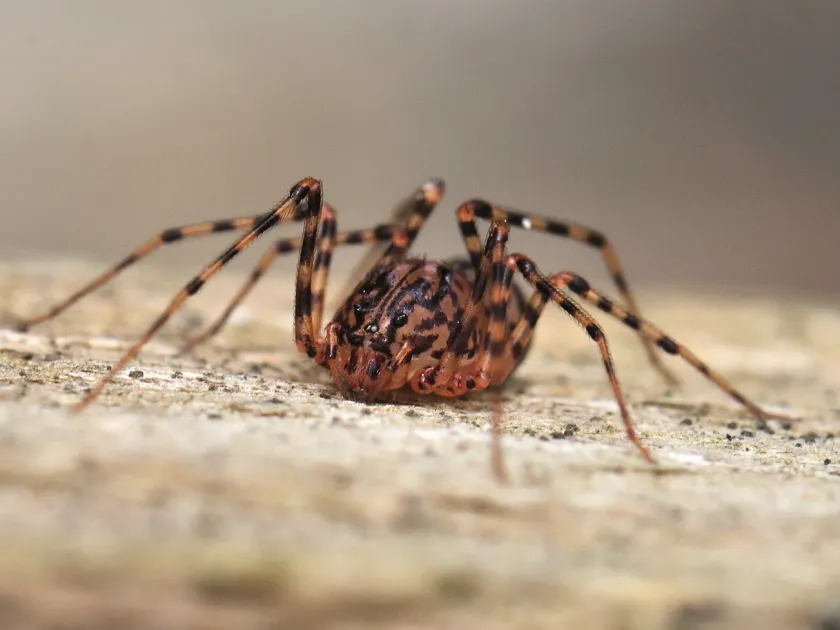
The spitting spider (genus Scytodes) is easily recognized by its distinctive dome-shaped carapace and specific hunting technique.
These spiders possess large venom glands that produce a sticky, silk-like substance, which they eject over their prey to immobilize it.
They typically exhibit a yellowish body with dark markings, providing excellent camouflage in diverse environments.
Unlike many other spiders, they do not spin traditional webs to catch prey, preferring a more active, ambush-style approach.
They are relatively small and are often found in dark, undisturbed areas within agricultural buildings or structures.
What it damages
In agronomic terms, the spitting spider is not a plant pest because it belongs to the group of specialized predators.
It does not feed on plant tissues, phloem sap, or roots, and therefore poses zero risk to crop health or yield quality.
Scytodes spiders do not cause any mechanical damage, such as leaf mining, gall formation, or tissue necrosis.
Their presence in a field or greenhouse is generally seen as neutral or beneficial, as they contribute to the control of harmful insects.
Since they do not interact with plants as phytophages, they are never considered a target for agricultural pest management programs.
When it appears
The life cycle of the spitting spider is heavily dependent on the presence of small insects that serve as their primary food source.
In greenhouses and climate-controlled storage facilities, they may remain active throughout the entire year.
In outdoor environments, their peak activity aligns with the warmer months when prey insects are most abundant.
Reproduction involves laying eggs in a silken sac, which the female carries with her until the spiderlings emerge.
Their population size naturally fluctuates based on the density of the prey population within their habitat.
Signs of infestation
Identifying the presence of spitting spiders involves spotting their unique hunting residue on non-plant surfaces.
Small, solidified droplets of sticky webbing on walls or structural beams are the only indicators of their hunting activity.
One will never find signs of injury on vegetation, such as discoloration or wilting, associated with these spiders.
They are solitary hunters, so they do not build large, visible webs that would interfere with greenhouse maintenance.
These spiders are usually encountered by chance during routine inspections of storage facilities or dark, sheltered areas.
Control measures
No protective measures are required against spitting spiders, as they do not threaten agricultural productivity.
Using broad-spectrum pesticides to eliminate these spiders is counterproductive as it destroys beneficial natural predators.
Maintaining good sanitation in storage areas and clearing debris is sufficient to limit their population if they become a nuisance.
Focusing on general insect management will naturally reduce the food supply for Scytodes, leading to a natural decline in their numbers.
Promoting a balanced ecosystem by protecting such predators is a standard practice in modern integrated pest management strategies.
Taxonomy
- Latin name
- Scytodes
- Family
- Scytotidae
- EPPO code
- SCTTSP
Discussion
No discussions yet — be the first.