
Greenhouse symphylan
Scutigerella immaculata
Description
How to identify
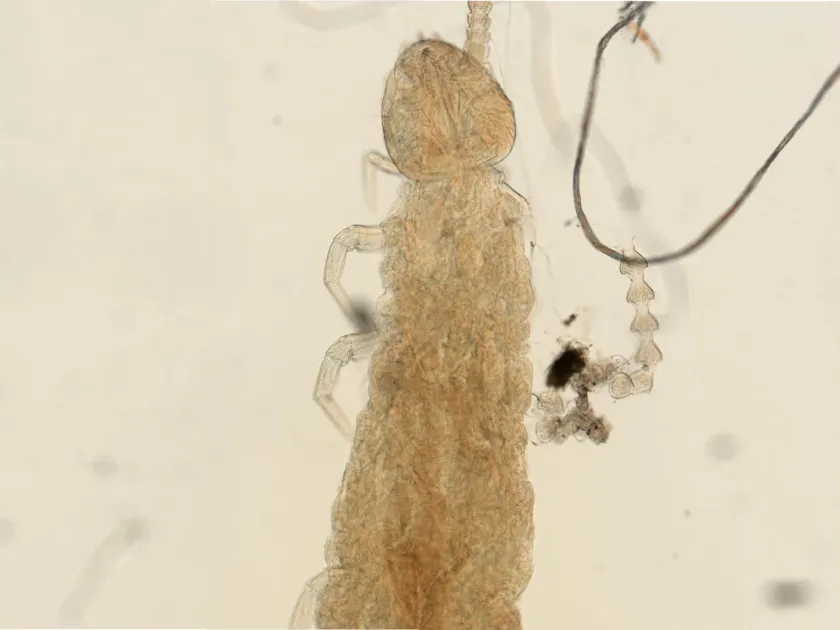
The greenhouse symphylan, scientifically known as Scutigerella immaculata, is a small, soil-dwelling arthropod related to centipedes. Adult individuals are typically 5 to 8 millimeters long, possessing a white or translucent body that is soft and extremely agile.
They are characterized by having 12 pairs of legs and a pair of long, bead-like antennae. Their body structure is adapted for navigating through tiny crevices, pore spaces, and natural channels within the soil profile.
Symphylans are photophobic, meaning they avoid light, and are highly sensitive to soil moisture levels. They spend their entire life cycle hidden underground, coming to the surface only when humidity is high and the soil is damp.
Unlike insects, symphylans continue to molt and grow throughout their lifespan even after reaching sexual maturity. They undergo a hemimetabolous development process, where juveniles look like smaller versions of the adults.
These organisms are distributed globally and are particularly problematic in greenhouse environments where year-round temperature control creates optimal breeding conditions for population growth.
What it damages
Scutigerella immaculata is a polyphagous pest known to attack a wide array of vegetable and ornamental crops. It is particularly devastating to seedlings and young plants, where the root system is not yet fully established.
They feed on root hairs and chew small, irregular holes in the primary roots and hypocotyls of plants like tomatoes, cucumbers, peppers, and various leafy greens. This feeding activity disrupts nutrient and water uptake.
Beyond direct mechanical damage, the wounds created by symphylans serve as entry points for soil-borne pathogens, leading to severe root rot, damping-off, and fungal infections that often kill the plant entirely.
In greenhouses, heavy infestations can lead to stunted growth, yellowing foliage, and eventually total crop failure. The impact is most severe in potted plants, where the confined root volume allows symphylans to feed extensively.
Because they target the most active parts of the root system, even low population densities can significantly reduce the overall productivity and marketability of greenhouse-grown vegetables.
When it appears
In indoor greenhouse systems, the greenhouse symphylan is active year-round. Consistent soil moisture and moderate temperatures provide the stability they need for continuous reproduction, making seasonal changes less relevant.
In outdoor environments, population activity usually peaks during spring and autumn when the soil is damp and temperatures are moderate. During hot, dry summer months, they migrate deeper into the soil profile to find cooler, moister conditions.
Vertical migration is their primary survival strategy. They may move as deep as 60 centimeters or more to avoid surface desiccation. They return to the topsoil as soon as rainfall or irrigation increases moisture levels.
Their life cycle duration is heavily influenced by the soil environment. In ideal conditions, the time from egg to reproductive maturity is significantly shortened, potentially leading to multiple generations within a single season.
Growers should be most vigilant following intensive irrigation events, as symphylans will rapidly ascend to the root zone to take advantage of the moisture and fresh growth.
Signs of infestation
The most common indicator of a symphylan problem is a patch of uneven or stunted plant growth within the greenhouse. Affected plants often appear paler and may wilt during the hottest parts of the day.
On closer inspection, the roots of damaged plants will show characteristic tiny pits and eaten-away root tips. In some cases, the root system may appear significantly smaller and less developed than that of a healthy neighbor.
Monitoring can be done by digging small, moist soil samples near the root zone and breaking them open gently. If present, white, quick-moving individuals will be visible for a few seconds before diving back into the soil.
The sudden death of seedlings in trays or seedbeds without any signs of foliage pests is a strong indicator of symphylan feeding activity. They can quickly strip the roots of young seedlings, causing rapid collapse.
Persistent issues with "damping-off" or root rot that do not respond well to typical fungicides suggest that a soil-dwelling pest is causing the underlying tissue damage that facilitates infection.
Control measures
Effective management begins with soil preparation. Deep tillage can physically disrupt their established channels and bring them to the surface, where exposure to sunlight and drying air reduces their population.
Crop rotation and keeping greenhouses free of weeds are essential preventive practices, as these provide alternative food sources and refuges for the pests during periods when the main crop is absent.
Biological control using entomopathogenic nematodes (e.g., Heterorhabditis species) can provide effective suppression of symphylan populations when soil moisture and temperature conditions are well-regulated.
Chemical control usually involves the application of soil-applied insecticides or drenches. These treatments must be targeted precisely at the root zone to ensure they reach the depth where the pests are actively feeding.
In cases of chronic infestation, sterilization of the greenhouse soil, such as through steam pasteurization or replacement of the growing media, is the most reliable way to achieve complete eradication of the pest.
Taxonomy
- Latin name
- Scutigerella immaculata
- Family
- Scutigerellidae
- EPPO code
- SCUTIM
Discussion
No discussions yet — be the first.