
Garden symphylan
Scutigerella
Description
How to identify
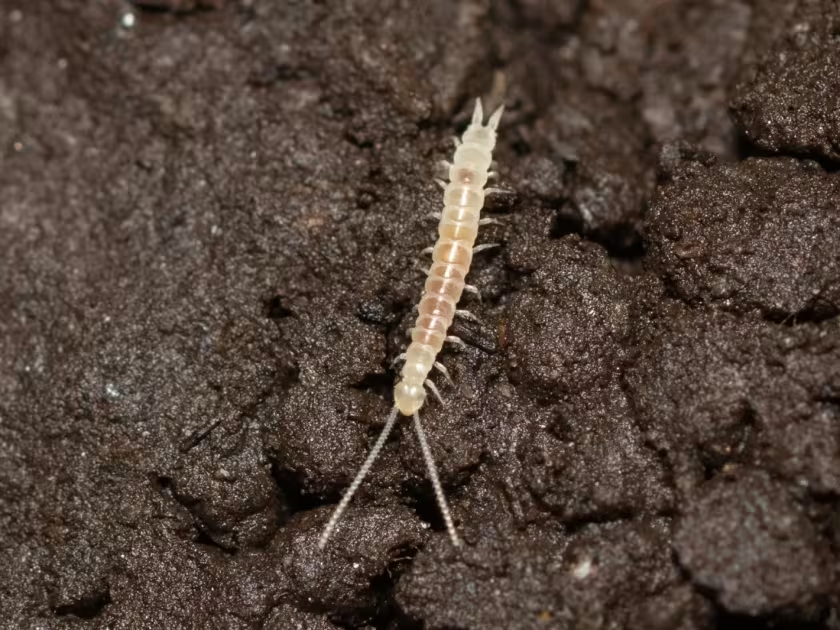
Scutigerella immaculata, commonly known as the garden symphylan, is a small, pale arthropod belonging to the class Symphyla. They are often described as garden centipedes due to their appearance.
Measuring only 5–8 mm in length, they possess a slender, segmented body and 12 pairs of legs in adulthood. Their high mobility allows them to move rapidly through existing soil pores.
Symphylans are strictly subterranean organisms that require high humidity to survive. They lack a respiratory system, relying on gas exchange through their thin cuticle, which dictates their habitat choice.
They are extremely sensitive to desiccation and light. If exposed to the surface, they quickly attempt to burrow back into the moist, dark soil environment to avoid dehydration.
Their life cycle involves multiple molts. Even as nymphs, they resemble adults, gaining additional pairs of legs as they grow, which makes them permanent residents in the soil profile.
What it damages
Garden symphylans are polyphagous pests capable of damaging a wide variety of crops, including vegetables, fruits, and ornamental plants, particularly in greenhouse environments.
They primarily feed on root hairs and the delicate tips of lateral roots. This feeding activity disrupts the plant's ability to uptake water and nutrients, leading to stunted growth.
Heavy infestations can cause seedling death, resulting in patchy emergence and reduced crop stands. In established plants, it results in low vigor and decreased marketable yield.
The wounds created by symphylans serve as entry points for soil-borne pathogens. This often leads to secondary infections like root rots, which can be more devastating than the initial feeding damage.
In greenhouses, where conditions remain constantly moist and warm, symphylans can cause severe, multi-season damage if left unmanaged, as they reproduce continuously.
When it appears
Symphylan activity is highly dependent on soil moisture and temperature. They are most active during the spring when the soil warms up to the 15–20°C range.
They overwinter in deeper soil layers, often moving down to 50 cm or more to avoid extreme cold or dryness. As spring progresses, they migrate toward the root zones near the surface.
During the summer, if the topsoil becomes dry, they retreat deeper into the soil. However, they return immediately to the surface zone once irrigation or rainfall restores moisture.
Their populations are difficult to track because they occupy different depths depending on daily and seasonal conditions. This makes them a persistent threat to spring-planted crops.
Because they have a slow and staggered reproductive cycle, controlling them is difficult. There is no single "peak" time for emergence, making constant monitoring essential.
Signs of infestation
The primary symptom is uneven growth or poor stands in fields and greenhouses. Plants may appear stunted, chlorotic, or wilted despite adequate irrigation.
A closer inspection of the root system of an affected plant usually reveals a lack of fine root hairs. The roots may appear stubby, stunted, or possess distinct feeding scars.
When searching for the pest, one may find small, translucent white organisms scurrying rapidly away when the soil is turned. They are easily mistaken for young millipedes.
A simple bait trap using pieces of raw potato or carrot buried a few centimeters deep can confirm the presence of symphylans. They are naturally attracted to the moisture and starch.
If plant damage persists and conventional diseases or nutrient deficiencies are ruled out, a soil sampling procedure focused on the root zone is highly recommended.
Control measures
Management begins with good cultural practices. Thorough soil preparation, such as plowing and harrowing, can disrupt symphylan tunnels and reduce their movement to the root zone.
Avoid excessive use of un-composted organic matter, as it serves as a primary food source for the pest. Maintaining soil structure is key to reducing their habitat.
Chemical control is challenging due to the pest's deep-soil habits. Insecticides must be applied in a way that allows them to reach the root zone during the planting phase.
- Utilize biological control agents like entomopathogenic fungi such as Beauveria bassiana.
- Implement steam sterilization for greenhouse soils to eliminate populations.
- Maintain proper irrigation scheduling to avoid unnecessary saturation of the topsoil.
- Monitor populations using bait traps to determine if chemical intervention is necessary.
In high-pressure areas, integrating multiple strategies—such as trap cropping, careful irrigation, and targeted insecticide application—is the only way to achieve sustainable control.
Taxonomy
- Latin name
- Scutigerella
- Family
- Scutigerellidae
- EPPO code
- SCUTSP
Discussion
No discussions yet — be the first.