
Fir engraver
Scolytus ventralis
Description
How to identify
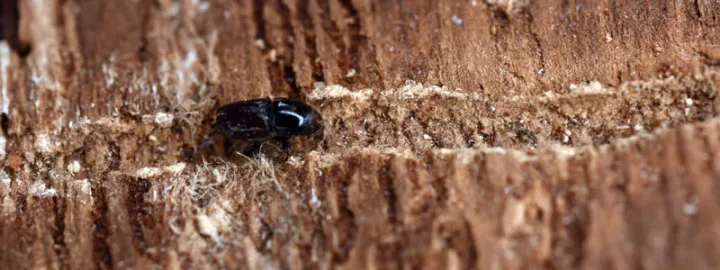
The fir engraver (Scolytus ventralis) is a destructive species of bark beetle within the Curculionidae family. Adult beetles are small, typically measuring 4 to 5 mm in length, with a cylindrical, dark brown to black body characterized by a slight metallic sheen.
A key identifying feature of the male is the presence of a concave abdomen with small, tooth-like projections. These structural nuances are essential for professional identification during entomological surveys in infested forest areas.
The larvae are white, legless, and C-shaped, with a well-developed head capsule. They develop beneath the bark, feeding on the phloem and cambium layer, which makes them effectively hidden from predators and external environmental factors for most of their lifecycle.
The beetle's life cycle is closely synchronized with the phenology of its host plants. Temperature plays a critical role in determining the speed of development, with warmer summers often leading to more aggressive outbreaks of the population.
The fir engraver is highly specialized and is primarily known for attacking true firs (Abies). It possesses a remarkable ability to detect stressed trees using olfactory cues, which allows it to colonize host plants effectively.
What it damages
The primary host for this pest is the fir tree (Abies spp.). When environmental conditions favor the beetle, populations can explode, causing widespread tree mortality and significant damage to the ecosystem structure.
By excavating extensive gallery systems in the cambium, the beetles disrupt the tree's vascular system, preventing the transport of water and nutrients. This structural damage eventually leads to branch dieback and total tree death within one to three years.
The pest often introduces pathogenic fungi into the tree, which further accelerates the decay of the wood. This symbiotic relationship between the beetle and fungi creates a lethal combination that overwhelms the host's natural defense mechanisms.
Trees suffering from drought, root disease, or physical damage are the most susceptible to attacks. During periods of severe stress, even apparently healthy trees can be overwhelmed by mass attacks from the beetle population.
Economic impacts are severe, particularly in forest management where timber quality is compromised. Furthermore, dead trees create high fuel loads, increasing the risk of severe forest fires in affected regions.
Signs of infestation
Small, circular entrance holes in the bark, often accompanied by piles of reddish-brown boring dust (frass), are the most reliable early indicators that the fir engraver has started its colonization process.
Crown symptoms follow as the tree loses its ability to move water. Needles turn pale green, then yellow, and eventually reddish-brown before dropping. The crown may thin progressively or show sudden signs of fading if the infestation is heavy.
Pitch tubes or streaks of dried resin on the bole are common, as the tree attempts to push the beetles out. However, if the tree is too weak or the attack is too intense, resin production may cease entirely, making the attack signs more subtle.
Removing a section of the bark reveals the signature horizontal galleries. These galleries, carved deep into the wood and cambium, are the most definitive evidence of an infestation by the fir engraver beetle.
Heavy woodpecker activity on the trunk is a common secondary sign. These birds recognize the infestation and strip away pieces of bark while foraging for larvae, creating visible damage to the tree's outer layer.
Control measures
Management of the fir engraver focuses on preventative silviculture. Maintaining stand vigor through proper thinning and reducing competition for resources makes forests less attractive to the beetle population.
Sanitation is critical; infested trees must be identified and removed promptly to reduce the beetle population before the next generation emerges. Proper disposal of this wood, such as burning or chipping, is essential to kill the larvae.
Chemical control, while difficult to apply on a large forest scale, can be used to protect high-value trees in landscapes or recreation sites. Targeted applications of contact insecticides during the adult flight period can be effective.
Integrated pest management (IPM) incorporates monitoring with pheromone-based traps to track population trends. This data helps forest managers decide when and where to implement active suppression tactics.
- Rapid removal and disposal of infested fir trees.
- Enhancing forest stand diversity to reduce host availability.
- Using trap trees to capture beetles before mass emergence.
- Monitoring flight patterns to time potential pesticide applications.
Taxonomy
- Latin name
- Scolytus ventralis
- Order
- Coleoptera (beetles)
- Family
- Curculionidae
- EPPO code
- SCOLVE
Discussion
No discussions yet — be the first.