
Shothole borer
Scolytus rugulosus
Description
How to identify
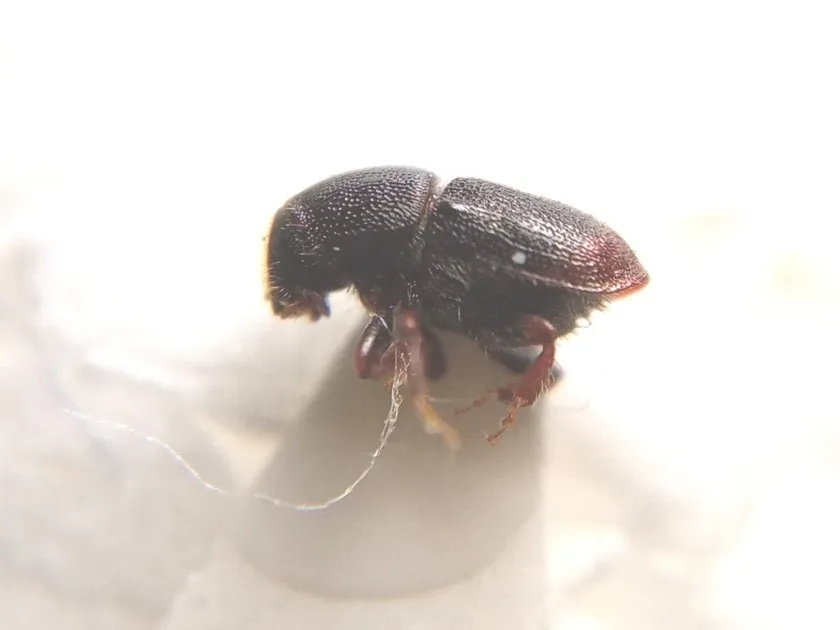
The shothole borer, scientifically known as Scolytus rugulosus, is a small beetle belonging to the Curculionidae family and the Scolytinae subfamily. Measuring only 2 to 4 millimeters in length, these beetles are cylindrical and dark brown or black in color.
The elytra, or wing covers, have distinctive longitudinal rows of deep punctures that give the insect a wrinkled appearance. This texture is the primary characteristic used for visual identification in the field by orchard managers.
The larvae are small, legless, cream-colored grubs with a brown head capsule. They spend their entire life stage beneath the bark, tunneling through the cambium layer, which is the most active part of the tree's growth system.
Pupation occurs within small, individual chambers located just below the outer bark surface. The insects pass through several generations in warmer climates, leading to a significant increase in population density throughout the growing season.
As wood-boring insects, they are notoriously difficult to monitor because they reside inside the host plant. By the time visual symptoms appear on the bark surface, the infestation is often well-established and causing damage to the tree's vascular system.
What it damages
This beetle is a serious pest of rosaceous fruit trees. It primarily attacks species such as apples, pears, plums, cherries, peaches, apricots, and quinces, causing significant economic damage to both commercial orchards and home gardens.
Beyond cultivated fruit trees, the shothole borer also infests wild hosts like hawthorn and mountain ash. These wild trees can act as a reservoir for the pest, especially if they are situated in nearby hedgerows or neglected overgrown areas.
The beetles preferentially attack trees that are already weakened by environmental stress, drought, nutritional deficiencies, or prior mechanical injuries. Once the tree's defenses are compromised, it becomes a target for colonization.
The primary mechanism of damage is the larval feeding behavior. By boring tunnels through the phloem and cambium, the larvae effectively girdle the tree and interrupt the transport of water and nutrients, leading to branch dieback and eventual tree death.
Furthermore, the holes bored by the beetles act as entry points for various pathogenic fungi and bacteria. These secondary infections can kill a tree much faster than the boring activity of the beetles themselves, complicating the management of the orchard.
Signs of infestation
The most visible sign of an infestation is the presence of numerous small, circular exit or entry holes on the bark, roughly 1.5 millimeters in diameter. These holes often resemble a pattern left by buckshot pellets fired at the trunk or branches.
Another reliable indicator is the appearance of fine, wood-colored dust, commonly referred to as "frass," accumulating around these holes or in bark crevices. This is the waste material expelled by the beetles as they tunnel into the tree.
In stone fruit species, the trees may respond to the boring activity by exuding large amounts of gum or sap at the sites of attack. While this is a defense mechanism, it is rarely sufficient to stop an established population of wood-borers.
Foliage symptoms include yellowing, wilting, and premature leaf drop on affected branches. As the vascular damage increases, entire limbs may stop producing new growth and turn brown, creating a sparse and sickly-looking canopy.
If you carefully remove a patch of bark where frass is present, you will observe the galleries beneath. These typically consist of a main vertical maternal gallery with numerous smaller larval tunnels extending perpendicularly, forming a distinct pattern.
Control measures
The first line of defense is ensuring overall tree vigor through proper horticultural practices. Adequate irrigation, balanced fertilization, and avoiding mechanical damage to the trunk make trees much less susceptible to colonization by borers.
- Perform regular sanitation by pruning and destroying infested branches.
- Remove and burn severely damaged or dead trees immediately to kill larvae.
- Apply white latex paint or whitewash to trunks to prevent sunscald.
- Use trap logs to attract beetles away from healthy trees during the flight period.
- Apply targeted insecticides when adult beetles are active and searching for hosts.
Chemical control is effective only during the short window when adult beetles are emerging and looking for new trees to colonize. Treatment must be applied to the bark surface before the insects have the opportunity to tunnel under the protective layers.
Maintaining a clean orchard environment is essential for long-term management. Piles of firewood, discarded prunings, and old stumps left in or near the orchard serve as breeding sites and must be disposed of promptly to keep the population under control.
Taxonomy
- Latin name
- Scolytus rugulosus
- Order
- Coleoptera (beetles)
- Family
- Curculionidae
- EPPO code
- SCOLRU
Discussion
No discussions yet — be the first.