
Spruce bark beetle (Scolytus piceae)
Scolytus piceae
Description
How to identify
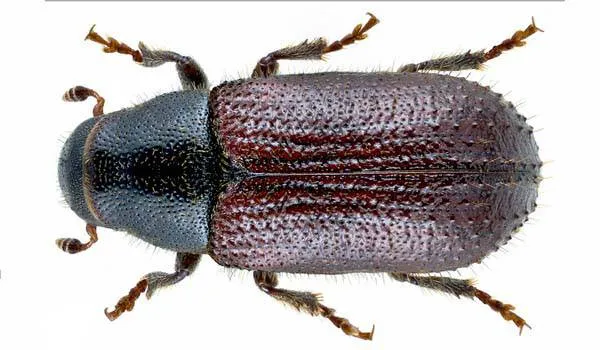
The spruce bark beetle (Scolytus piceae) belongs to the order Coleoptera and the family Curculionidae (subfamily Scolytinae). The adult beetle is cylindrical, typically measuring 2.5 to 4 mm in length, with a dark brown to black coloration.
A key diagnostic feature of this species is the shape of the male abdomen, which is truncated and angled upwards. The head is usually retracted under the pronotum, a common trait for beetles in the Scolytus genus.
The larvae are legless, C-shaped, and creamy white with a yellowish head capsule. They develop within the cambium layer of the host tree, creating galleries that effectively disrupt the nutrient and water flow of the tree.
Adult beetles also engage in maturation feeding on young shoots. This feeding behavior is critical to recognize when assessing the health of trees in nurseries or young forest stands.
Because they live beneath the bark for most of their lifecycle, positive identification often requires careful inspection of the bark surface and the gallery patterns beneath it.
What it damages
The primary hosts for Scolytus piceae are spruce trees (genus Picea), particularly the Norway spruce. However, the beetle can occasionally infest other conifers depending on regional availability and the stress levels of the host.
The beetle typically targets weakened, stressed, or fallen trees. However, when population levels reach outbreak proportions, they can readily attack healthy, vigorous trees, leading to extensive forest decline.
Damage is primarily caused by larvae feeding on the inner bark and cambium, which severs the phloem and xylem. This girdling effect kills the tree by preventing the transport of essential resources.
Infested trees become prime habitats for secondary invaders, including other wood-boring insects and pathogenic fungi, which further accelerate the tree mortality rate.
In silviculture, this pest is considered significant because it can trigger widespread mortality events that degrade the economic value of timber and cause ecological instability in spruce-dominated areas.
When it appears
The flight period of the adult beetles typically begins in the spring, once temperatures consistently exceed +15°C to +18°C. This is the time when overwintered adults emerge to locate new hosts.
Following emergence, the beetles seek out suitable host trees using chemical cues (pheromones and host volatiles). The main infestation phase usually lasts for several weeks during late spring and early summer.
The lifecycle generally consists of one generation per year, although warmer climates may support two generations. The development from egg to adult occurs beneath the bark surface.
As autumn approaches, the newly emerged adults and late-stage larvae prepare for overwintering. They usually remain under the bark of the host tree, entering a state of diapause until the following spring.
Pheromone traps are essential tools for forest managers to monitor population spikes and the exact timing of flight, which is crucial for scheduling timely protection measures.
Signs of infestation
The most reliable early sign of infestation is the presence of fine wood dust, known as frass, appearing on the bark or accumulating at the base of the tree in crevices.
Close examination often reveals entry holes on the bark surface. In active trees, these holes may be accompanied by small blobs of resin (pitch tubes) as the tree attempts to repel the beetles.
Yellowing or reddish foliage in the crown is a symptom of advanced infestation. As the tree's vascular system fails, the needles lose color and eventually fall, leaving the branches bare.
If the bark is peeled away on a suspected tree, the diagnostic maternal and larval galleries become visible. These galleries create distinct, characteristic patterns specific to the Scolytus species.
Top-down dieback is a classic symptom in spruce trees, indicating that the beetle population has successfully established itself and is slowly killing the tree from the upper canopy downward.
Control measures
Sanitary logging and the immediate removal of infested trees are the most effective methods to contain outbreaks. It is vital to remove or debark infested timber before the new generation of beetles emerges.
The use of pheromone-baited traps can successfully monitor population trends and help suppress the local beetle density during peak flight times without large-scale chemical intervention.
For high-value ornamental trees, systemic insecticides applied as bark treatments or soil drenches can provide effective protection, especially when applied preventively before the flight season begins.
Maintaining tree vigor is the best long-term strategy. Proper irrigation, soil management, and preventing mechanical damage make trees less attractive and more resistant to beetle colonization.
- Regular health monitoring of spruce stands;
- Prompt disposal of logging slash and debris;
- Application of systemic insecticides for high-value specimens;
- Promoting natural predators like woodpeckers and parasitoid wasps.
Taxonomy
- Latin name
- Scolytus piceae
- Order
- Coleoptera (beetles)
- Family
- Curculionidae
- EPPO code
- SCOLPI
Discussion
No discussions yet — be the first.