
Mediterranean fruit tree bark beetle
Scolytus mediterraneus
Description
How to identify
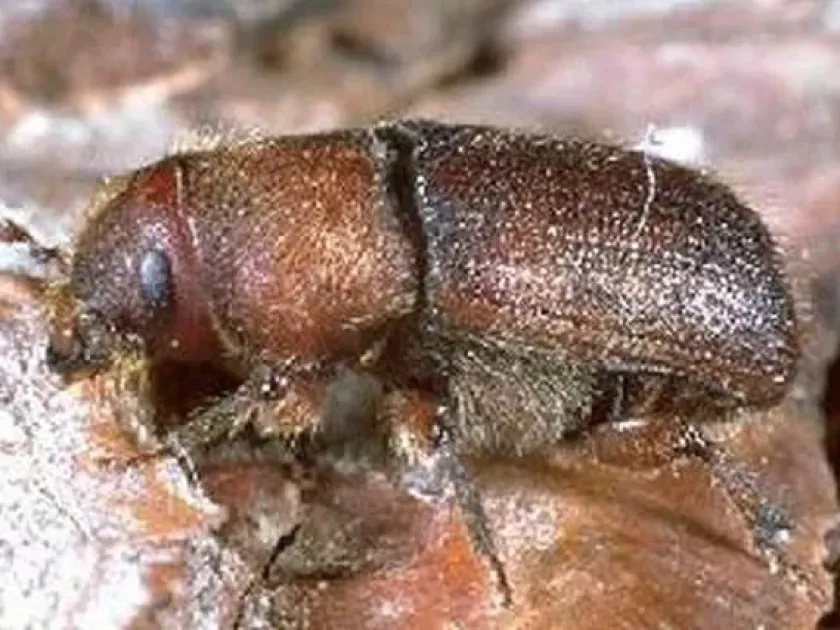
The Mediterranean fruit tree bark beetle (Scolytus mediterraneus) is a wood-boring insect belonging to the Curculionidae family. Adult beetles typically measure between 3 and 4 millimeters in length and feature a dark, cylindrical, and shiny body.
The head of the beetle is positioned underneath the pronotum, a structural characteristic common to many bark beetles. The elytra have fine punctures, while the posterior part of the abdomen is shaped to facilitate the ejection of boring dust.
Larvae are legless, white, and possess a curved, fleshy body with a yellowish head capsule. They spend their entire developmental phase feeding within the inner bark, making them highly protected from environmental factors and contact pesticides.
The life cycle involves egg, larval, pupal, and adult stages. The duration of each stage is highly dependent on ambient temperature, meaning that warmer seasons can significantly accelerate their reproductive cycle.
This beetle is a specialist in colonizing stone fruit trees. It targets both weak and healthy specimens, though successful colonization depends on the tree's ability to resist with sap flow.
What it damages
The primary hosts for Scolytus mediterraneus are stone fruit species, including apricot, peach, plum, and cherry. The pest thrives in neglected orchards or trees suffering from physiological stress.
By excavating galleries beneath the bark, the larvae and adults disrupt the vascular cambium, which is essential for transporting nutrients and water throughout the tree. This damage quickly leads to reduced vigor and limb death.
In cases of heavy infestation, the beetle can kill a young tree within a single season. The entry points created by the beetles also serve as vectors for fungal infections and bacterial diseases, complicating plant recovery.
Visible damage on adult trees includes the dieback of branches and reduced fruit production. The overall stress placed on the host plant makes it susceptible to additional pests and environmental extremes.
Furthermore, persistent infestations weaken the structural integrity of the tree, increasing the risk of mechanical failure during strong winds or heavy snow loads.
When it appears
Adult flight typically begins in spring, from April to May, as temperatures rise to a threshold suitable for emergence. This period marks the beginning of the initial colonization wave.
Following emergence, beetles engage in maturation feeding, where they chew into the leaf petioles or near buds. This feeding behavior is a vital target window for early-season chemical applications.
Mating occurs shortly after, followed by the female boring into the bark to deposit eggs. Depending on the geographical region and weather conditions, there can be one or two generations per year.
Larvae feed continuously through the summer months, expanding their galleries and causing progressive damage to the host plant. They eventually enter the pupal stage, often remaining under the bark throughout winter.
By late summer, a second wave of adults may emerge, continuing the cycle and intensifying the pressure on already infested or stressed trees within the orchard.
Signs of infestation
The most distinctive sign of a bark beetle infestation is the appearance of small, circular exit and entry holes in the bark, resembling shotgun pellets. These marks are clear indicators of beetle activity.
Gumming (gummosis) is a common defensive response in stone fruit trees. Droplets of resin or sap oozing from these entry holes are a sign that the tree is struggling against the invaders.
Boring dust, which looks like fine sawdust, is often found in branch crotches or near the base of the trunk. This residue is kicked out by the beetles as they clear their tunnels.
Symptoms of vascular disruption include sudden wilting of branches, yellowing leaves, and premature leaf drop. If these signs are ignored, the condition of the tree will deteriorate rapidly.
- Shot-hole patterns on the trunk;
- Excessive gummosis;
- Presence of boring dust;
- Localized branch dieback;
- Premature yellowing of foliage.
Control measures
Maintaining vigorous orchard health is the first line of defense. Proper irrigation, balanced fertilization, and appropriate pruning ensure trees can mount a strong defensive response through sap production.
Strict sanitation is required. All infested branches must be pruned and burned immediately to prevent the maturation and dispersal of the next generation of beetles.
Chemical control should be implemented during the adult flight period. Systematic insecticides are highly effective as they penetrate the tree tissues, protecting the plant from internal boring attempts.
Monitoring using pheromone traps is essential for timing insecticide applications accurately. By identifying the exact start of the beetle flight, orchard managers can achieve superior control results.
Trunk whitening with lime-based solutions provides a physical barrier and can discourage beetles from colonizing the bark, acting as a preventative measure in susceptible stone fruit orchards.
Taxonomy
- Latin name
- Scolytus mediterraneus
- Order
- Coleoptera (beetles)
- Family
- Curculionidae
- EPPO code
- SCOLME
Discussion
No discussions yet — be the first.