
Scolytus
Scolytus
Description
How to identify
Scolytus is a genus of bark beetles belonging to the Curculionidae family. These insects are small, typically ranging from 2 to 6 mm in length, with a cylindrical body shape.
Their coloration is usually dark brown or black. The posterior end of the elytra is often truncated or concave, sometimes featuring small spines used to clear debris from their tunnels.
The larvae are legless, white, and C-shaped, with a distinct brown head capsule. They live exclusively under the bark, feeding on the cambium layer of their host trees.
The life cycle involves complete metamorphosis: egg, larva, pupa, and adult. Depending on the species and climate, they may have one or multiple generations per year.
Overwintering typically occurs in the larval stage, tucked safely beneath the bark of the host tree, allowing them to survive harsh winter conditions.
What it damages
Scolytus beetles primarily attack stressed or weakened fruit trees, including apple, pear, plum, cherry, and apricot. They thrive in environments where trees are drought-stressed.
Adults and larvae destroy the cambium layer and sapwood, effectively disrupting the plant's vascular system. This blockage prevents the movement of water and nutrients.
Heavy infestations can lead to rapid tree decline and death. If the trunk is completely girdled by the beetles' galleries, the tree will succumb to the attack quickly.
Furthermore, these beetles are notorious vectors for various fungal diseases, such as wood decay fungi and cankers, which further deteriorate the tree's health.
In commercial orchards, the presence of Scolytus can lead to severe economic losses if prompt management actions are not implemented.
When it appears
The emergence of overwintered adults typically coincides with the spring blooming period of host trees, usually between May and June in temperate regions.
A second generation may emerge in late summer, often peaking in August. During this time, trees are often at their most vulnerable due to summer heat and potential drought stress.
These beetles are highly active during warm, sunny days. This is when they migrate to find new host trees and initiate the process of mating and tunnel excavation.
Feeding activity is most intense during the warmer months, as larvae continuously tunnel through the sapwood to consume the nutrient-rich tissues beneath the bark.
As temperatures drop in autumn, the larvae slow their feeding rate, preparing for the dormant winter period, and the adult population decreases significantly.
Signs of infestation
The most visible sign of an infestation is the presence of small, round exit holes on the bark, resembling holes made by a drill or a large nail.
Fine wood dust, often called frass or boring dust, collects in crevices or at the base of the tree, providing clear evidence of active internal tunneling.
In stone fruit trees, sap or gum exudation is a common defensive response to beetle attacks, resulting in visible hardened droplets on the trunk surface.
Wilting of branches or premature leaf yellowing indicates that the tree's vascular system has been compromised, signifying an advanced stage of infestation.
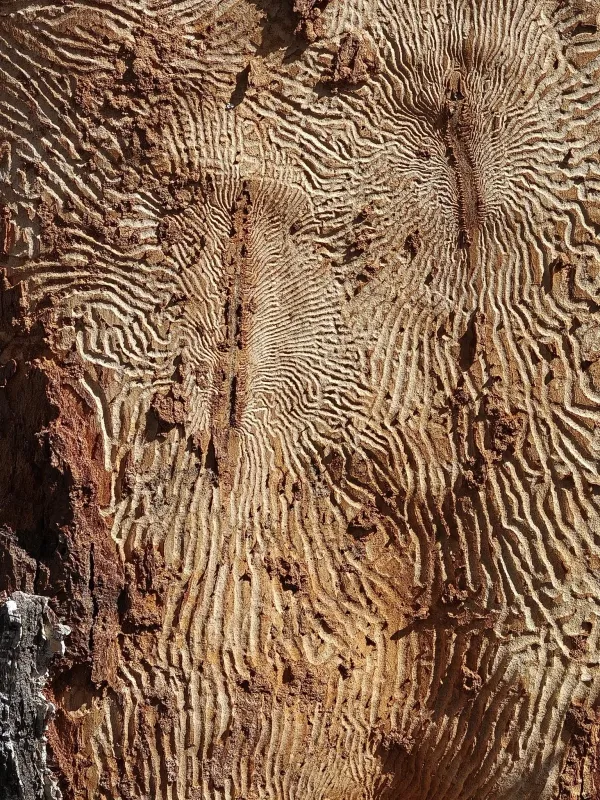
Peeling away a small section of dead bark reveals intricate patterns of galleries—a main maternal tunnel with numerous larval tunnels branching off perpendicular to it.
Control measures
The best defense against Scolytus is keeping trees healthy through proper irrigation, fertilization, and regular pruning of dead or diseased wood.
Sanitation is crucial; all infested material, including fallen logs and stumps, must be removed and destroyed to prevent population buildup.
- Apply white latex paint to trunks to prevent sunscald, which weakens bark.
- Remove and burn infested branches as soon as they are identified.
- Use pheromone traps to monitor adult beetle activity and reduce localized populations.
- Apply contact insecticides during the peak flight season to prevent new colonization.
Systemic insecticides may be used as a supplementary measure, but they are most effective when combined with excellent orchard hygiene and cultural care.
Taxonomy
- Latin name
- Scolytus
- Order
- Coleoptera (beetles)
- Family
- Curculionidae
- EPPO code
- SCOLSP
Discussion
No discussions yet — be the first.