
Mango thrips
Scirtothrips mangiferae
Description
How to identify
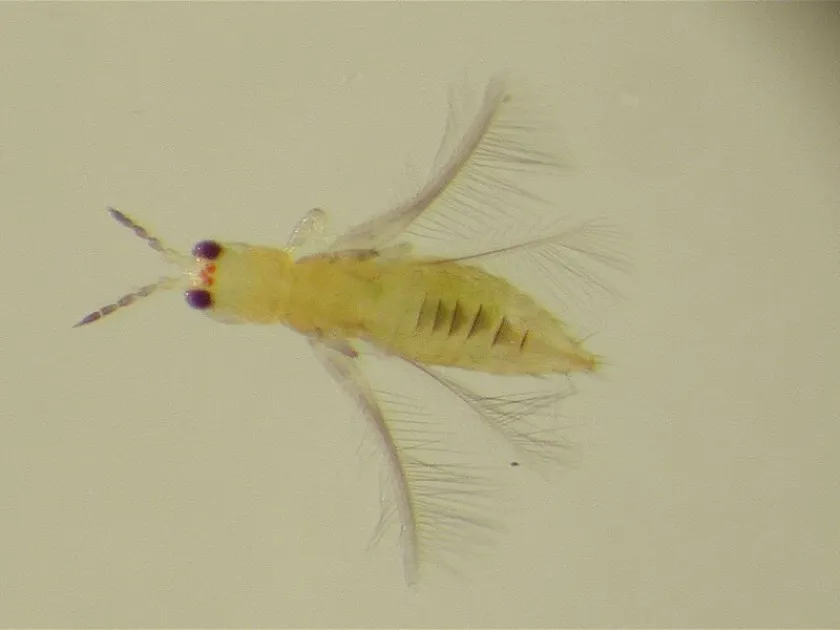
Mango thrips (Scirtothrips mangiferae) belongs to the family Thripidae. These are extremely small, slender insects that are typically less than 1 millimeter in length.
Adults are usually yellow or light brown in color, possessing fringed wings that allow them to move quickly between host plants in favorable conditions.
The life cycle progresses through eggs, two larval stages, propupa, pupa, and adult. They prefer warm and dry environments for optimal breeding and development.
They are primarily found on tender, succulent plant parts such as newly emerging leaves, buds, and delicate flower panicles.
Due to their microscopic size, they are often overlooked until the plant shows visible symptoms of stress or damage.
What it damages
The primary host for this pest is the mango tree (Mangifera indica), where they cause damage to both foliage and the reproductive parts of the tree.
Both larvae and adults feed by piercing the plant tissue and sucking the cell sap, which leads to the collapse of the epidermis cells.
Infestation of flower panicles is particularly damaging as it often results in flower drop and a subsequent reduction in fruit set and overall yield.
The feeding process causes stunted growth in young trees and significantly reduces the vigor of adult fruit-bearing specimens.
Economic damage is twofold: reduced yields due to blossom failure and quality loss due to fruit scarring and surface deformation.
Signs of infestation
The earliest symptom is the appearance of silvery or bronzed patches on the undersurface of young leaves, caused by the destruction of chlorophyll-rich tissue.
Leaves often curl and become distorted or brittle. As the infestation persists, these leaves may turn brown and wither prematurely.
On developing mango fruits, the presence of thrips leads to corky, russeted, or scarred patches that ruin the market appearance of the produce.
Tiny black fecal spots left on the surface of leaves and fruits serve as a diagnostic indicator of thrips activity within the canopy.
During peak activity, careful inspection of the growing tips will reveal small, yellowish larvae actively crawling on the plant surfaces.
Control measures
Integrated Pest Management (IPM) programs should prioritize the use of biological control agents like predatory mites and lacewing larvae.
Regular monitoring using yellow or blue sticky traps is essential to detect early arrivals and manage population spikes before they become uncontrollable.
Chemical control should involve targeted applications of insecticides with translaminar or systemic activity during the flushing and flowering stages.
Cultural practices such as pruning affected growth and ensuring balanced fertilization can help trees recover and build resilience against further damage.
It is important to rotate active ingredients in chemical applications to prevent the development of resistance in thrip populations over time.
Taxonomy
- Latin name
- Scirtothrips mangiferae
- Order
- Thrips
- Family
- Thripidae
- EPPO code
- SCITMG
Discussion
No discussions yet — be the first.